Knowledge hub

Manufacturing Systems

Design better operating systems through line balance, capacity, takt, material flow, scheduling, industrial engineering and production design.

CapacityLine balanceMaterial flowProduction

Guides in this hub.

Start with the fundamentals, then follow the related methods as the knowledge base grows.

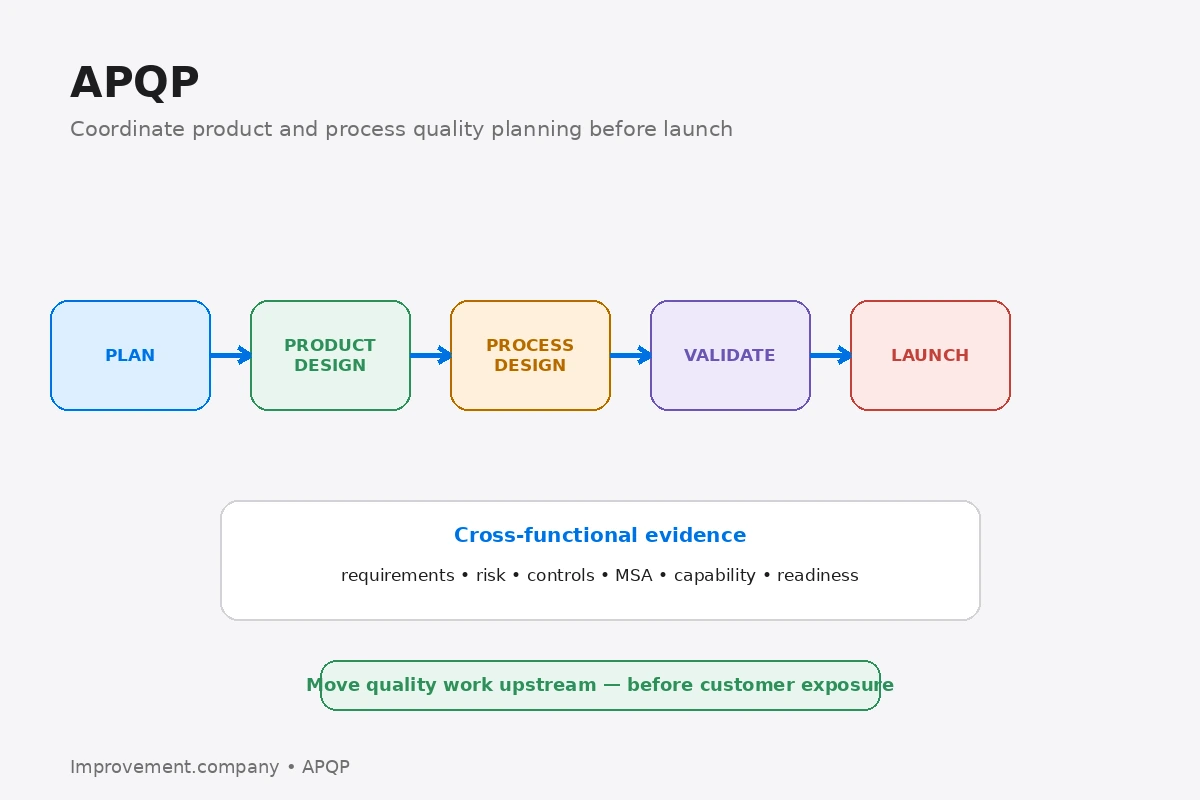
APQP roadmap showing planning, product design, process design, validation, and launch connected through cross-functional quality evidence.
Manufacturing Systems

APQP: Plan Product and Process Quality Before Launch

Learn how Advanced Product Quality Planning coordinates requirements, design risk, process development, validation, controls, and launch readiness before production begins.

APQPAdvanced Product Quality PlanningManufacturingQuality Planning
Read guide →
Manufacturing Systems

Bottleneck Analysis: Find the Constraint Limiting Flow

Learn how to identify a process bottleneck, distinguish temporary congestion from a true constraint, and improve flow without moving the problem elsewhere.

BottleneckConstraintFlowCapacity
Read guide →
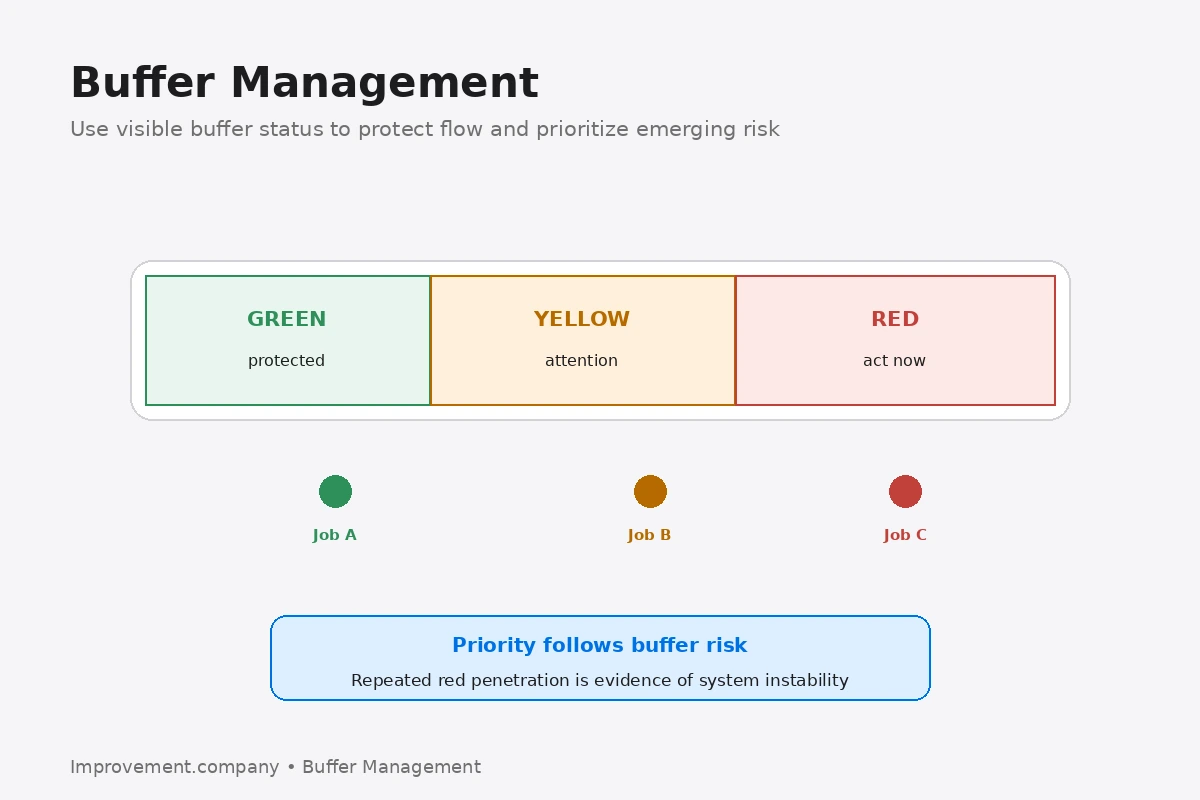
Buffer Management diagram showing green, yellow, and red buffer zones used to prioritize work based on risk to flow.
Manufacturing Systems

Buffer Management: Protect Flow by Managing Time and Inventory Buffers

Learn how Buffer Management uses visible buffer status to protect constraints, prioritize work, detect emerging risk, and improve flow without simply increasing inventory.

Buffer ManagementManufacturing SystemsTheory of ConstraintsFlow
Read guide →
Manufacturing Systems

Capacity Planning: Match Process Capability to Demand

Learn how to estimate practical process capacity, compare it with demand, expose capacity gaps, and choose improvements before adding equipment or labor.

Capacity PlanningDemandManufacturingFlow
Read guide →
Manufacturing Systems

Centerlining: Control Critical Process Settings

Learn how Centerlining defines, visualizes, and controls critical equipment settings so processes return quickly to proven operating conditions.

CenterliningProcess ControlManufacturingStandard Work
Read guide →
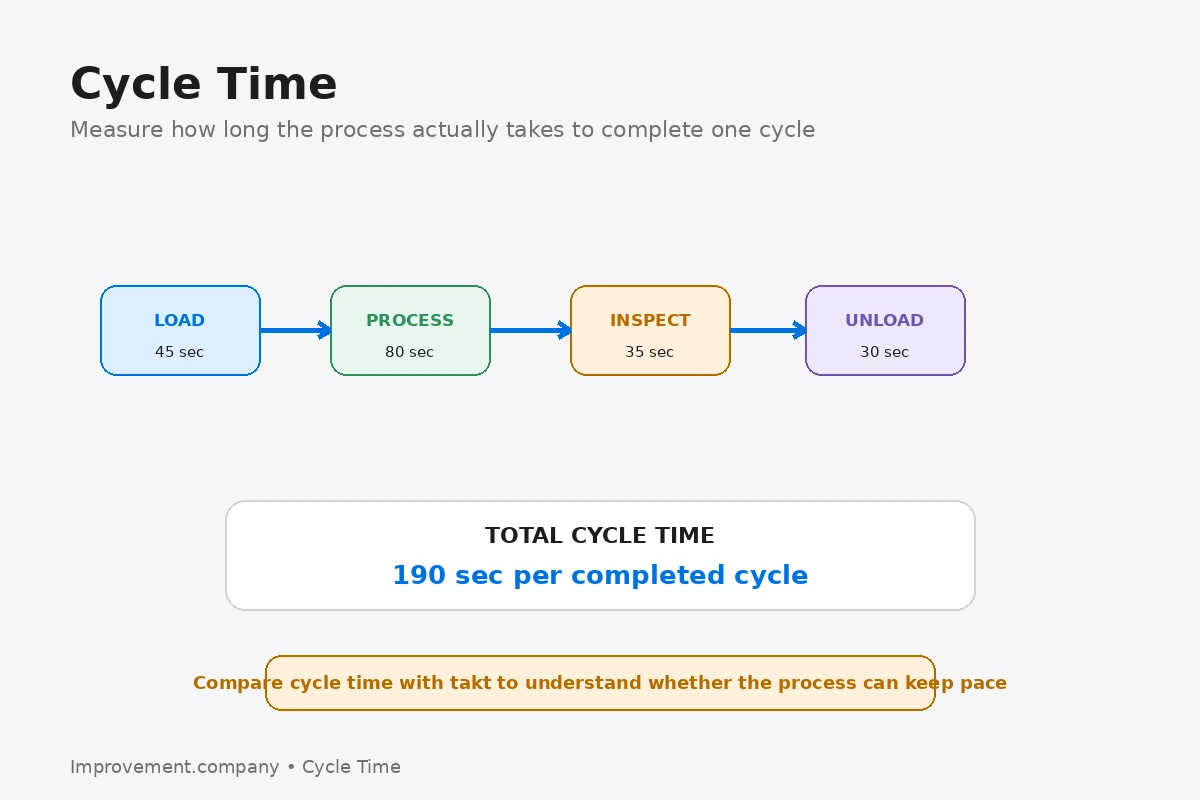
Cycle Time diagram showing a process sequence with timed load, processing, inspection, and unload steps summed into total cycle duration.
Manufacturing Systems

Cycle Time: Measure the Pace of the Process

Learn what cycle time means, how it differs from takt time and lead time, how to measure it correctly, and how to use it in process improvement.

Cycle TimeTakt TimeCapacityFlow
Read guide →
Manufacturing Systems

Cycle Time vs Takt Time vs Lead Time: Understand the Difference

Learn the difference between Cycle Time, Takt Time, and Lead Time and how the three measures work together to explain process speed, demand rhythm, and customer waiting.

Cycle TimeTakt TimeLead TimeManufacturing
Read guide →
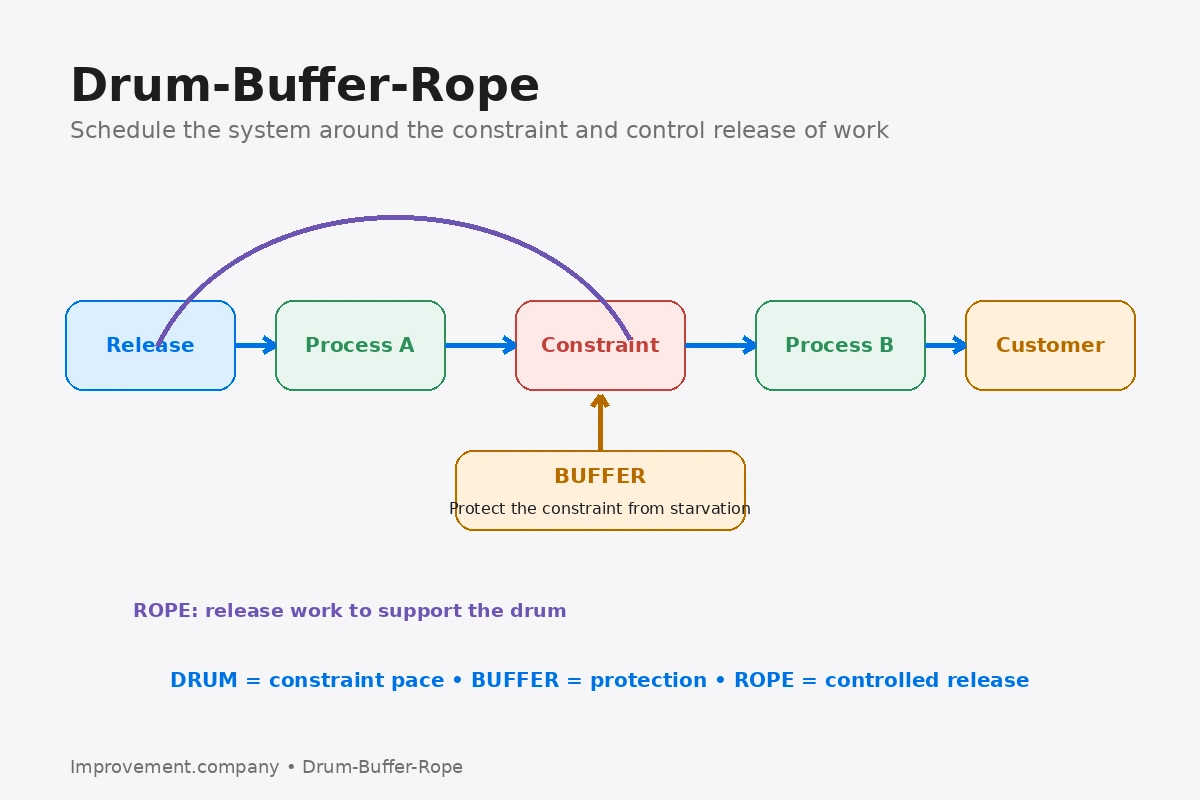
Drum-Buffer-Rope diagram showing the constraint as the drum, a protective buffer, and controlled release of work through the rope.
Manufacturing Systems

Drum-Buffer-Rope: Schedule the System Around the Constraint

Learn how Drum-Buffer-Rope uses the constraint as the production drum, protects it with a buffer, and controls release of work with a rope.

Drum Buffer RopeTheory of ConstraintsManufacturingScheduling
Read guide →
Manufacturing Systems

EPEI: Every Part Every Interval for Mixed-Model Production

Learn how EPEI measures how frequently a process can make every required part and how changeover, demand, and available capacity shape the interval.

EPEIManufacturingMixed ModelHeijunka
Read guide →
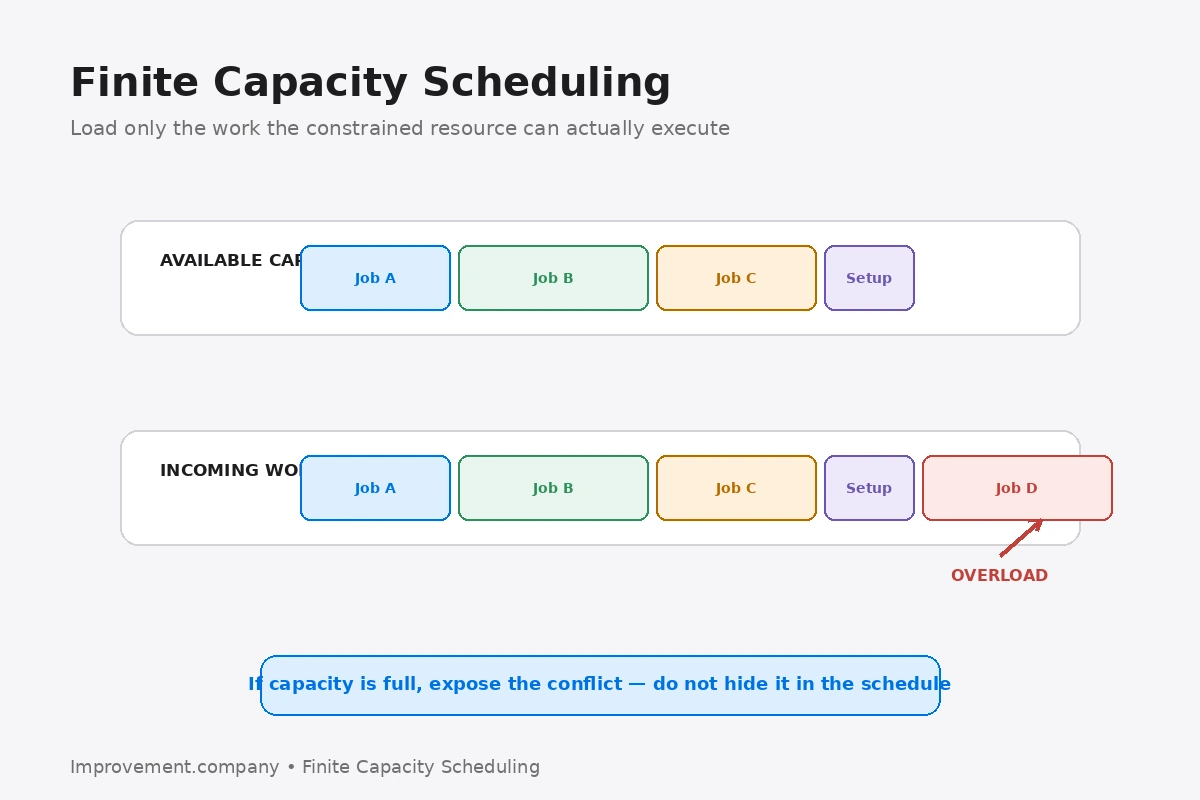
Finite Capacity Scheduling diagram comparing available resource capacity with incoming workload and exposing overload instead of hiding it in the schedule.
Manufacturing Systems

Finite Capacity Scheduling: Build a Schedule Resources Can Run

Learn how Finite Capacity Scheduling limits planned work to available resource capacity so schedules reflect real constraints instead of assuming unlimited labor or equipment.

Finite Capacity SchedulingManufacturing SystemsSchedulingCapacity
Read guide →
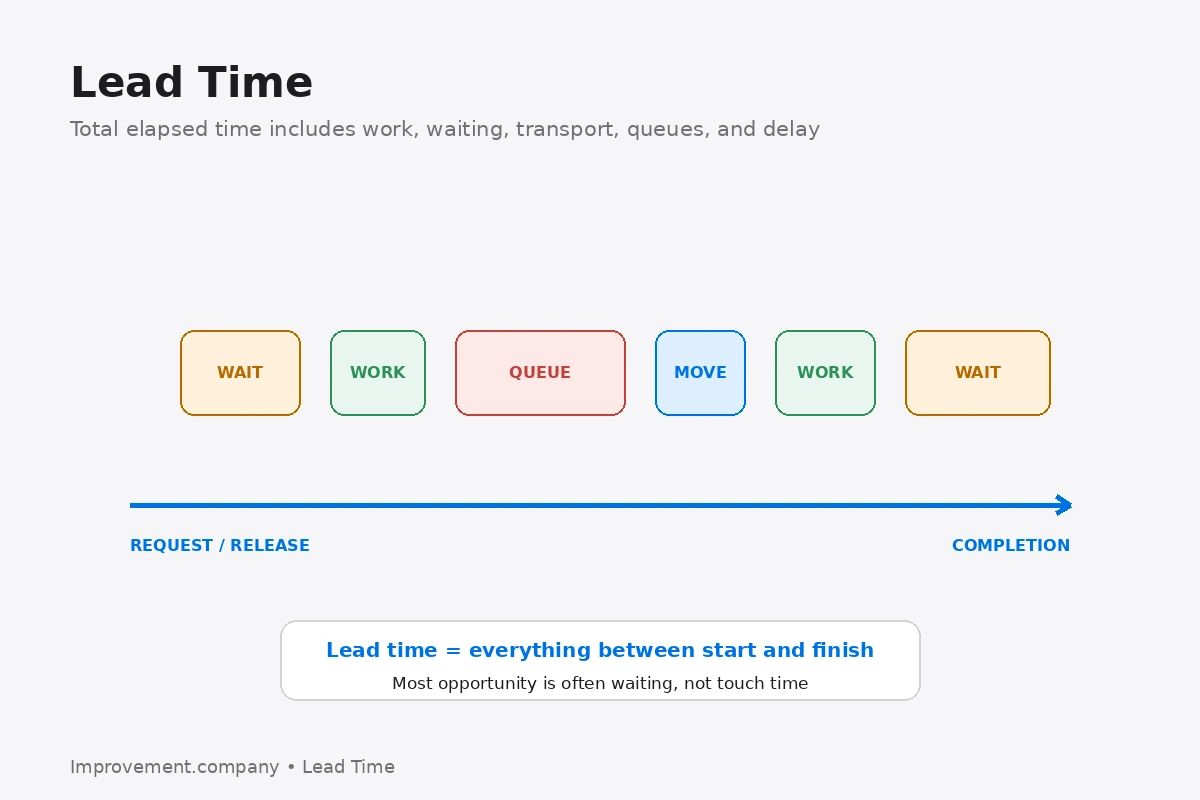
Lead Time diagram showing total elapsed time from request to completion as a mix of work, waiting, queue, movement, and delay.
Manufacturing Systems

Lead Time: Measure Total Time from Request to Completion

Learn how Lead Time measures total elapsed time from request or release to completion, including processing, waiting, transport, queues, and delays.

Lead TimeManufacturingFlowLittle's Law
Read guide →
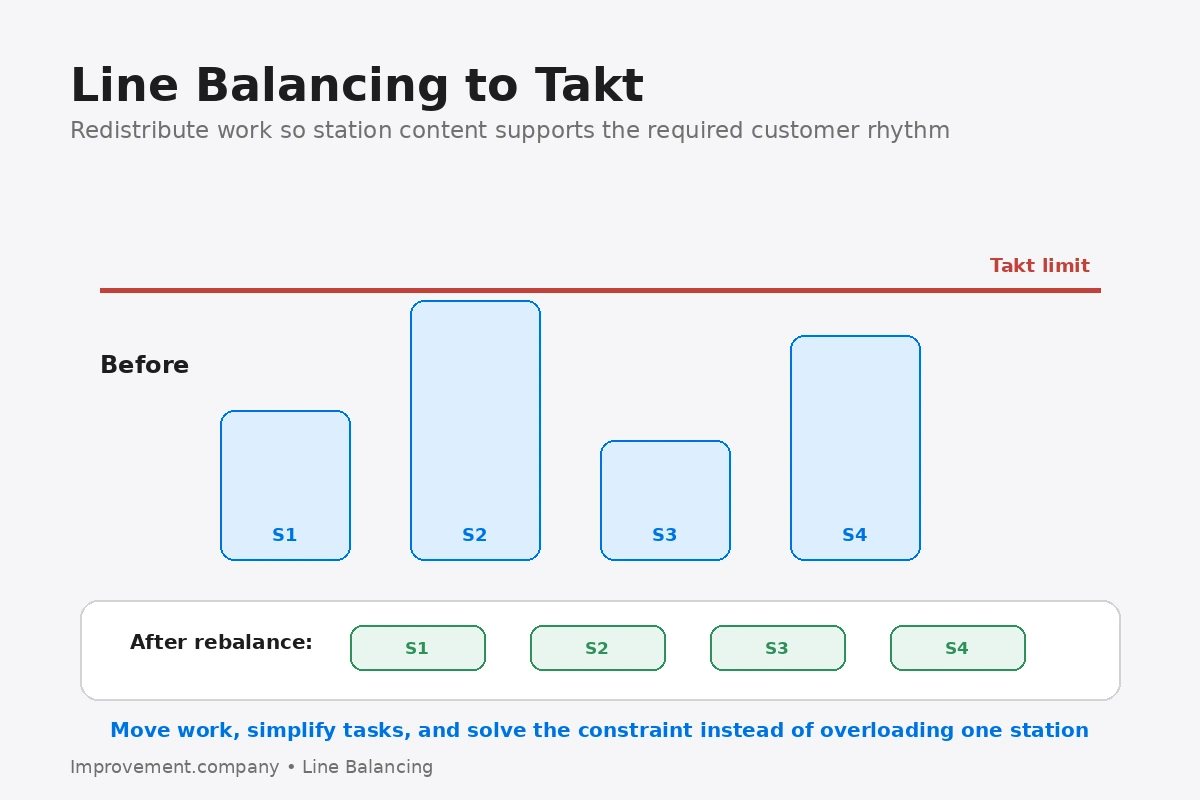
Line balancing diagram showing station work content against takt and a more even redistributed workload.
Manufacturing Systems

Line Balancing

Line balancing distributes work across operators or stations so that the process can meet demand with less waiting, overload and unevenness.

Line BalancingTakt TimeWork Content
Read guide →
Manufacturing Systems

Line-Side Material Presentation: Design Material for the Work

Learn how Line-Side Material Presentation uses point-of-use location, container size, orientation, replenishment, and ergonomics to support stable flow.

Line-Side Material PresentationManufacturingMaterial FlowPoint of Use
Read guide →
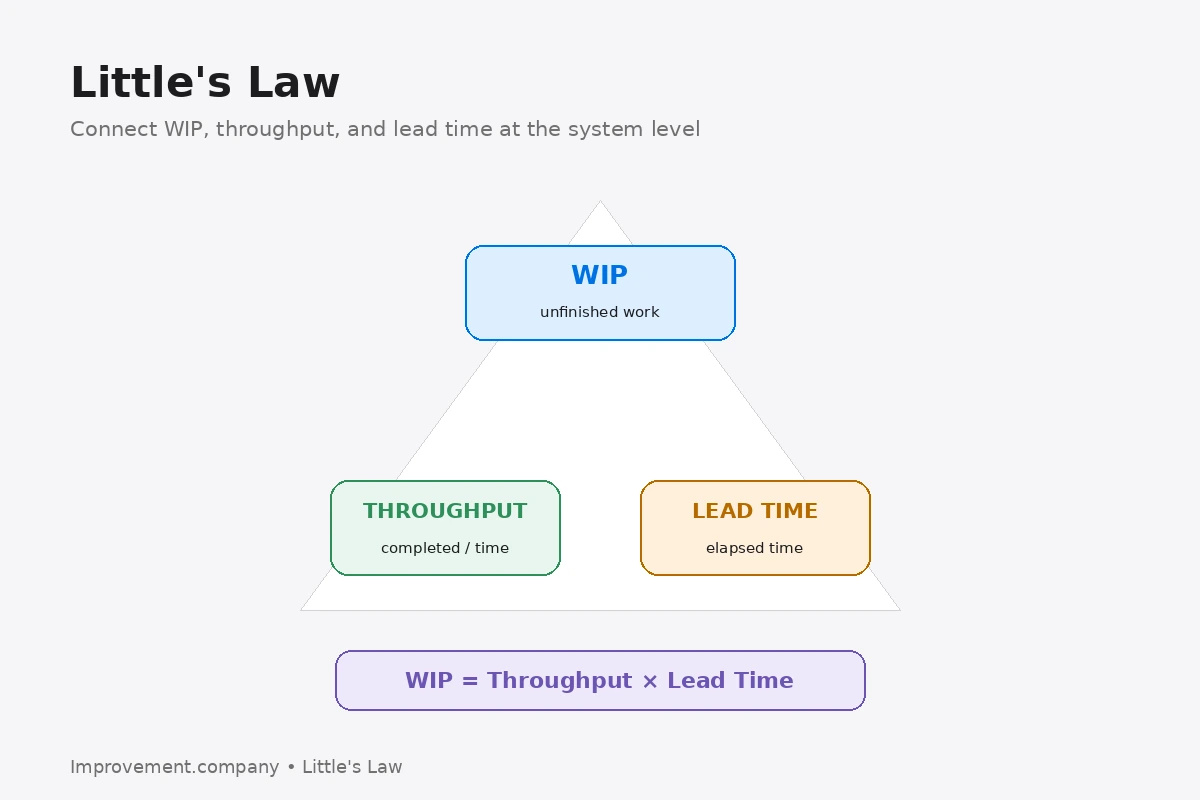
Little's Law diagram connecting work in process, throughput, and lead time with the relationship WIP equals throughput multiplied by lead time.
Manufacturing Systems

Little's Law: Connect WIP, Throughput, and Lead Time

Learn how Little's Law connects work-in-process, throughput, and lead time and why excess WIP usually increases time in the system.

Little's LawWIPLead TimeThroughput
Read guide →
Manufacturing Systems

Milk Run Material Delivery: Replenish on a Standard Route

Learn how a Milk Run uses a standard route, frequency, and quantity to replenish material predictably without constant forklift expedites.

Milk RunMaterial FlowLogisticsPFEP
Read guide →
Manufacturing Systems

Model Mix Sequencing: Arrange Mixed Production for Stable Flow

Learn how Model Mix Sequencing arranges product variants in a repeatable production pattern that supports demand, workload balance, material flow, and changeover control.

Model Mix SequencingManufacturingHeijunkaProduction Control
Read guide →
Manufacturing Systems

Plan for Every Part (PFEP): Build a Controlled Material System

Learn how Plan for Every Part organizes the information required to control material flow, storage, replenishment, packaging, and ownership.

PFEPMaterial FlowLogisticsKanban
Read guide →
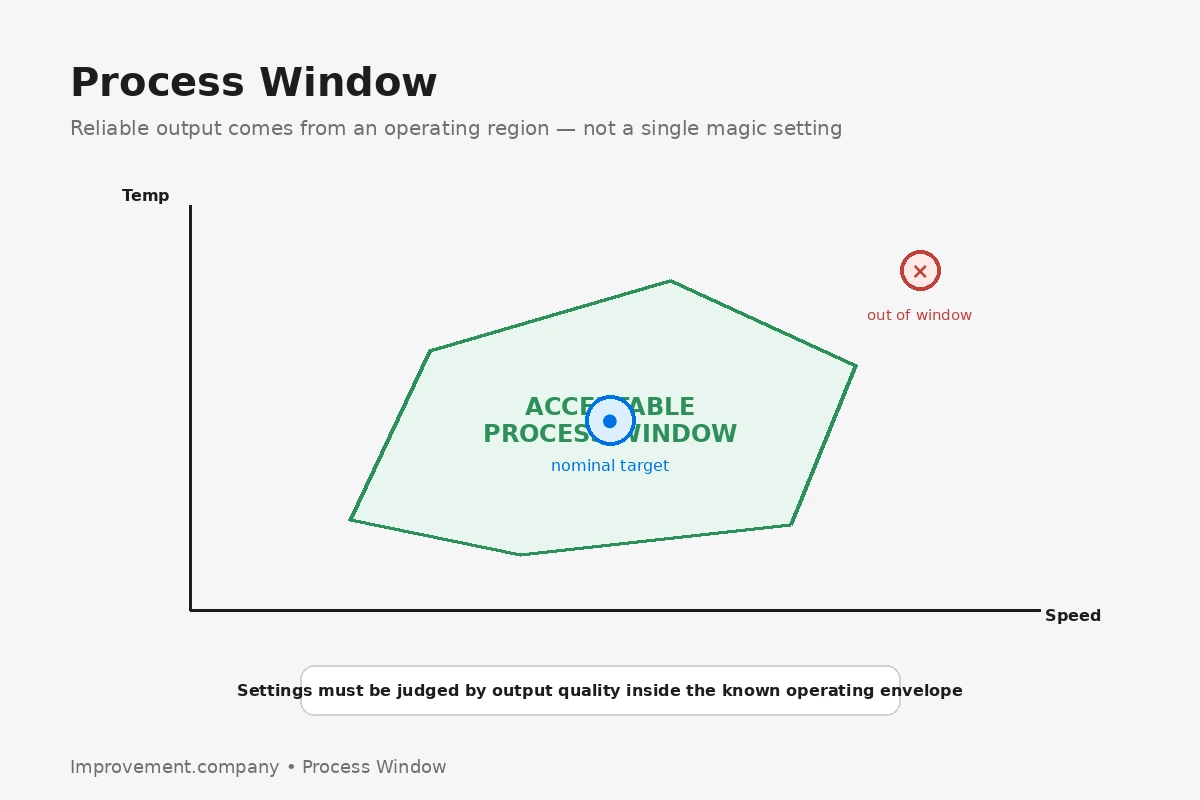
Process Window diagram showing an acceptable operating envelope across interacting process settings, a nominal target, and an out-of-window condition.
Manufacturing Systems

Process Window: Define the Operating Range That Produces Good Output

Learn how a Process Window defines the combination of process settings and conditions that consistently produce acceptable output without relying on a single nominal value.

Process WindowManufacturing SystemsProcess ControlCenterlining
Read guide →
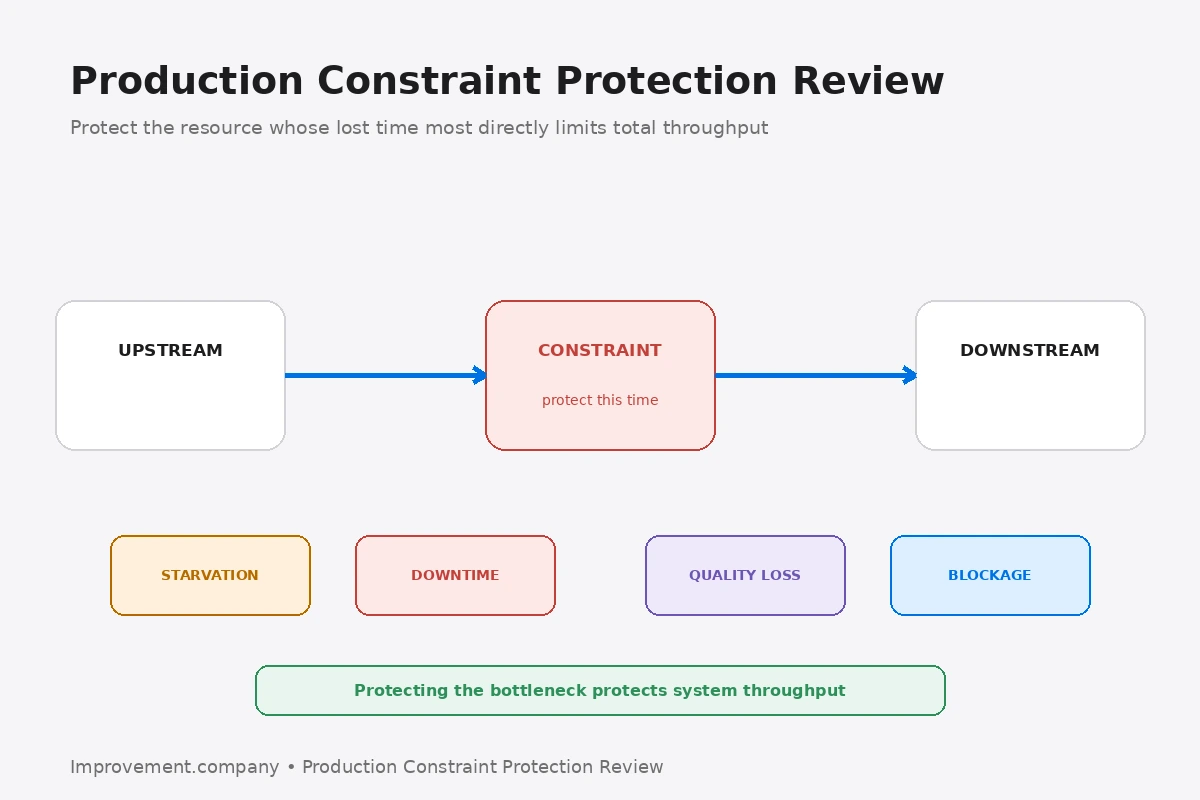
Production Constraint Protection Review diagram showing upstream flow, the protected system constraint, downstream flow, and key losses from starvation, downtime, quality, and blockage.
Manufacturing Systems

Production Constraint Protection Review: Protect the Bottleneck

Learn how a Production Constraint Protection Review checks starvation, blockage, downtime, quality loss, staffing, material readiness, and schedule decisions at the constraint.

Production Constraint Protection ReviewManufacturing SystemsConstraintThroughput
Read guide →
Manufacturing Systems

Production Loss Analysis: Find Where Capacity Is Being Lost

Learn how Production Loss Analysis separates downtime, speed, quality, changeover, waiting, and other losses so teams can focus improvement on the largest constraints.

Production Loss AnalysisManufacturingCapacityOEE
Read guide →
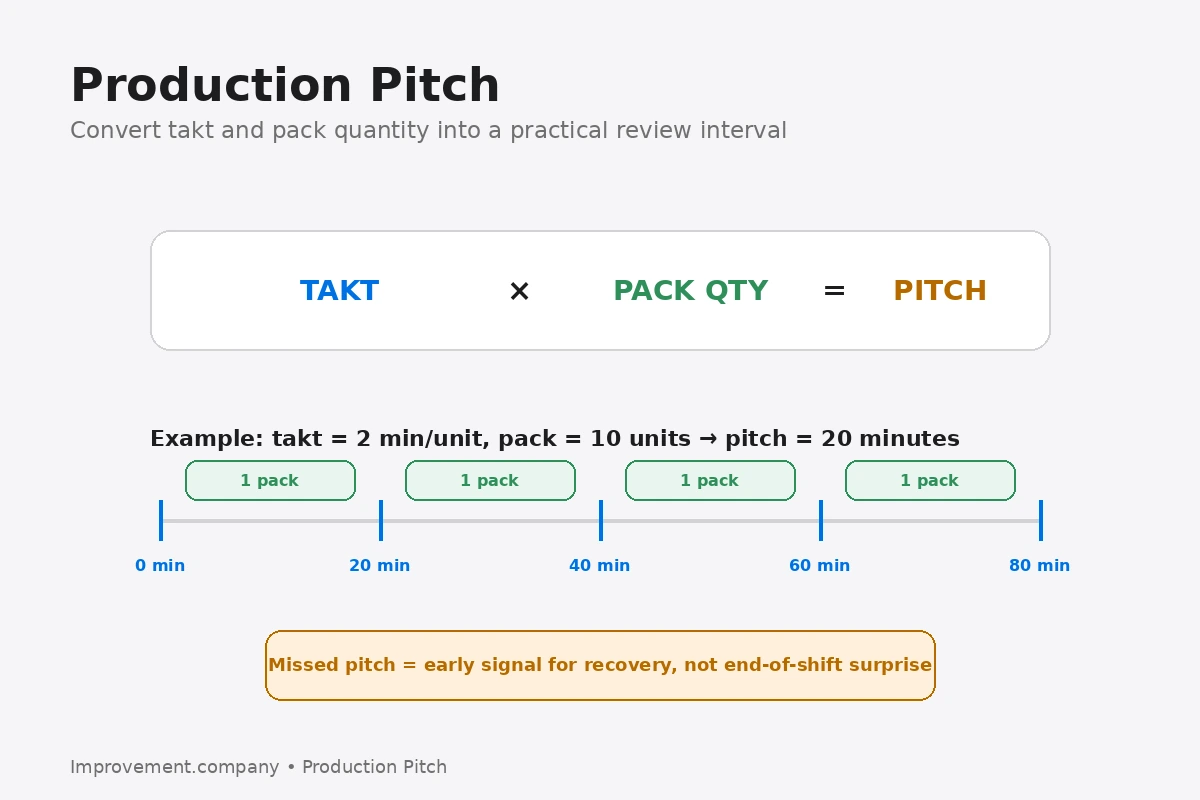
Production Pitch diagram showing pitch as takt time multiplied by pack quantity and used as a practical visual review interval.
Manufacturing Systems

Production Pitch: Convert Takt into a Practical Management Interval

Learn how Production Pitch converts takt time and pack quantity into a practical interval for planning, visual control, and short-cycle production review.

Production PitchManufacturingTakt TimeDaily Management
Read guide →
Manufacturing Systems

Production Preparation Process (3P): Design Flow Before Launch

Learn how the Production Preparation Process, or 3P, explores alternative process and layout concepts before major equipment or production decisions are locked in.

3PProduction Preparation ProcessManufacturingProcess Design
Read guide →
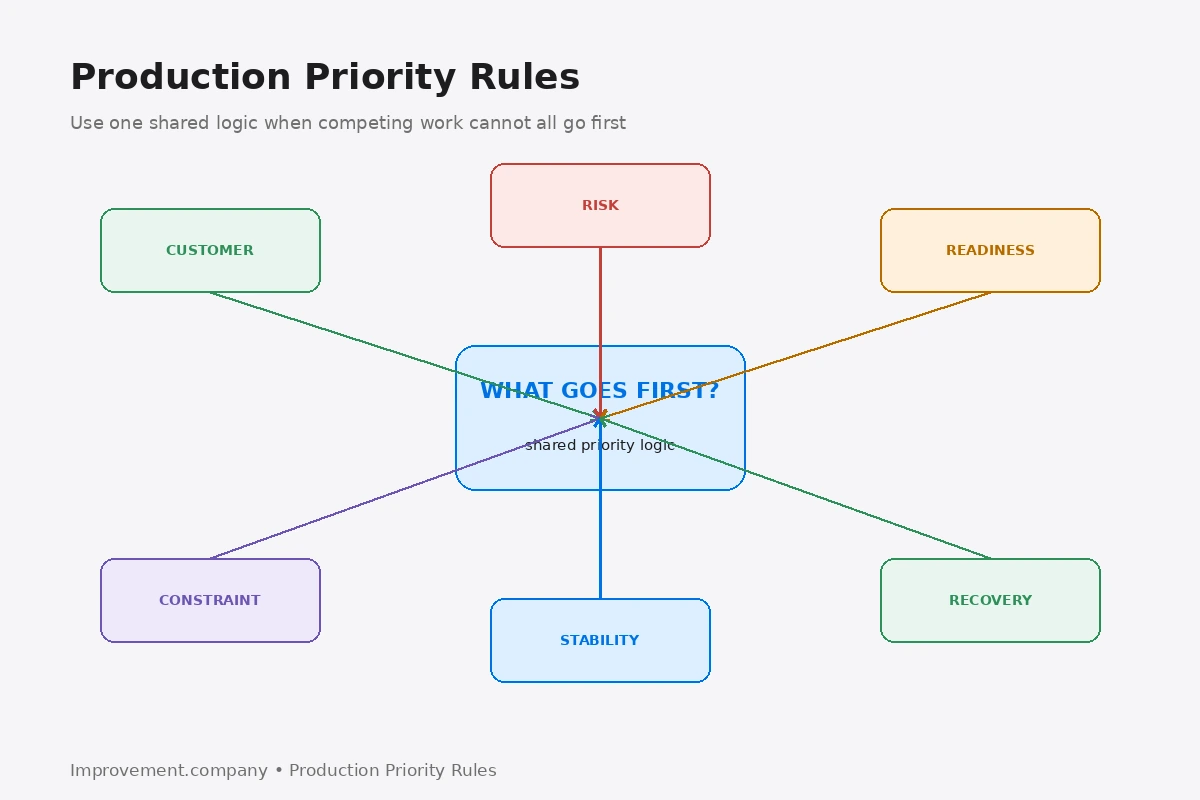
Production Priority Rules diagram showing customer commitment, risk, readiness, constraint impact, schedule stability, and recovery needs feeding a shared decision about what goes first.
Manufacturing Systems

Production Priority Rules: Decide Which Work Goes First

Learn how Production Priority Rules rank competing work using customer commitment, risk, material readiness, constraint impact, schedule stability, and recovery needs.

Production Priority RulesManufacturing SystemsSchedulingPriority
Read guide →
Manufacturing Systems

Production Readiness Exception Review: Resolve Readiness Gaps

Learn how a Production Readiness Exception Review focuses on missing material, tooling, staffing, approvals, technical information, and equipment conditions before release.

Production Readiness Exception ReviewManufacturing SystemsReadinessProduction Control
Read guide →
Manufacturing Systems

Production Readiness Review: Verify the System Before Launch

Learn how a Production Readiness Review checks people, equipment, materials, quality controls, documentation, capacity, and support before release.

Production Readiness ReviewManufacturingLaunchCapacity
Read guide →
Manufacturing Systems

Production Recovery Priority Logic: Restore Flow After Disruption

Learn how Production Recovery Priority Logic uses customer impact, readiness, constraint protection, material, sequence, and recovery effort to decide what should run first.

Production Recovery Priority LogicManufacturing SystemsRecoveryPriority
Read guide →
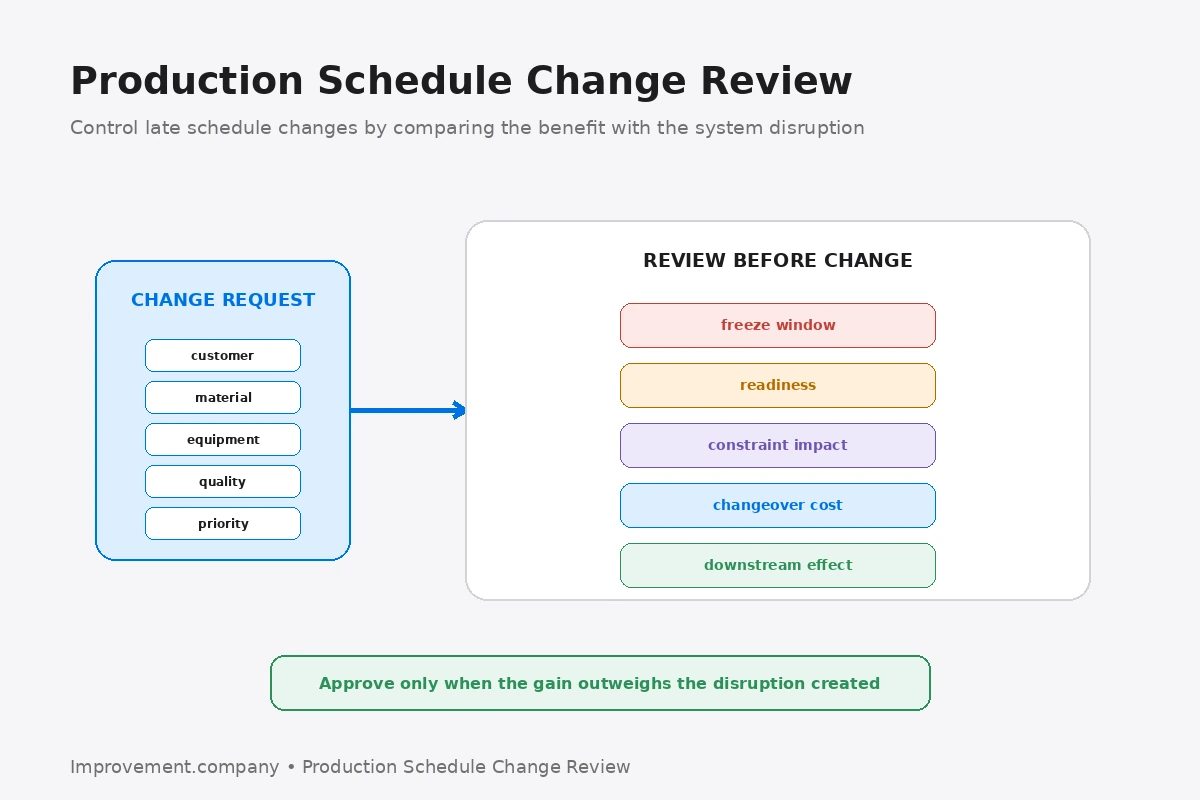
Production Schedule Change Review diagram showing a late change request filtered through freeze-window status, readiness, constraint impact, changeover cost, and downstream effects before approval.
Manufacturing Systems

Production Schedule Change Review: Control Late Changes

Learn how a Production Schedule Change Review evaluates customer need, readiness, constraint impact, changeover cost, downstream effects, and authority before a schedule change.

Production Schedule Change ReviewManufacturing SystemsSchedulingStability
Read guide →
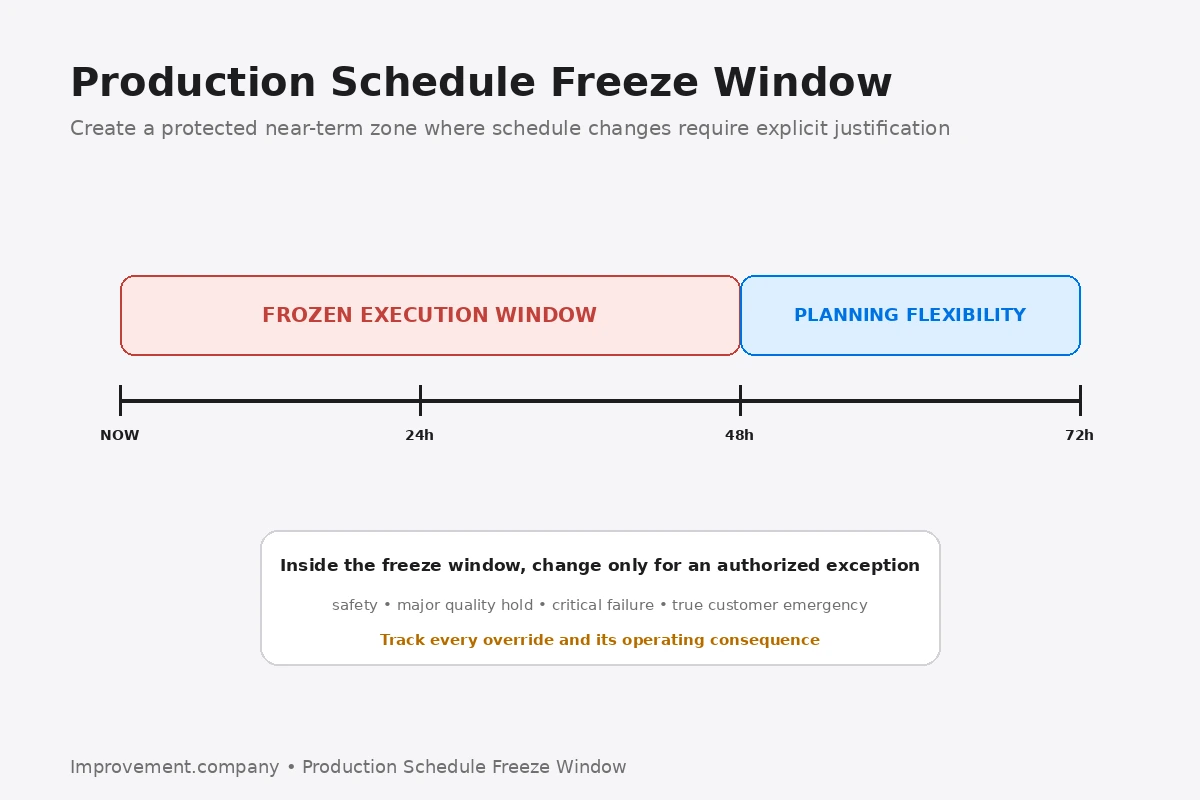
Production Schedule Freeze Window diagram showing a protected near-term execution zone followed by a more flexible planning horizon.
Manufacturing Systems

Production Schedule Freeze Window: Protect Near-Term Execution

Learn how a Production Schedule Freeze Window limits near-term schedule changes so materials, staffing, setups, and production sequence can remain stable enough to execute.

Production Schedule Freeze WindowManufacturing SystemsSchedulingStability
Read guide →
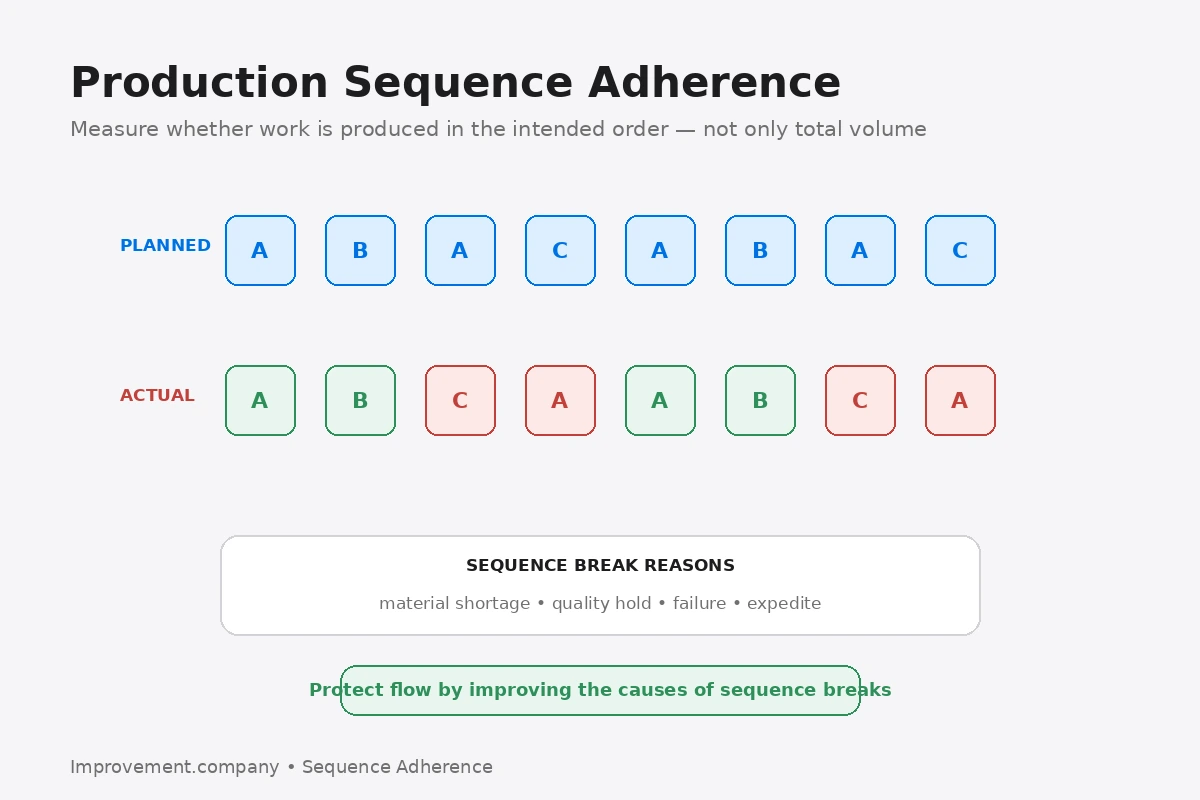
Production Sequence Adherence diagram comparing planned and actual product order and highlighting sequence breaks that require reason analysis.
Manufacturing Systems

Production Sequence Adherence: Protect the Planned Order of Work

Learn how Production Sequence Adherence measures whether products are built in the intended order and why sequence discipline matters for flow, materials, labor, and delivery.

Production Sequence AdherenceManufacturing SystemsSchedulingHeijunka
Read guide →
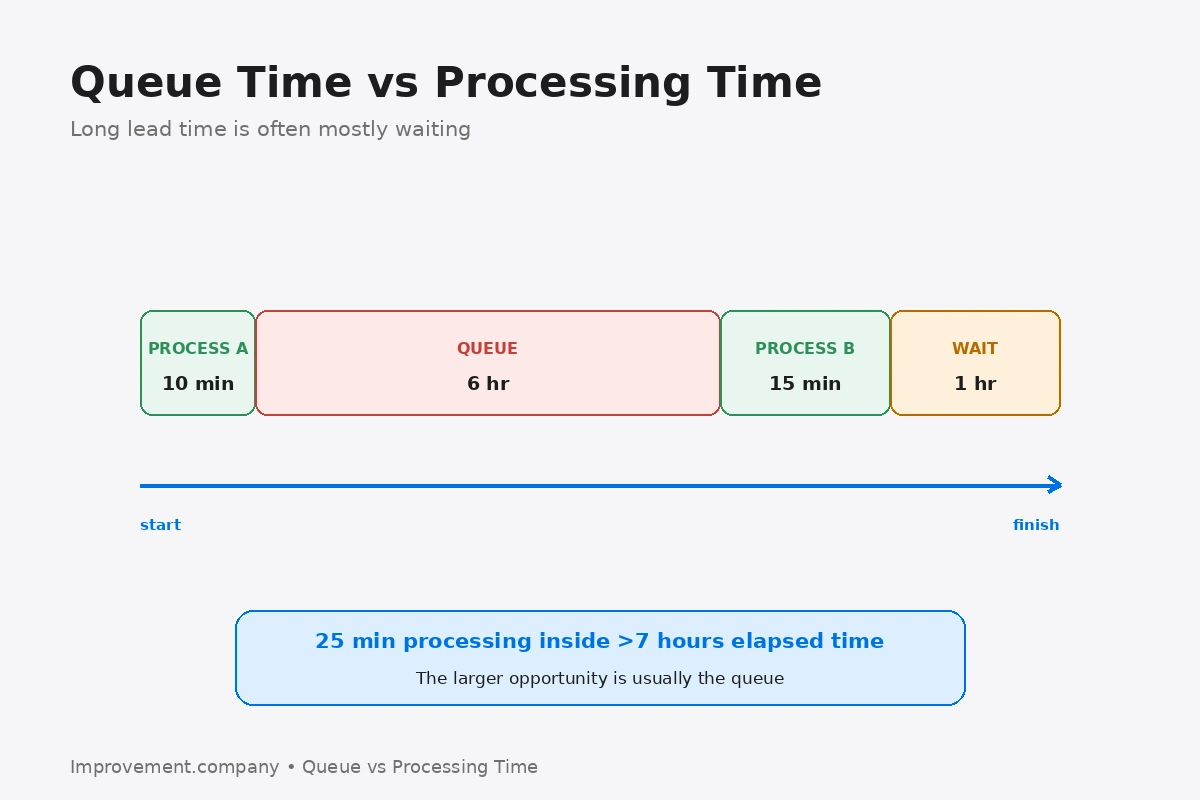
Queue Time versus Processing Time diagram showing a short amount of active processing embedded within much longer waiting periods across total lead time.
Manufacturing Systems

Queue Time vs Processing Time: Find Where Lead Time Really Goes

Learn how Queue Time differs from Processing Time and why reducing waiting between steps often creates more lead-time improvement than making already-fast tasks slightly faster.

Queue TimeProcessing TimeManufacturing SystemsLead Time
Read guide →
Manufacturing Systems

Run at Rate: Verify Production Capacity Under Real Conditions

Learn how a Run at Rate verifies whether a production process can sustain required output, quality, staffing, material flow, and operating conditions before full release.

Run at RateManufacturingCapacityProduction Validation
Read guide →
Manufacturing Systems

Schedule Attainment: Measure Whether Production Follows the Plan

Learn how Schedule Attainment compares planned and completed production by item and time window to reveal whether the operating system is executing the schedule.

Schedule AttainmentManufacturingProduction ControlDaily Management
Read guide →
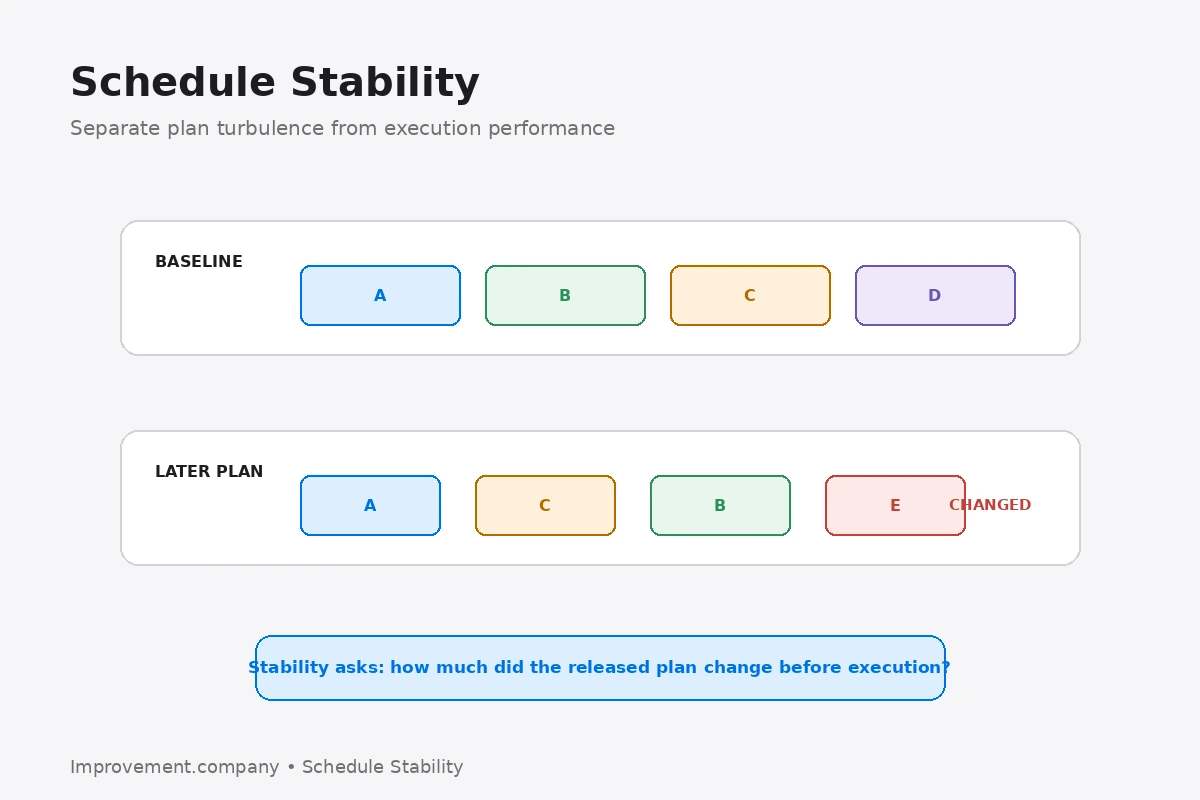
Schedule Stability diagram comparing a released baseline production plan with a later changed plan to make planning turbulence visible.
Manufacturing Systems

Schedule Stability: Measure How Much the Plan Keeps Changing

Learn how Schedule Stability measures near-term plan changes and helps teams separate unavoidable disruption from planning behavior that creates execution instability.

Schedule StabilityManufacturing SystemsSchedulingProduction Control
Read guide →
Manufacturing Systems

Standard Time: Convert Measured Work into a Planning Standard

Learn how Standard Time converts measured work into an approved planning value by defining method, normal conditions, and appropriate allowances.

Standard TimeWork MeasurementManufacturingCapacity
Read guide →
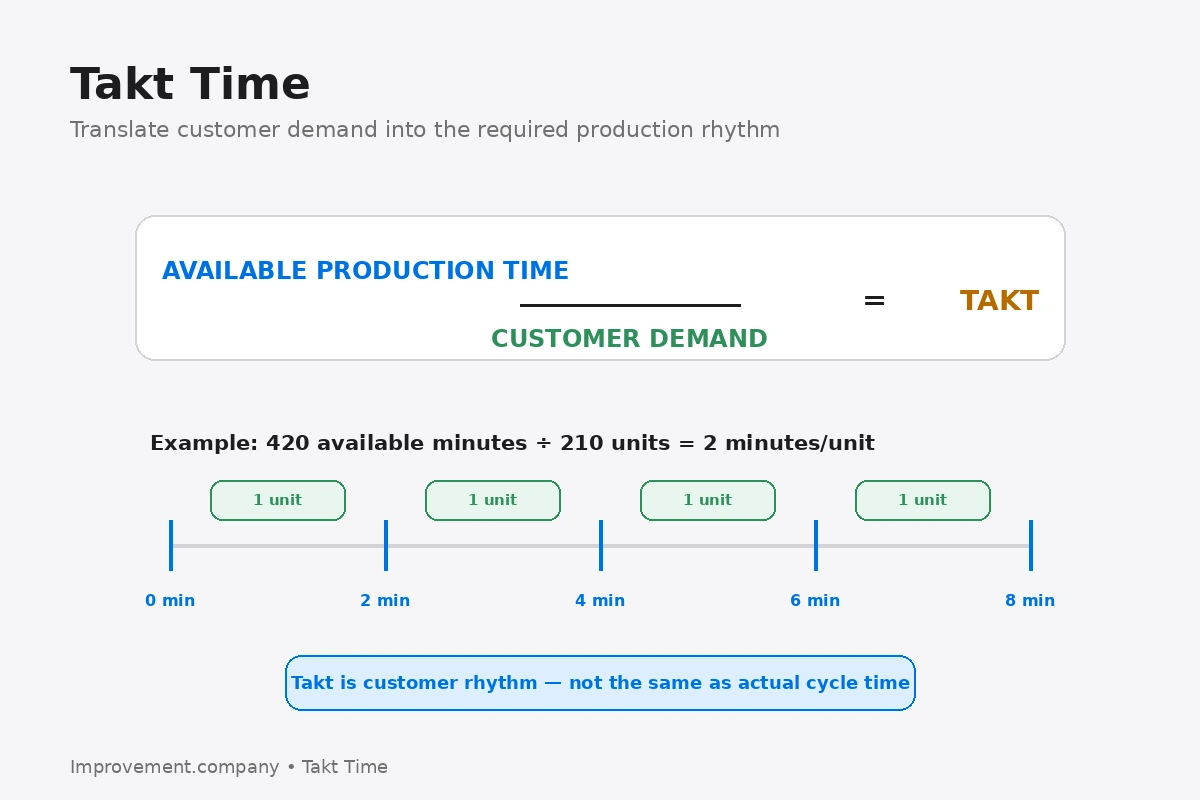
Takt Time diagram showing available production time divided by customer demand and an example production rhythm of one unit every two minutes.
Manufacturing Systems

Takt Time: Match Production Pace to Customer Demand

Takt time converts customer demand into the production pace a process must achieve, helping teams design flow, staffing, capacity, and daily output.

Takt TimeDemandFlow
Read guide →
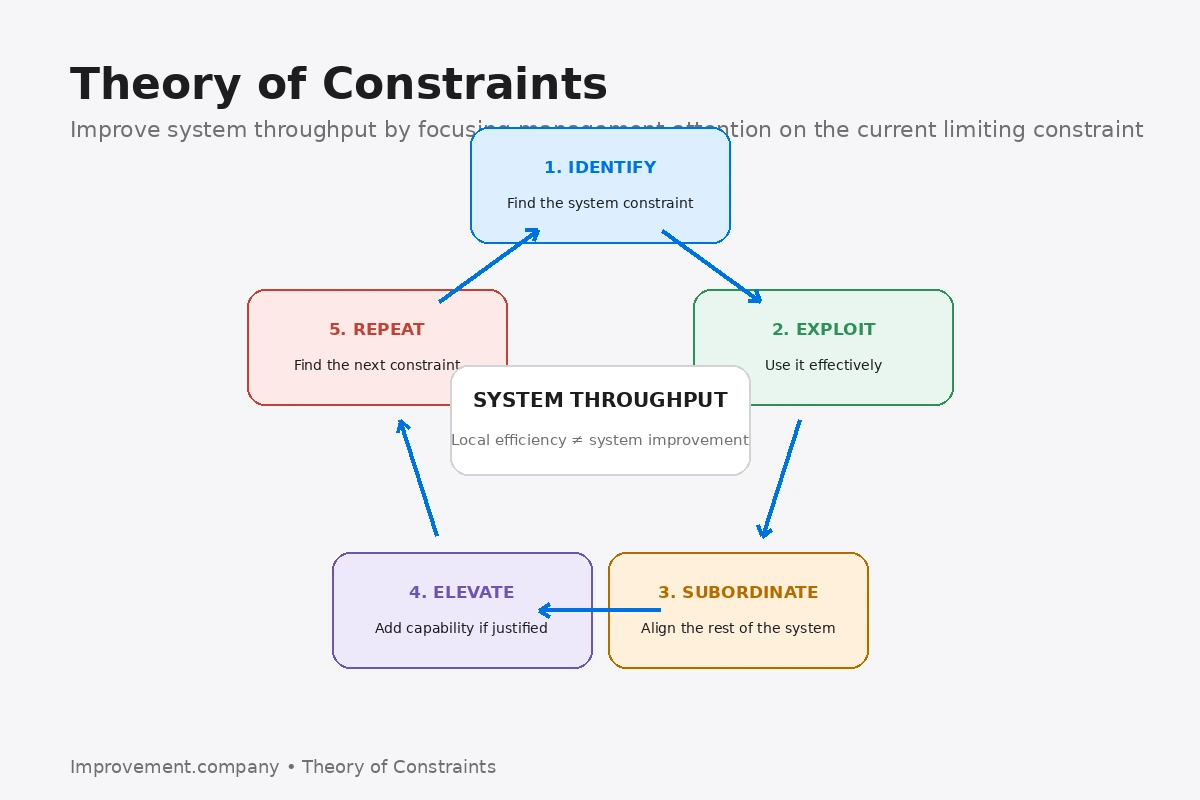
Theory of Constraints diagram showing the five focusing steps: identify, exploit, subordinate, elevate, and repeat around system throughput.
Manufacturing Systems

Theory of Constraints: Improve the System at Its Limiting Point

Learn how the Theory of Constraints identifies the system constraint, protects it, improves it, and prevents local optimization.

Theory of ConstraintsBottleneckThroughputFlow
Read guide →
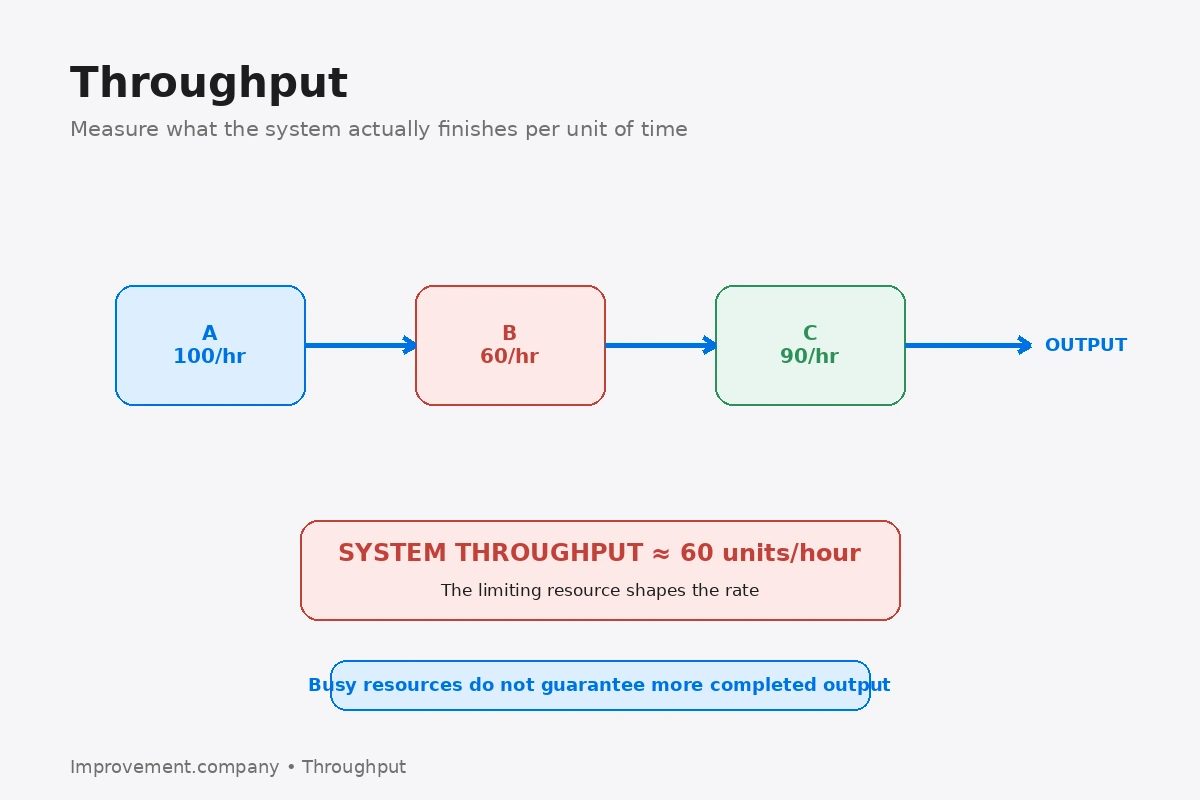
Throughput diagram showing three process steps with different rates and the slowest step limiting total completed output.
Manufacturing Systems

Throughput: Measure the Rate of Completed Output

Learn how Throughput measures completed output per unit of time and why system throughput should be managed differently from local utilization or activity.

ThroughputManufacturingTheory of ConstraintsFlow
Read guide →
Manufacturing Systems

Work Measurement: Quantify the Time Required for Work

Learn how Work Measurement estimates the time required for a defined method so teams can plan capacity, balance work, and evaluate improvement.

Work MeasurementManufacturingTime StudyStandard Work
Read guide →
Manufacturing Systems

Work Sampling: Estimate How Time Is Really Being Used

Learn how Work Sampling uses many randomized observations to estimate how frequently people or equipment spend time in defined activity categories.

Work SamplingIndustrial EngineeringProductivityCapacity
Read guide →
Manufacturing Systems

Workload Leveling: Balance Demand Across Time, People, and Resources

Learn how Workload Leveling reduces peaks, waiting, overload, and instability by distributing work more evenly across available time, people, or process capacity.

Workload LevelingManufacturing SystemsHeijunkaCapacity
Read guide →
Manufacturing Systems

Yamazumi Chart: Balance Work Against Takt Time

Learn how a Yamazumi chart stacks work elements by operator or station to reveal imbalance, overload, and improvement opportunities.

YamazumiLine BalancingTakt TimeStandard Work
Read guide →