Problem Solving
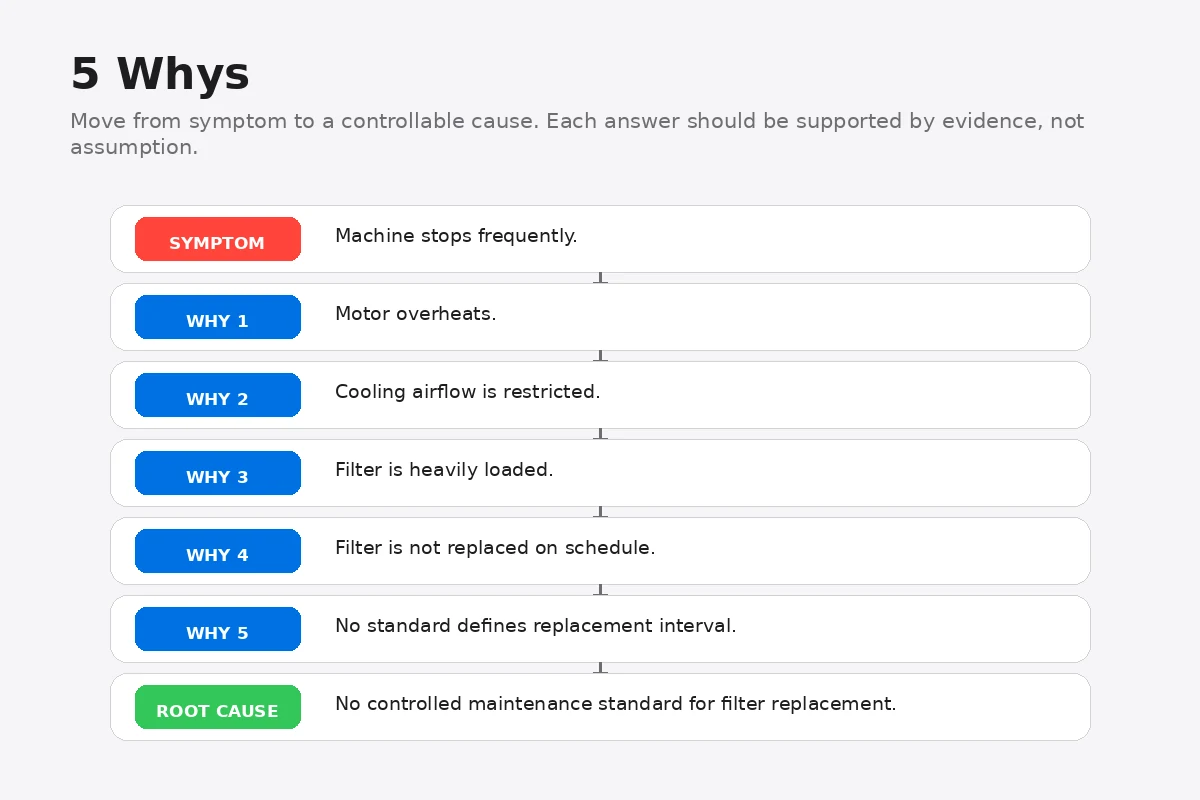
5 Whys
5 Whys is a simple root cause technique that uses repeated why questions to move from a visible problem toward the process conditions that allowed it to occur.
Explore practical methods by the problem they help solve, then connect them to related tools, systems and real-world application.
Build a strong foundation before choosing individual tools.
5 Whys is a simple root cause technique that uses repeated why questions to move from a visible problem toward the process conditions that allowed it to occur.
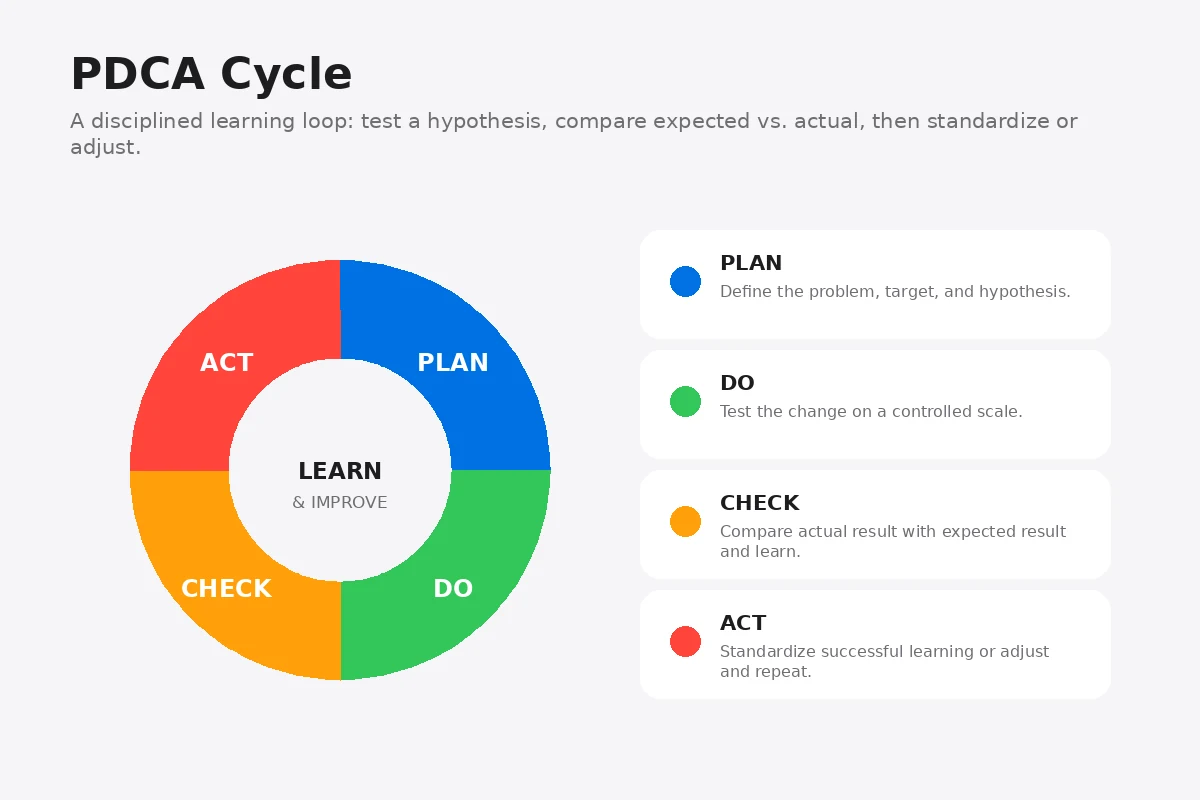
PDCA is a structured learning cycle for testing changes, comparing results with expectations and improving processes through repeated experimentation.
A practical explanation of Continuous Improvement: what it means, how it works, which methods support it, and how organizations turn improvement into everyday work.
Lean is a management system for creating more customer value with less waste by improving flow, exposing problems and developing people.
Choose the area that best matches the problem, system or capability you want to improve.
Kaizen, PDCA, improvement culture, organizational learning and the management systems that make improvement part of everyday work.
Create value with less waste through flow, pull, takt, Standard Work, 5S, visual systems, SMED, VSM, Kanban and mistake-proofing.
Define problems clearly, investigate causes and test countermeasures using 5 Whys, fishbone, A3, 8D and practical root cause methods.
Understand variation and strengthen process quality with DMAIC, SPC, capability, MSA, Pareto analysis, FMEA and prevention-based thinking.
Improve equipment performance through TPM, OEE, autonomous maintenance, planned maintenance, MTBF, MTTR and reliability practices.
Turn problems into visible daily action through Gemba, tier meetings, KPI boards, Andon, hour-by-hour management and escalation routines.
Build capability through coaching, leader standard work, respect for people, skill development, empowerment and strong improvement habits.
Design better operating systems through line balance, capacity, takt, material flow, scheduling, industrial engineering and production design.
Connect strategy, systems and culture through Hoshin Kanri, performance management, transformation and organization-wide improvement.