Lean
5S Workplace Organization
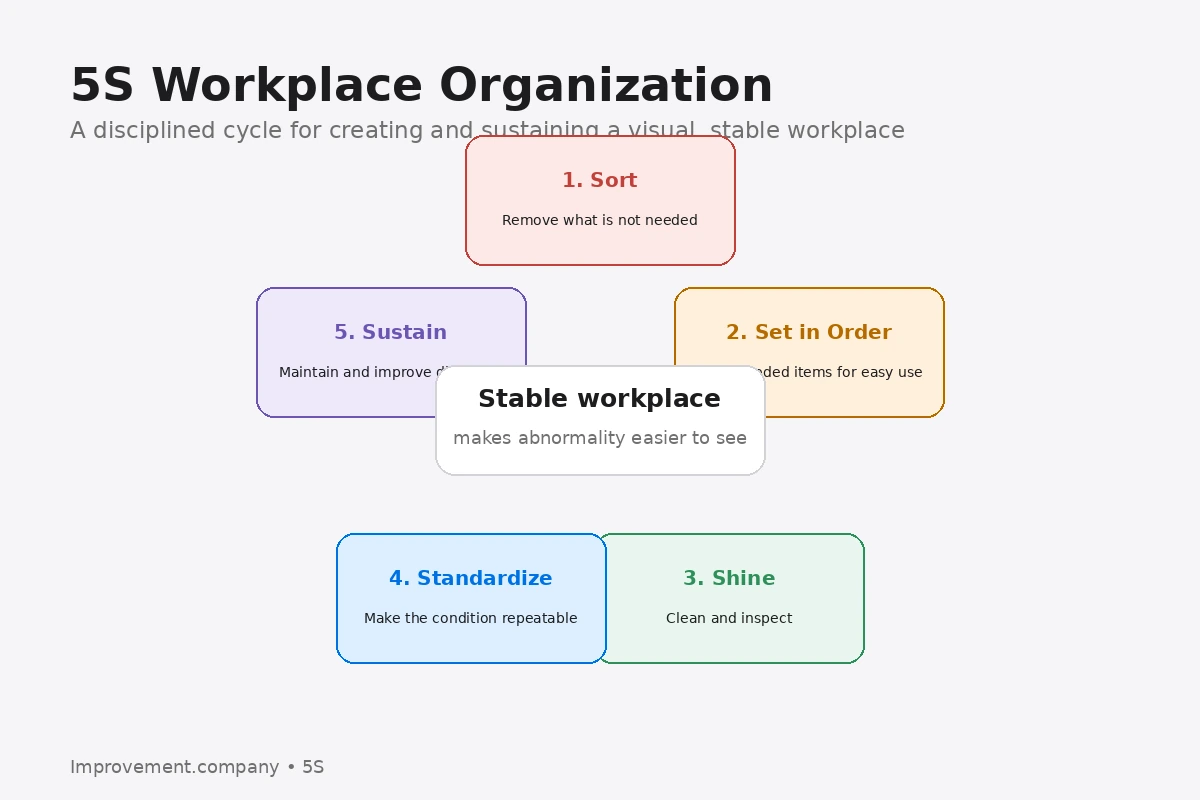
5S creates an organized, visible and repeatable workplace that makes abnormalities easier to detect and work easier to perform.
5SVisual ManagementStandard Work
Create value with less waste through flow, pull, takt, Standard Work, 5S, visual systems, SMED, VSM, Kanban and mistake-proofing.
Start with the fundamentals, then follow the related methods as the knowledge base grows.
5S creates an organized, visible and repeatable workplace that makes abnormalities easier to detect and work easier to perform.
Learn the eight Lean wastes and how to recognize activities that consume time, motion, materials, capacity, or effort without creating customer value.
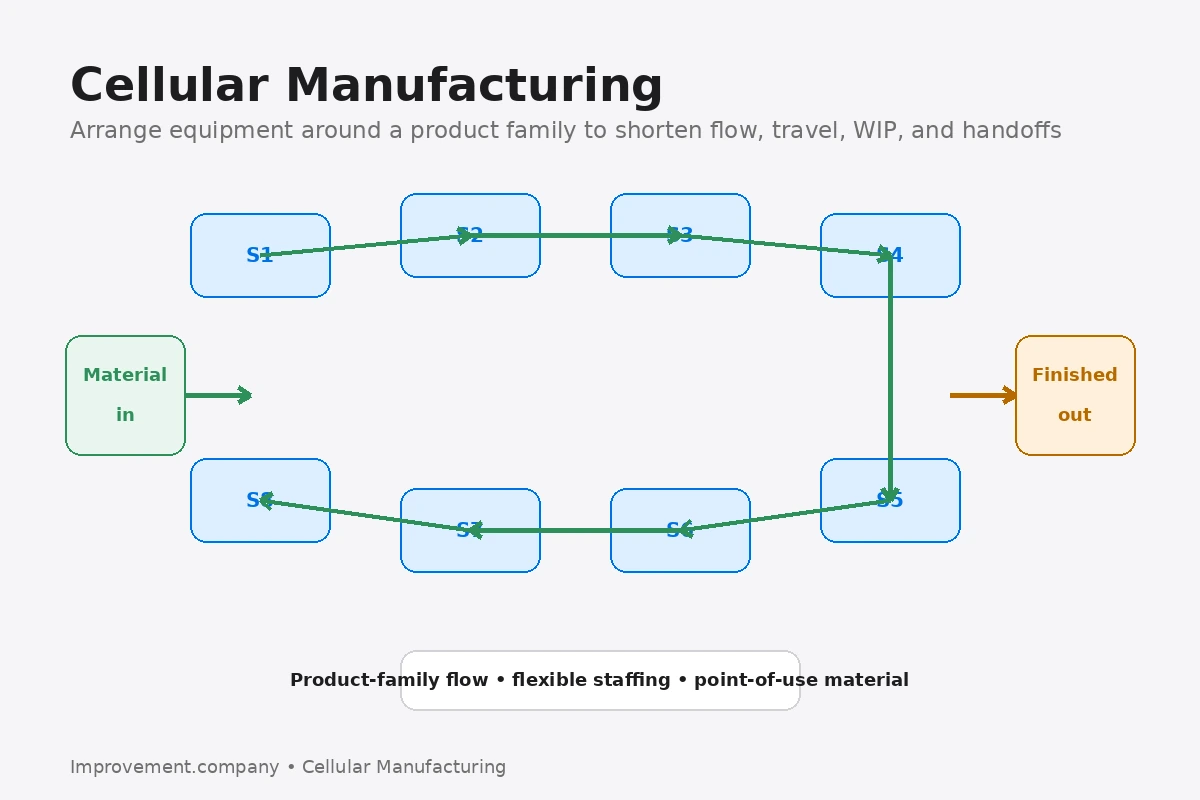
Learn how Cellular Manufacturing arranges people and equipment around product families to reduce travel, WIP, handoffs, and lead time.
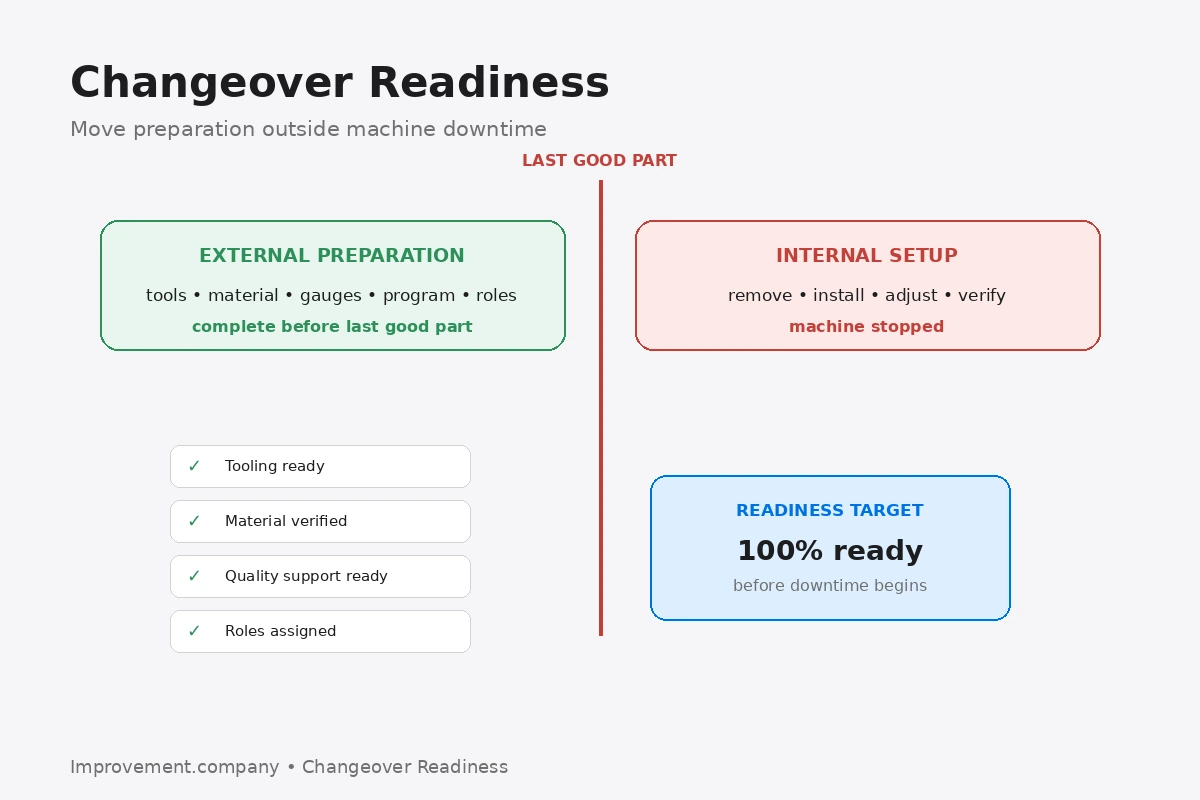
Learn how Changeover Readiness moves tools, materials, information, approvals, and setup preparation outside machine downtime so changeovers start ready and finish faster.
Learn how CONWIP controls total work in process across a production flow using circulating authorization cards rather than a separate Kanban loop at every process.
Learn how ECRS uses four practical questions to challenge process steps and improve flow, motion, handling, and work design.
Learn how a FIFO lane preserves processing sequence and limits work-in-process between operations that cannot be directly connected by continuous flow.
Learn how Flow Efficiency compares value-adding time with total lead time to expose waiting, queues, and delays inside a process.
Learn how Flow Interruption Analysis identifies where and why work stops, waits, backs up, or detours so teams can improve flow stability rather than only average cycle time.
Learn how Genchi Genbutsu builds better decisions by going to the actual place, observing the real process, and separating facts from assumptions.
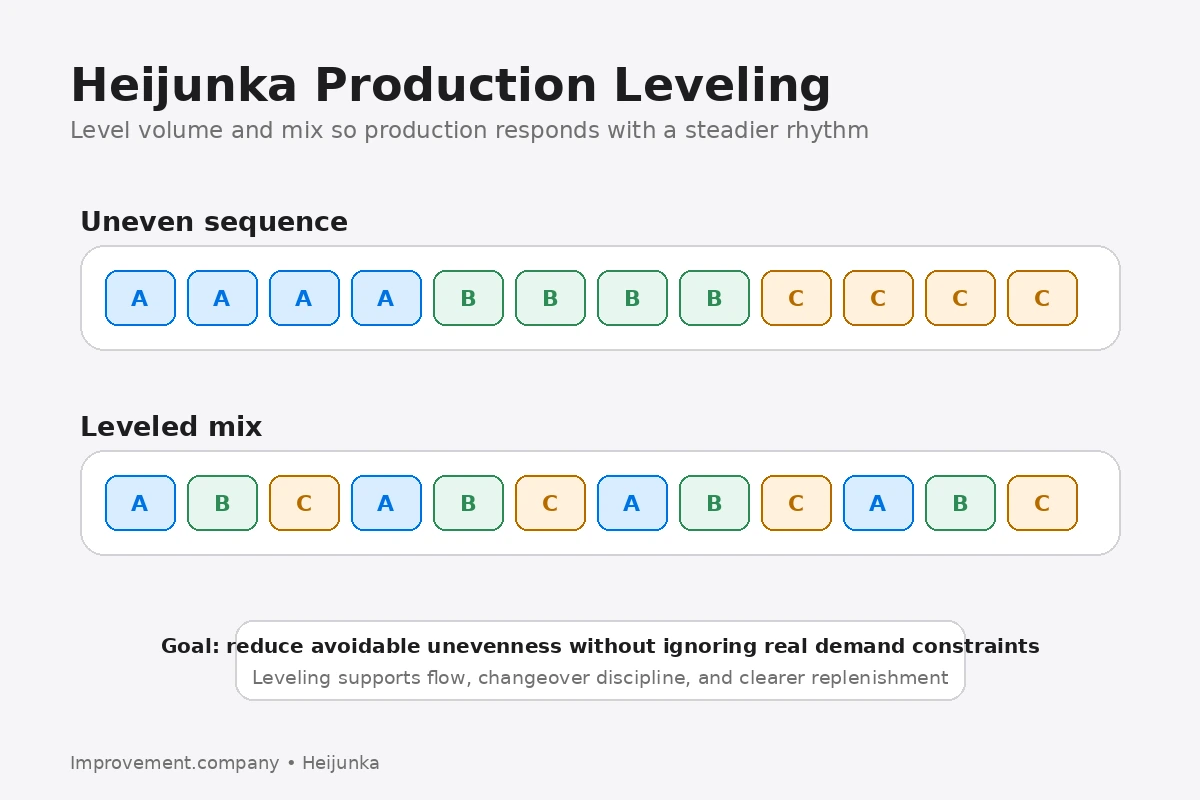
Learn how Heijunka levels production volume and mix to reduce unevenness, overburden, and instability while supporting a more predictable flow system.
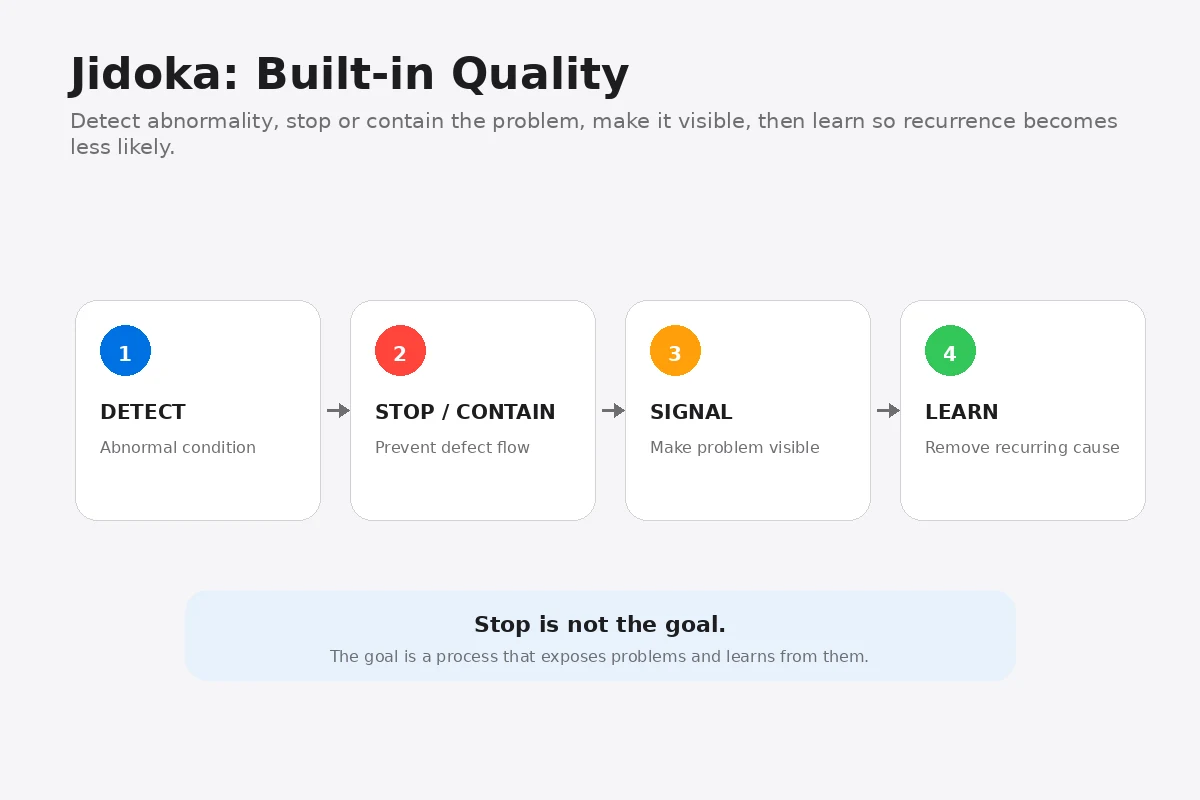
Learn how Jidoka detects abnormalities, stops defects from flowing forward, and turns problems into opportunities for permanent process improvement.
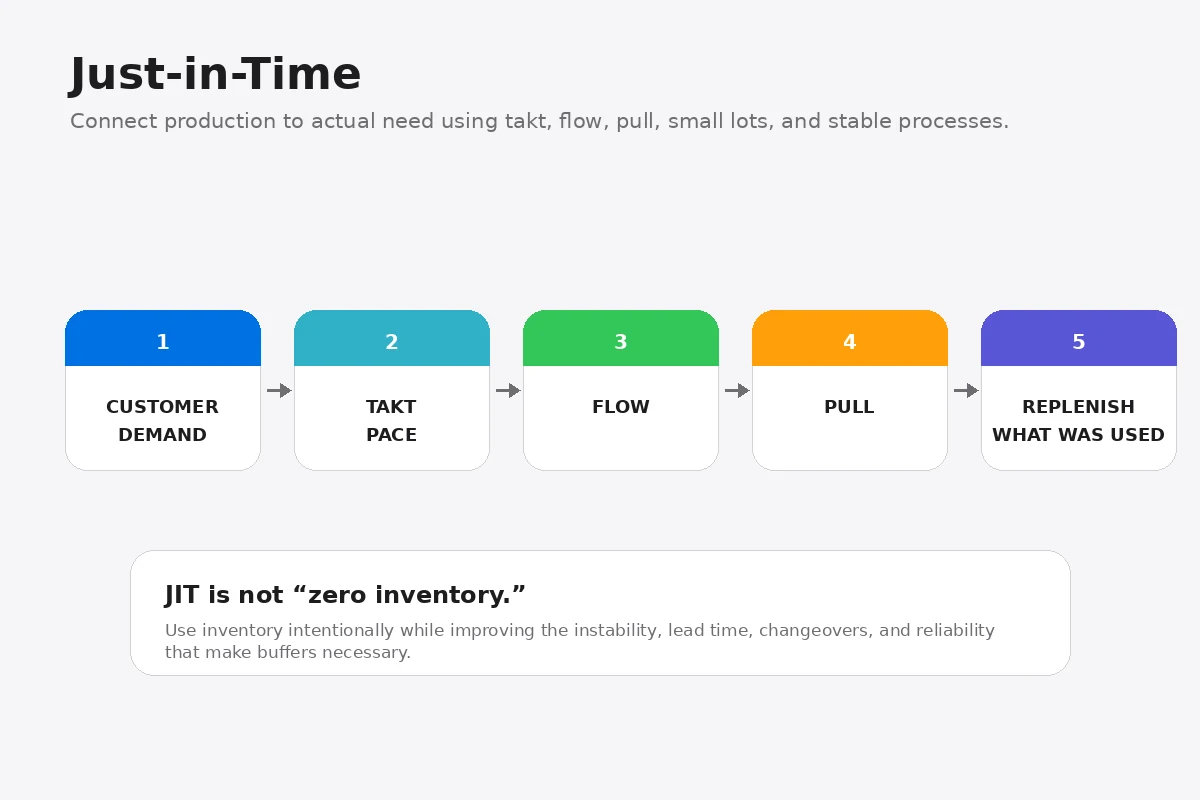
Understand the operating logic behind Just-in-Time, including flow, takt, pull, small lots, reliable processes, and the conditions required for JIT to work.
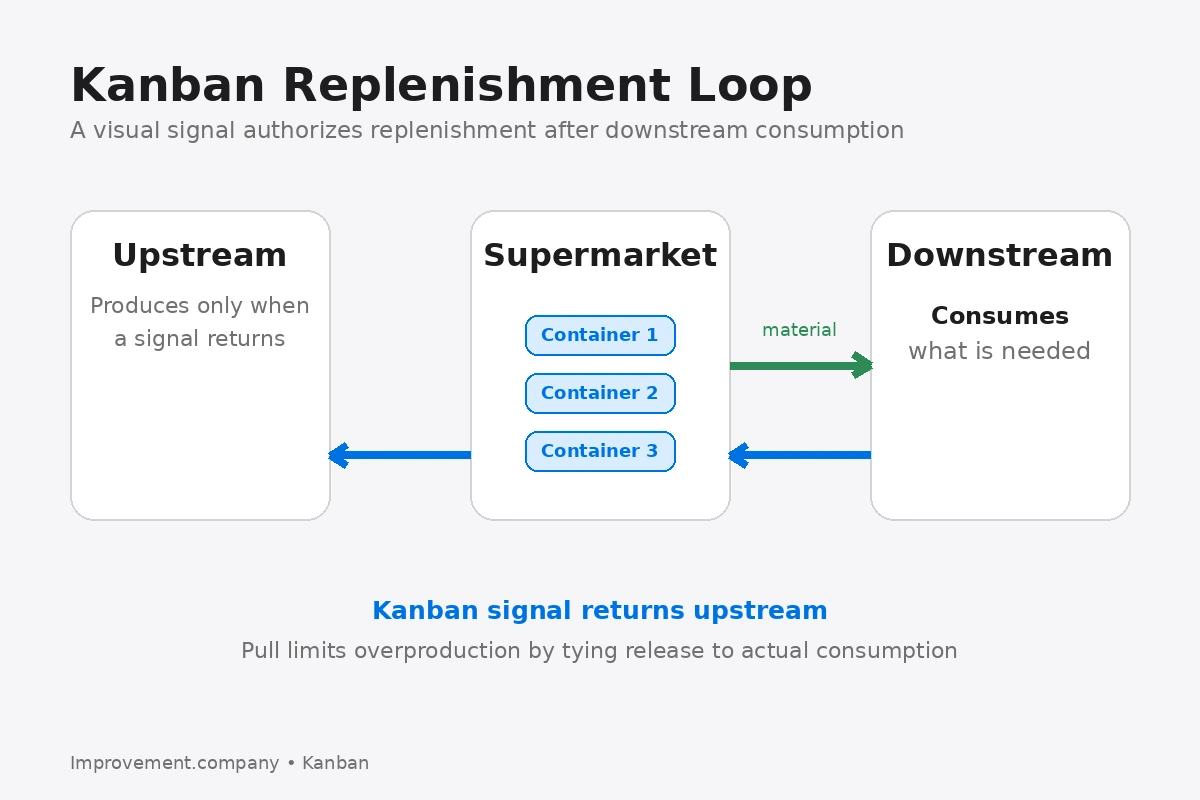
Learn how Kanban supports pull production, how cards or electronic signals control replenishment, and what conditions are needed for a stable system.
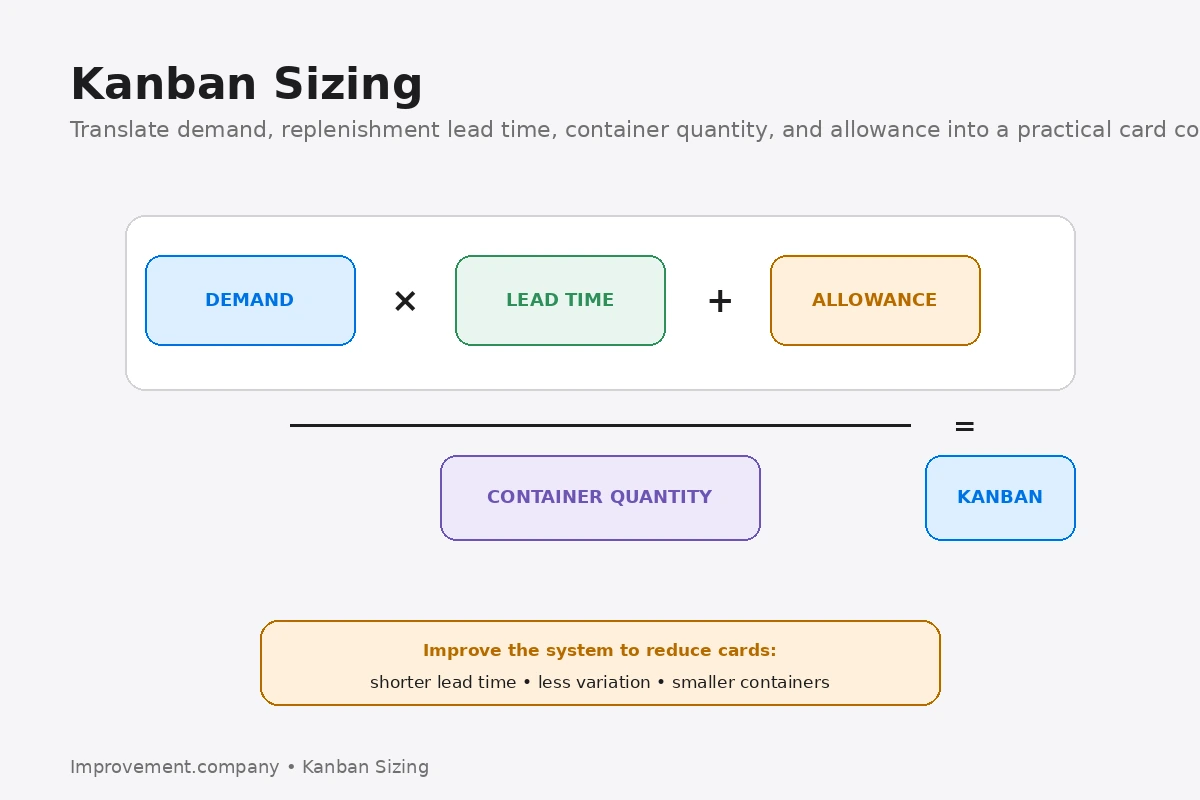
Learn how Kanban Sizing uses demand, replenishment lead time, container quantity, and controlled safety allowance to set a practical number of Kanban.
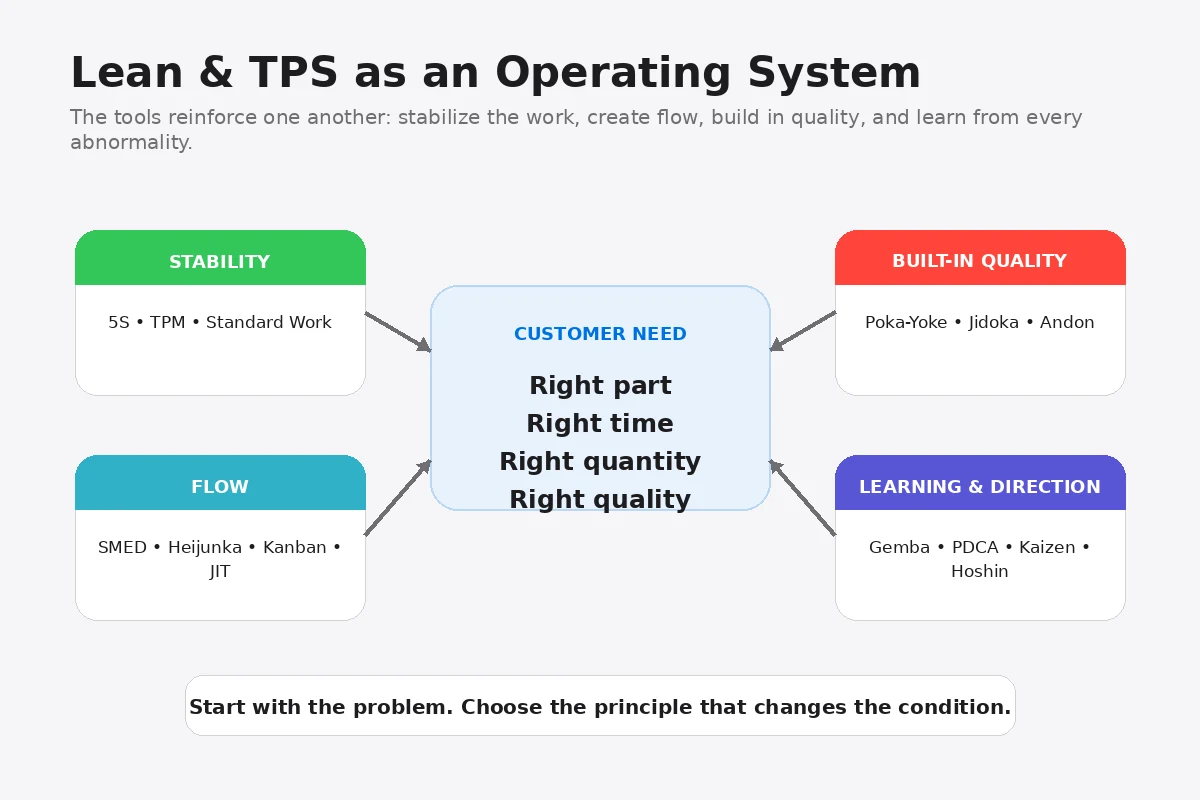
Explore 15 essential Lean and Toyota Production System tools and principles, and learn how they work together to improve flow, quality, reliability, and customer response.
Learn how a Mizusumashi or Water Spider supplies material, removes empties, handles signals, and supports operators through a standardized replenishment route.
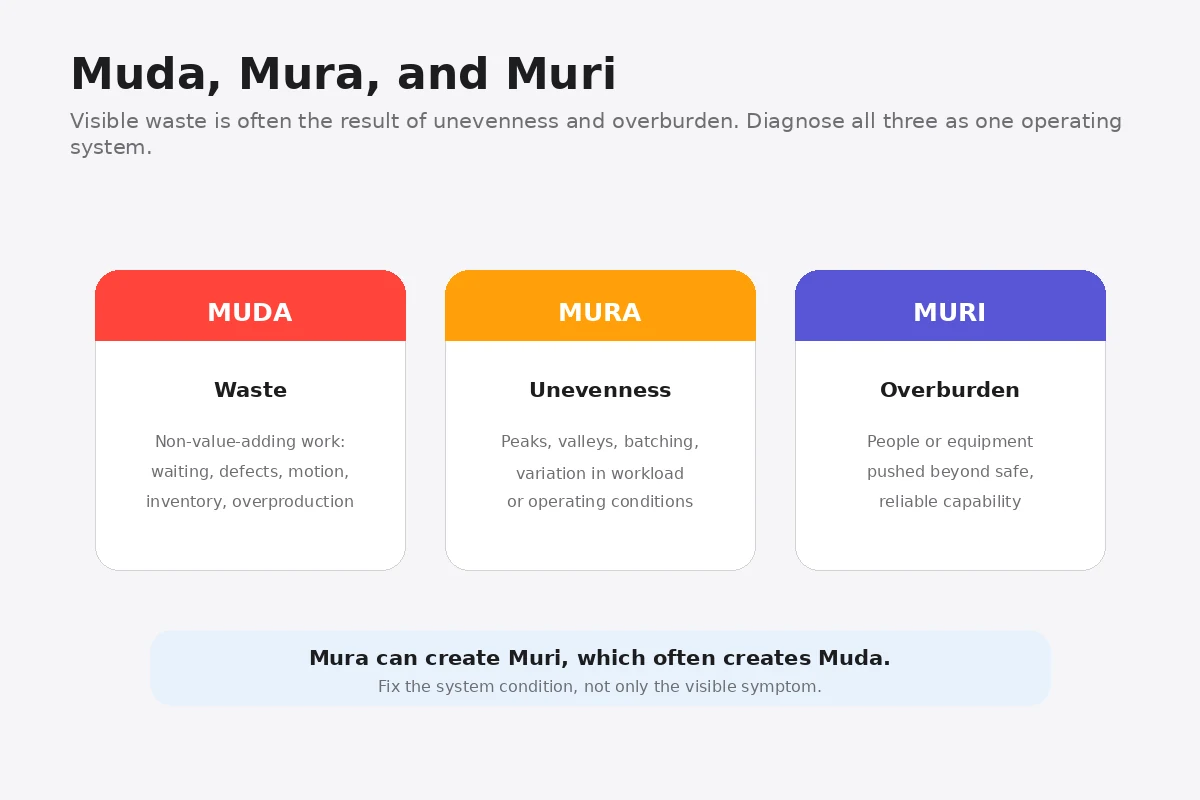
Understand the relationship between Muda, Mura, and Muri and why Lean improvement should address waste, unevenness, and overburden as one connected system.
Understand one-piece flow, why smaller transfer batches reduce delay and inventory, where continuous flow works well, and what conditions are needed.
Learn how the pacemaker process provides the scheduling point that sets production rhythm and connects downstream demand with upstream replenishment.
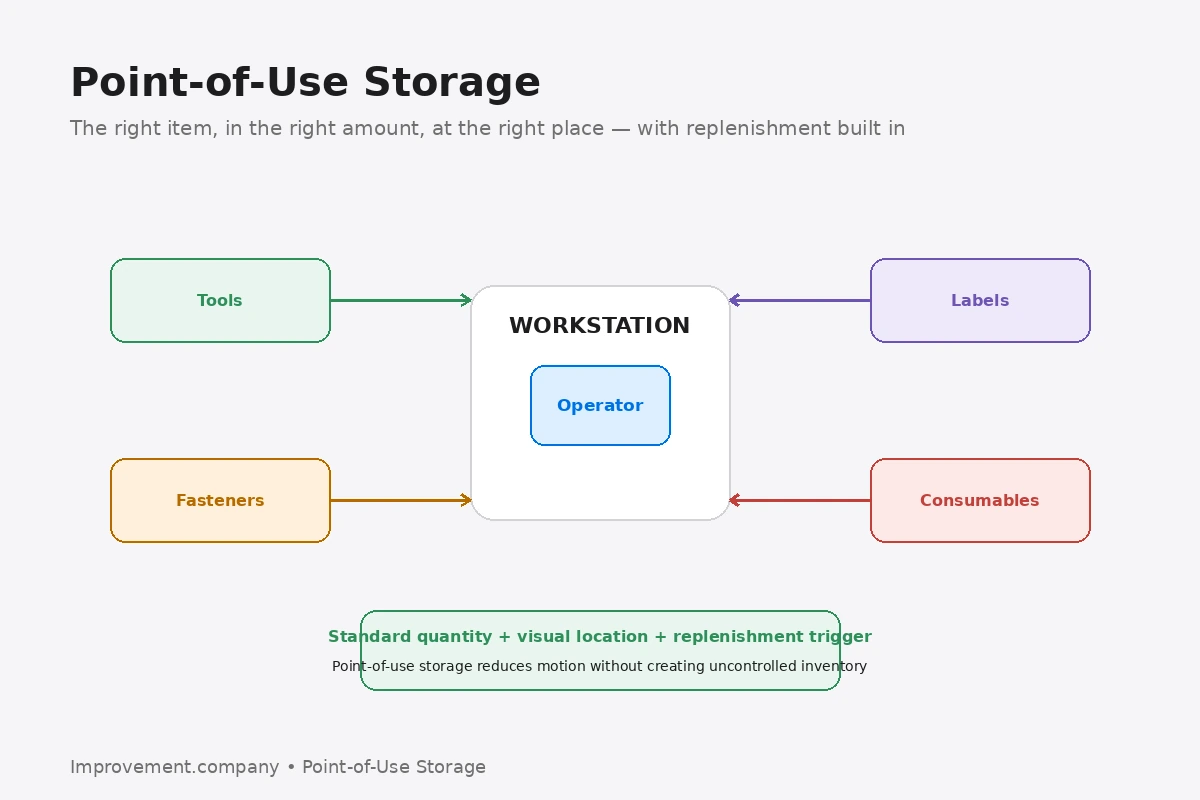
Learn how Point-of-Use Storage positions frequently used tools, materials, and information close to the work while controlling quantity, replenishment, and visual order.
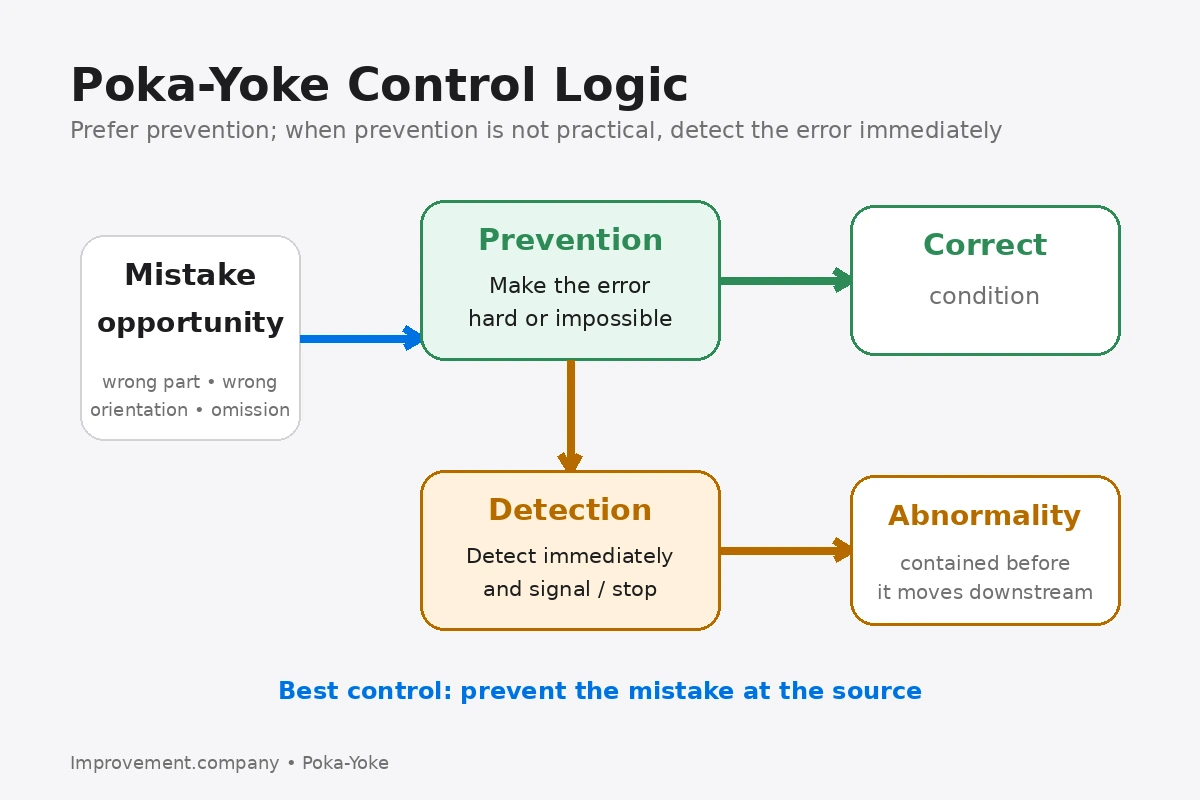
Learn how Poka-Yoke mistake-proofing prevents or detects errors at the source, when to use it, and how to avoid weak controls that rely on attention.
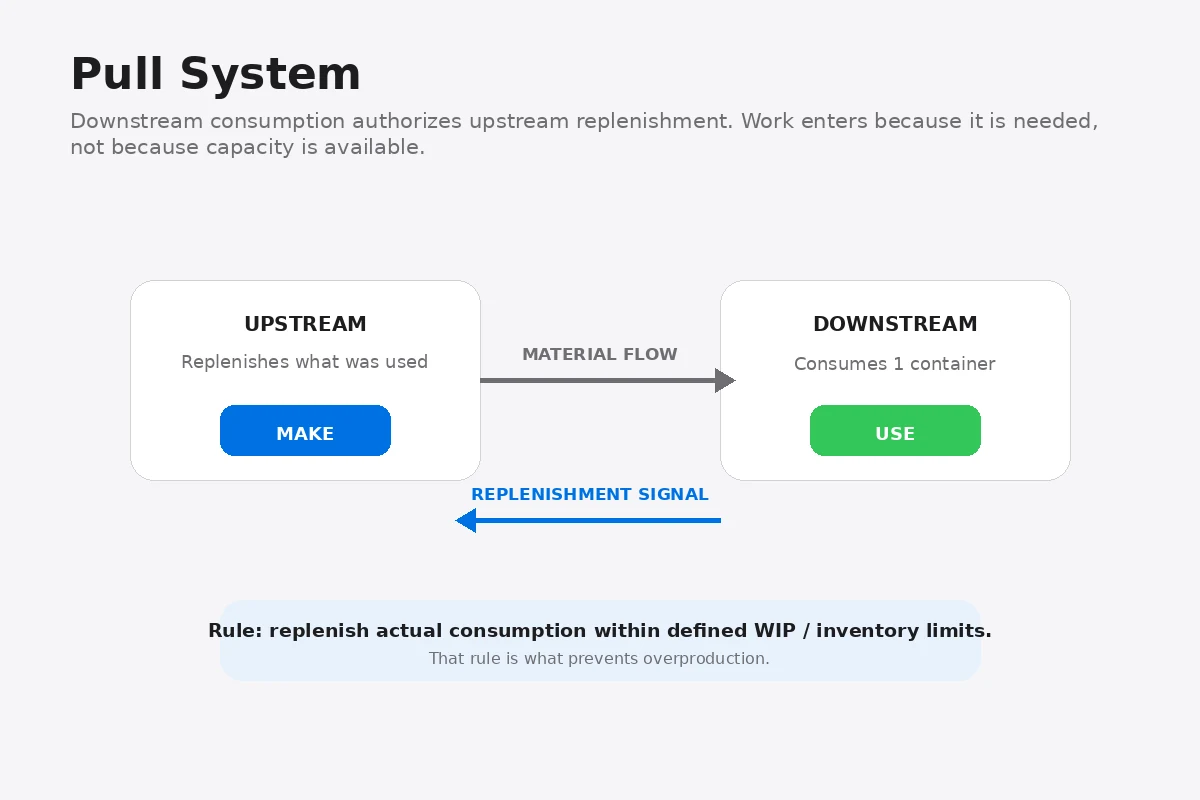
Learn how pull systems limit overproduction by connecting replenishment to actual downstream consumption instead of forecast-driven release.
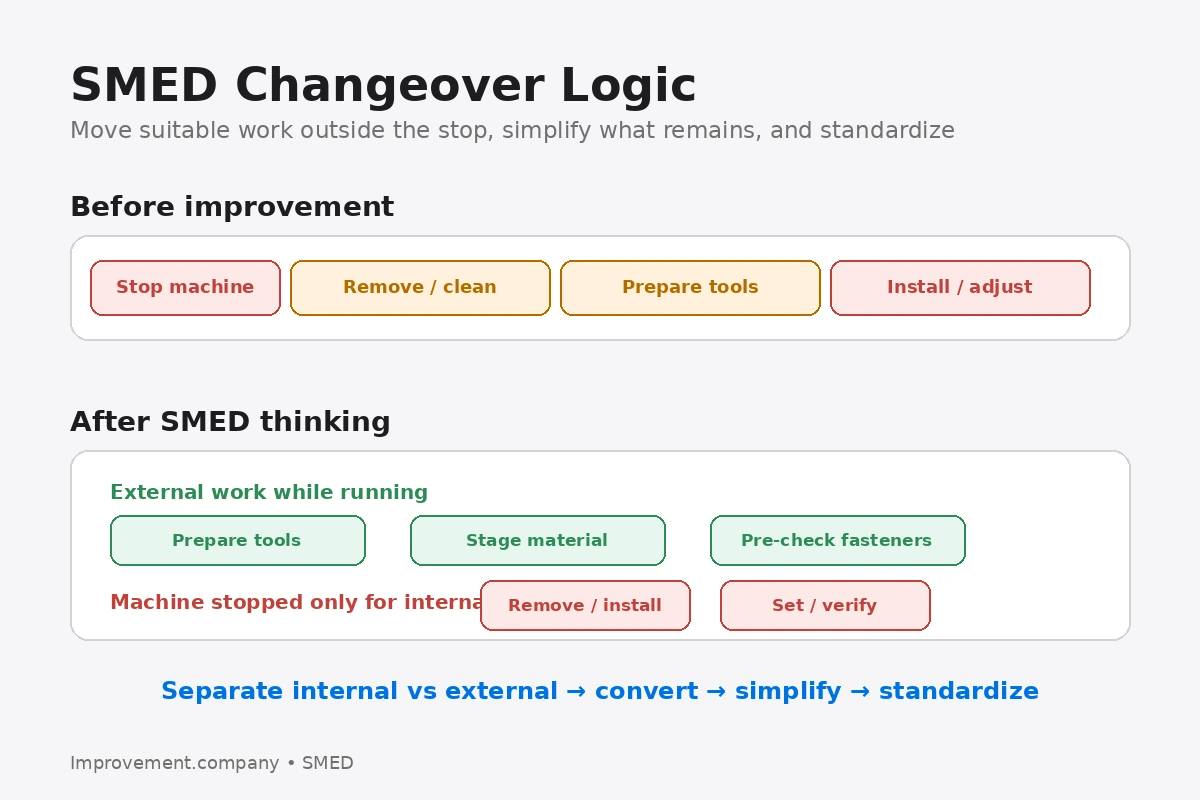
Understand SMED, the difference between internal and external setup work, how to reduce changeover time, and why faster setups improve flexibility.
Learn how a Spaghetti Diagram traces actual movement through a workplace to expose excess travel, poor layout, and wasted motion.
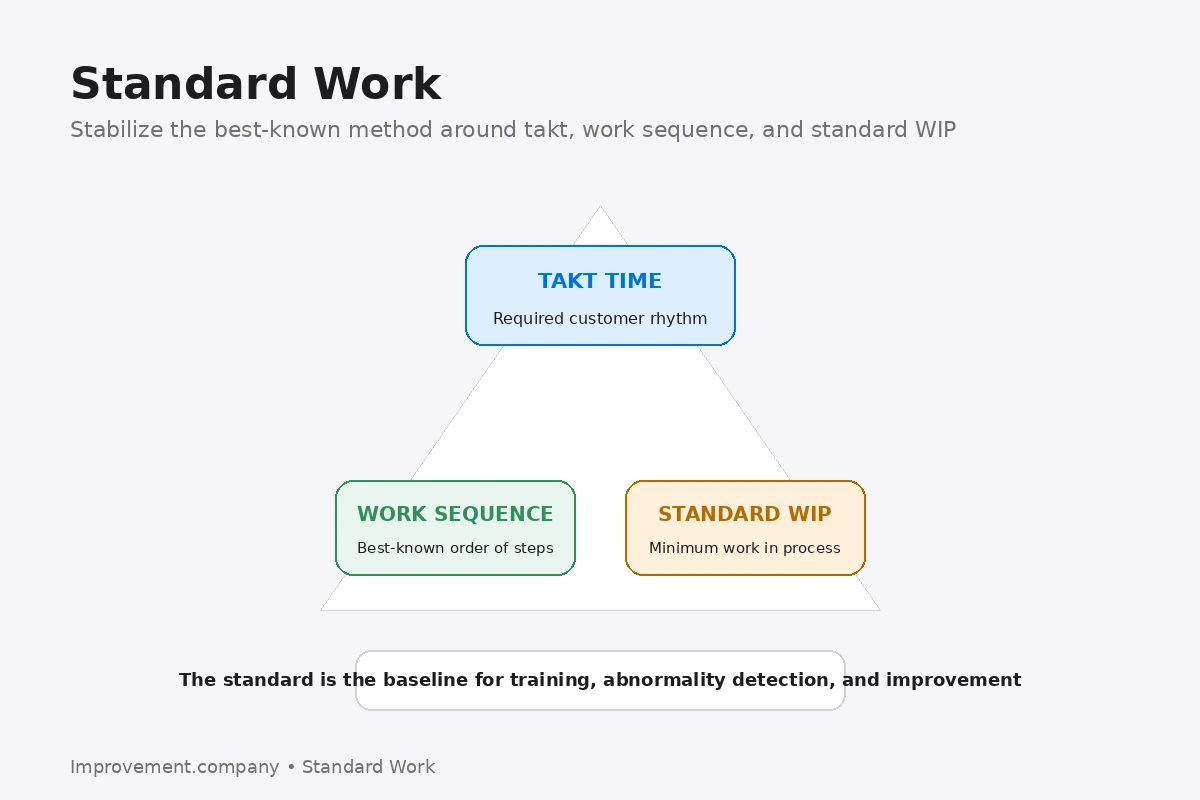
Standard Work defines the current best-known method for performing a process safely, consistently, and efficiently while creating a baseline for improvement.
Learn how Standard Work Abnormality Response defines detection, safe stop, containment, escalation, recovery, and restart when the normal work sequence cannot continue as designed.
Learn how Standard Work Change Control evaluates, approves, updates, communicates, and verifies changes to the defined work method while preventing informal drift.
Learn how the Standard Work Combination Table visualizes manual work, machine time, and walking to support balanced and repeatable work design.
Learn how a Standard Work Deviation Log records meaningful departures from the approved method so teams can distinguish one-time abnormalities from recurring barriers.
Learn how Standard Work Documentation turns the best-known method into clear, visual, controlled instructions that support repeatability, training, and improvement.
Learn how Standard Work Observation compares the defined method with actual work at the Gemba to identify barriers, drift, training needs, and improvement opportunities.
Learn how Standard Work Rebalancing redistributes task content when demand, staffing, layout, or process conditions change while preserving safety and quality.
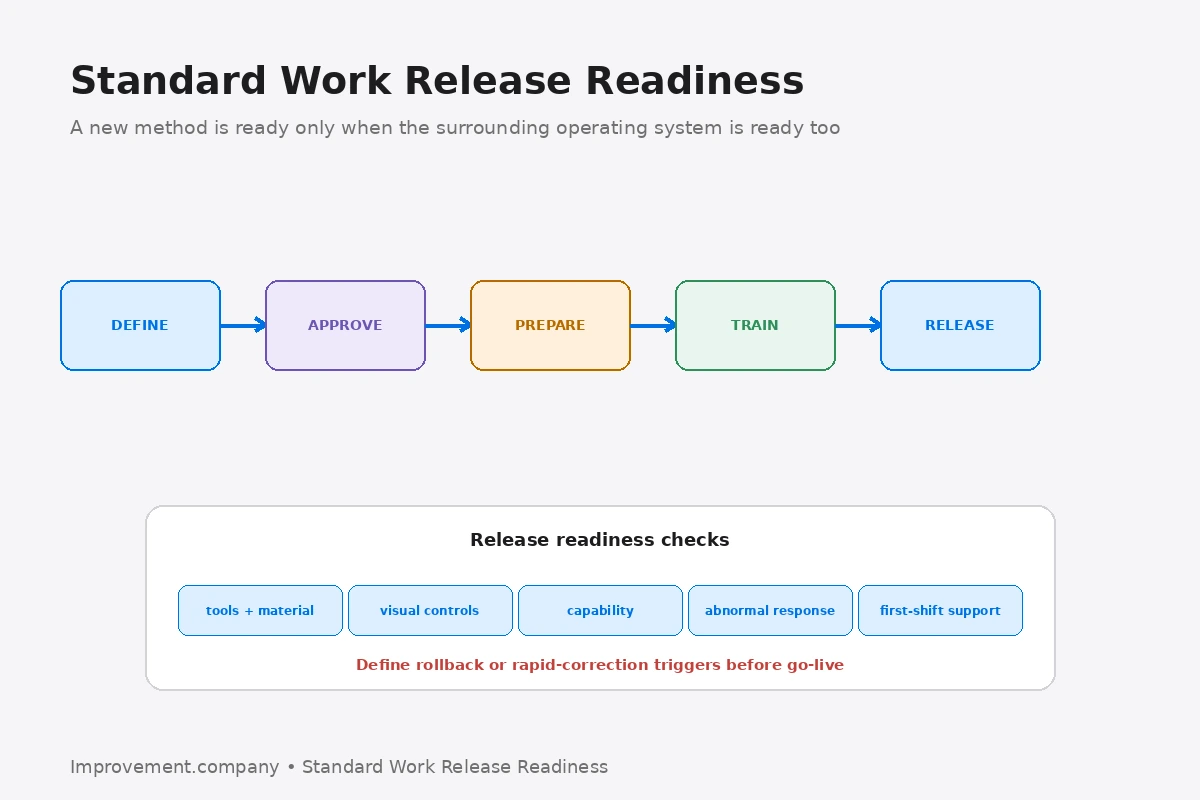
Learn how Standard Work Release Readiness checks documentation, training, tools, controls, abnormal response, ownership, and verification before a new method goes live.
Learn how Standard Work Sequence Verification checks whether the defined task order is followed, practical, safe, quality-protective, and effective under real conditions.
Learn how a Standard Work Stability Review checks sequence, timing variation, abnormality frequency, material conditions, equipment reliability, and change discipline.
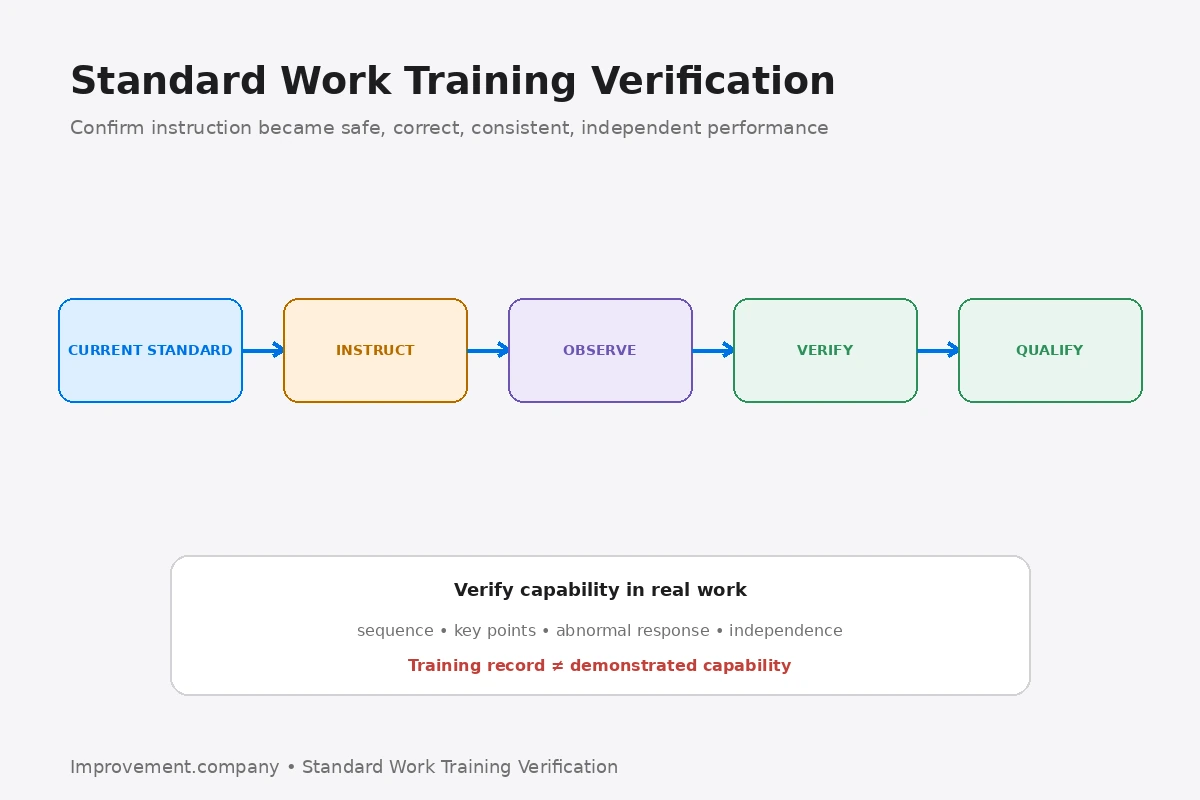
Learn how Standard Work Training Verification checks whether employees can perform the defined method safely, correctly, consistently, and independently after instruction.
Learn how a Lean supermarket stores controlled inventory and triggers replenishment based on downstream consumption.
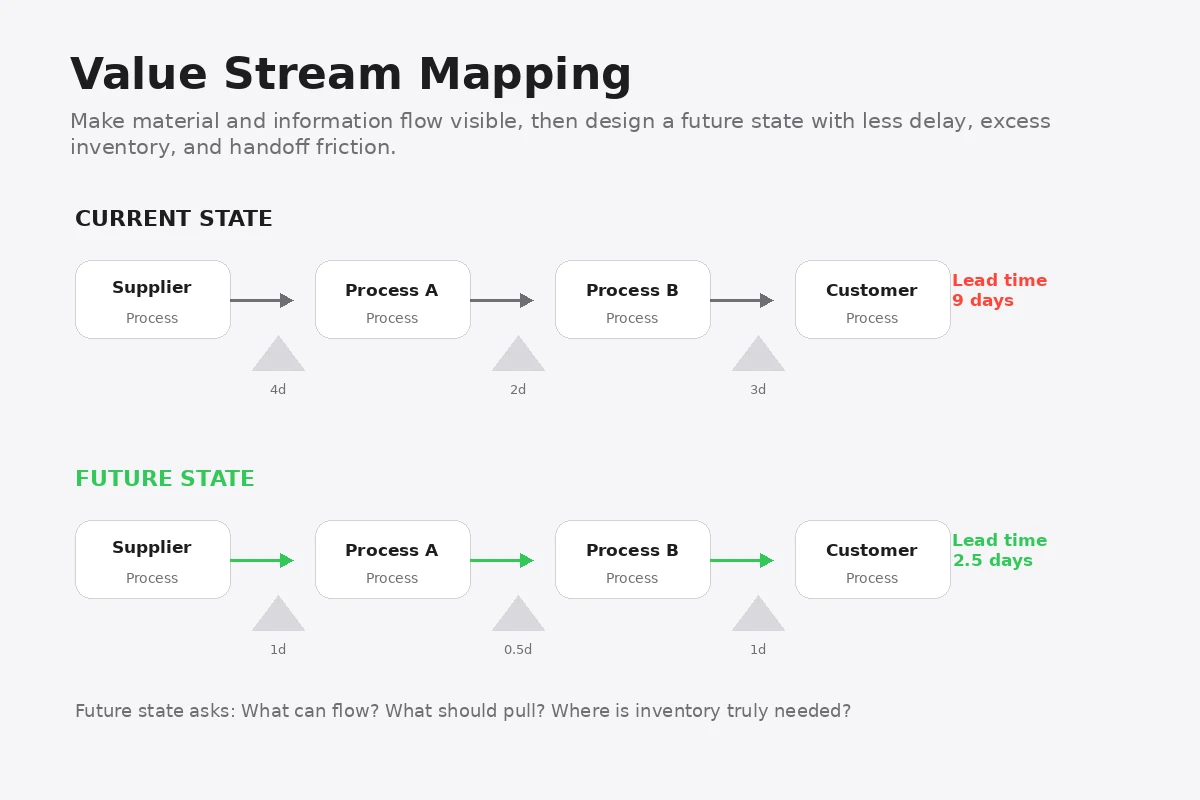
Understand Value Stream Mapping, what information belongs on a current-state map, how to design a future state, and the mistakes that reduce its value.
Lean is a management system for creating more customer value with less waste by improving flow, exposing problems and developing people.
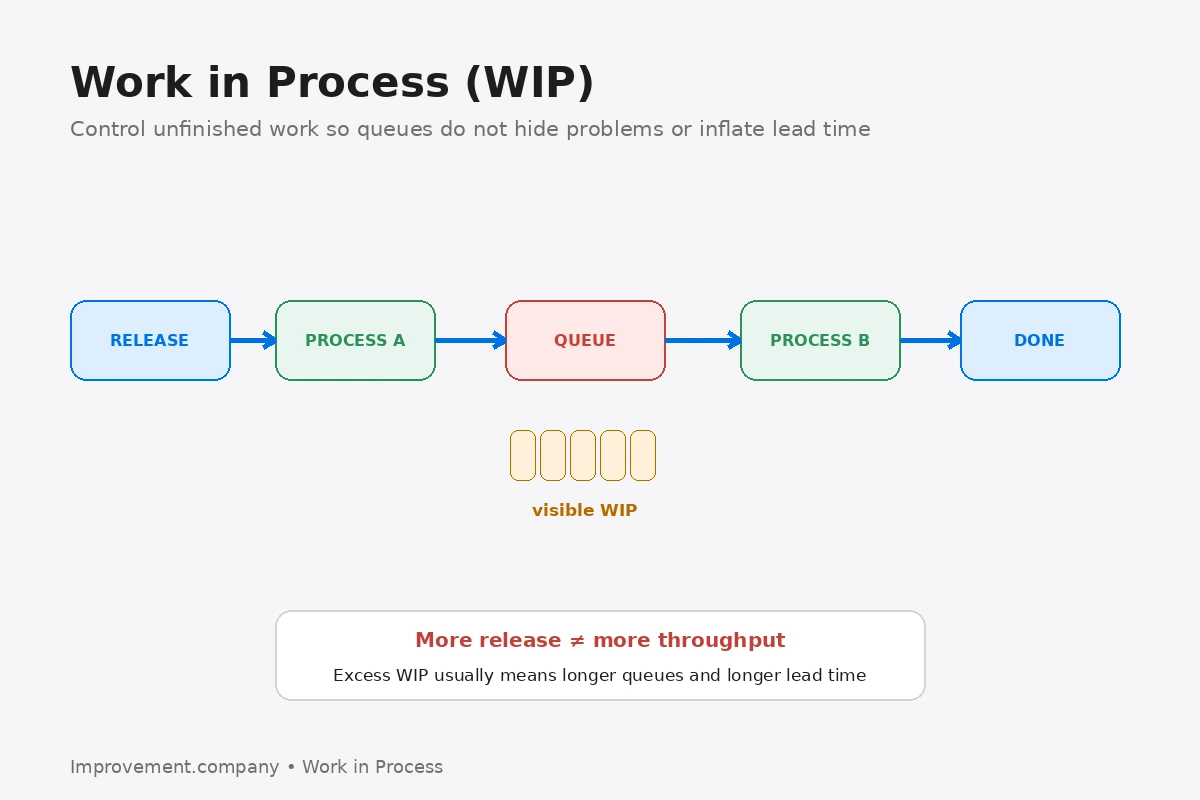
Learn how Work in Process measures unfinished work inside a process and why controlling WIP improves lead time, visibility, flow, and problem detection.