Autonomous Maintenance: Operators Protect Basic Equipment Conditions
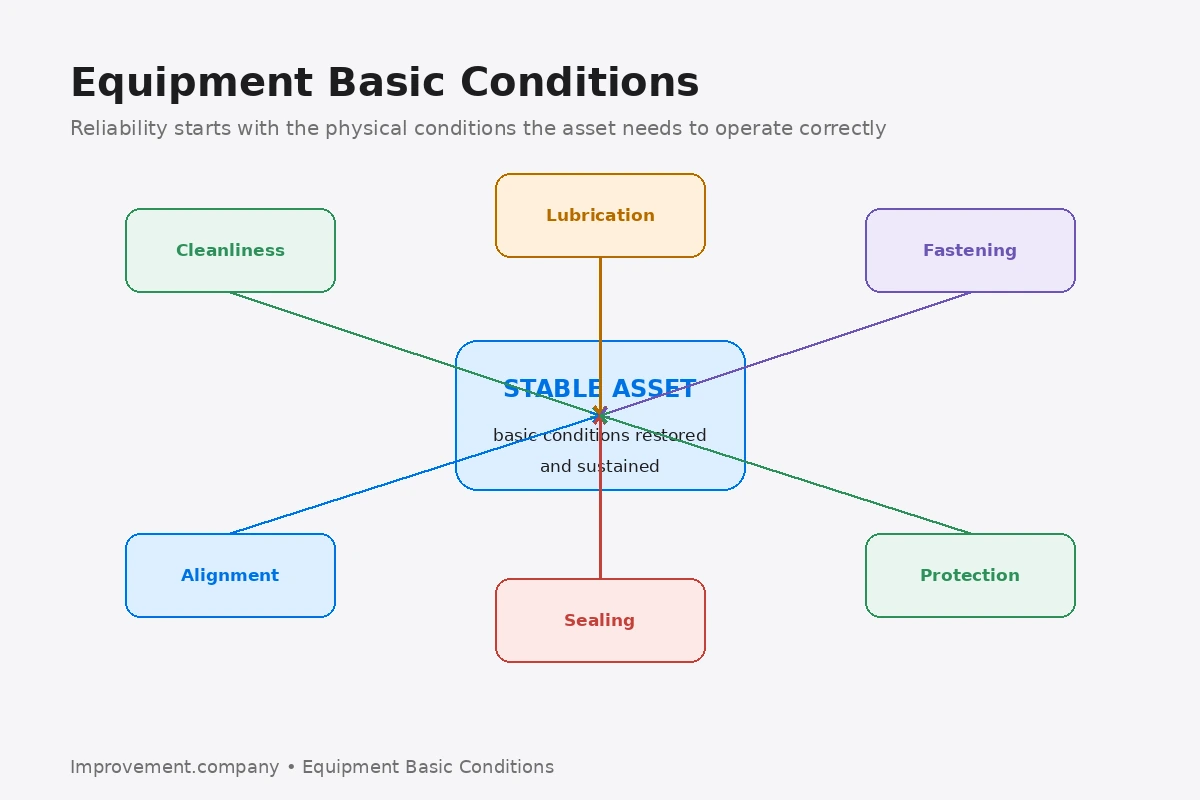
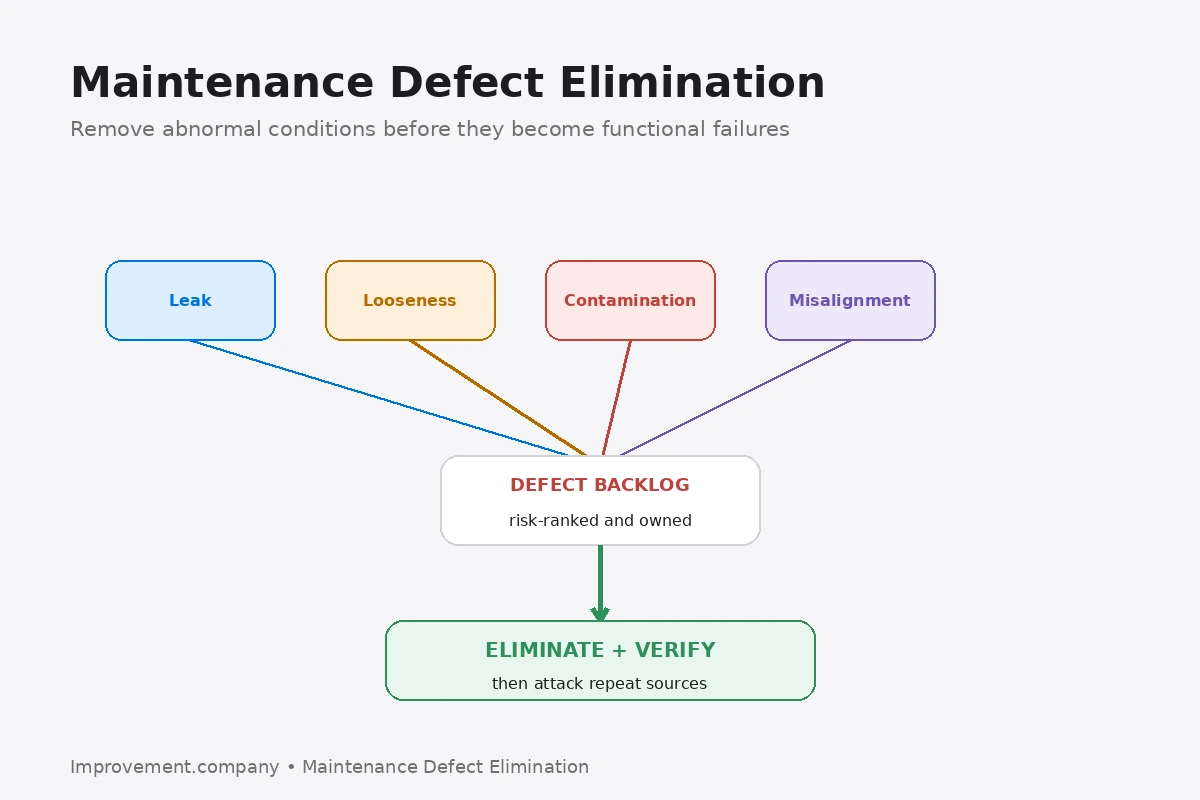
Learn how Autonomous Maintenance supports TPM through cleaning, inspection, lubrication, standards and early abnormality detection without replacing skilled trades.
Improve equipment performance through TPM, OEE, autonomous maintenance, planned maintenance, MTBF, MTTR and reliability practices.
Start with the fundamentals, then follow the related methods as the knowledge base grows.
Learn how Autonomous Maintenance supports TPM through cleaning, inspection, lubrication, standards and early abnormality detection without replacing skilled trades.
Learn how Early Equipment Management uses operating and maintenance knowledge to improve new equipment design, selection, installation and startup.
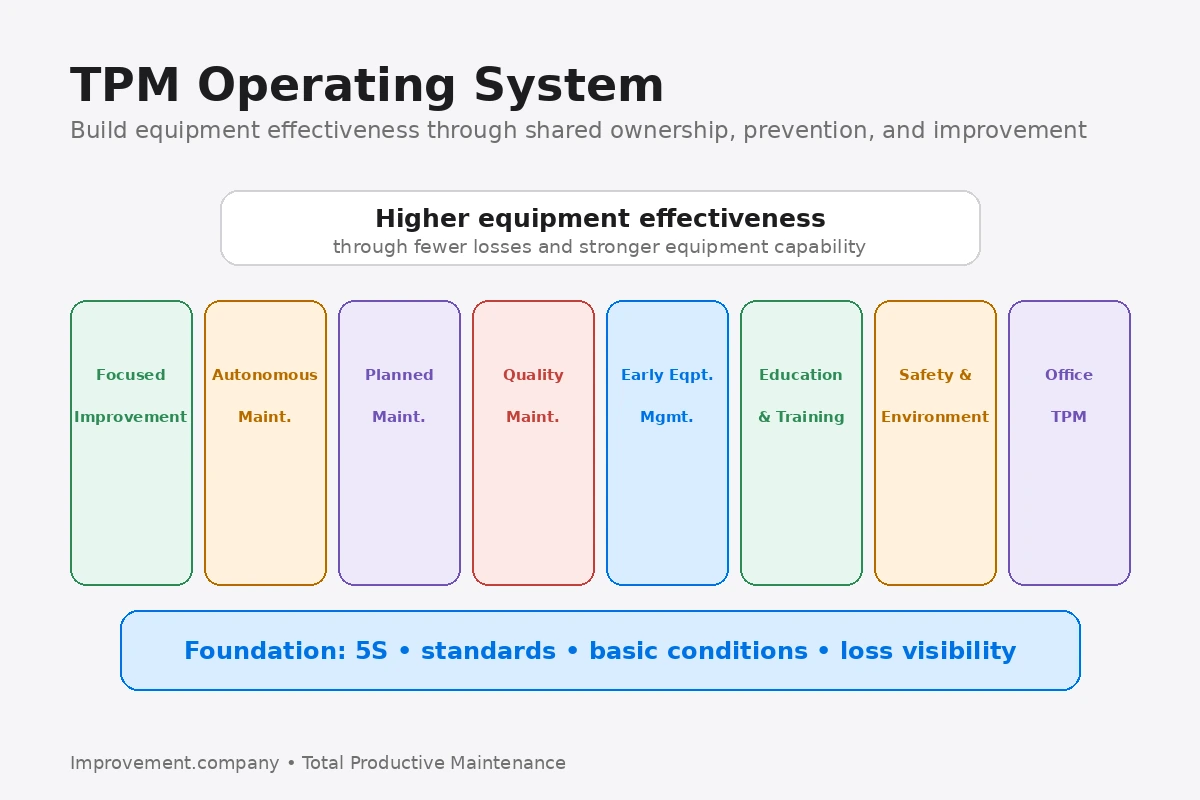
Learn the eight pillars of Total Productive Maintenance and how they work together to improve equipment reliability, quality, safety and capability.
Learn how Focused Improvement within TPM targets chronic losses using data, cross-functional problem solving and verified countermeasures.
Learn the difference between MTBF and MTTR, how each is calculated, what they reveal about equipment reliability and maintainability, and their limitations.
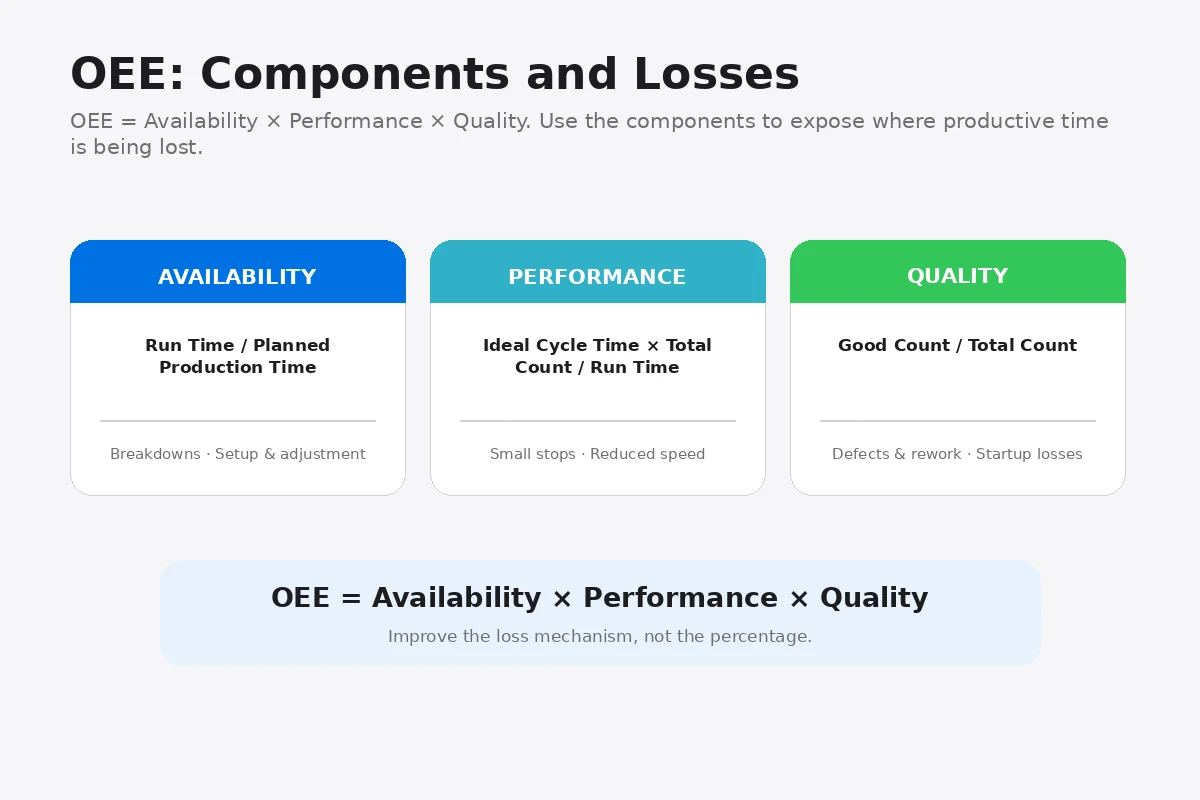
OEE combines Availability, Performance and Quality into one measure that helps reveal major equipment-related production losses.
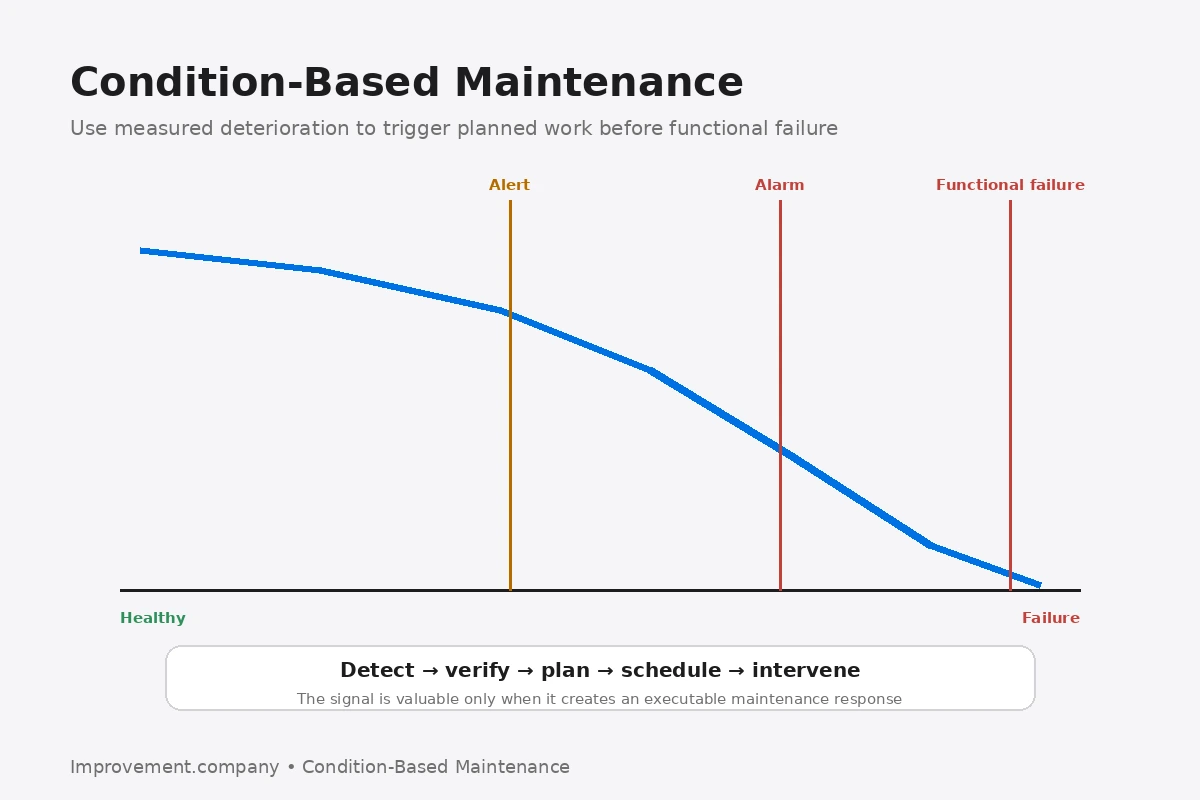
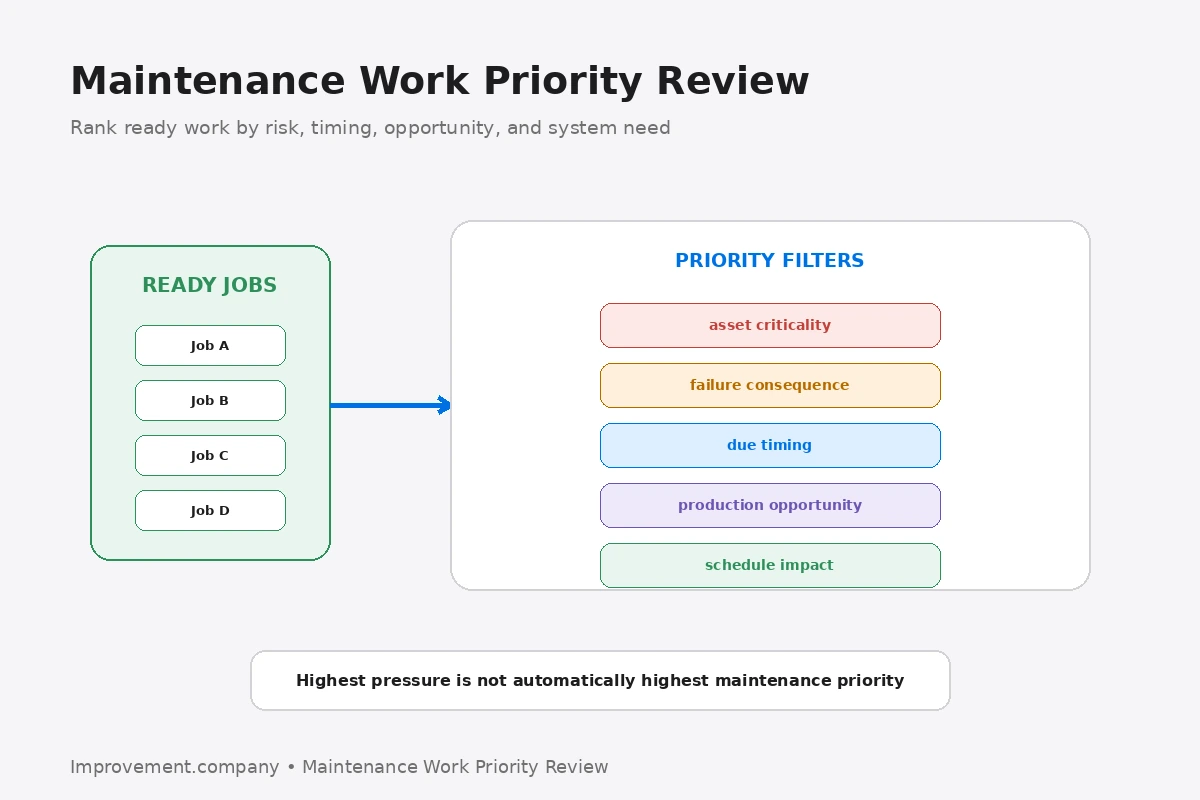
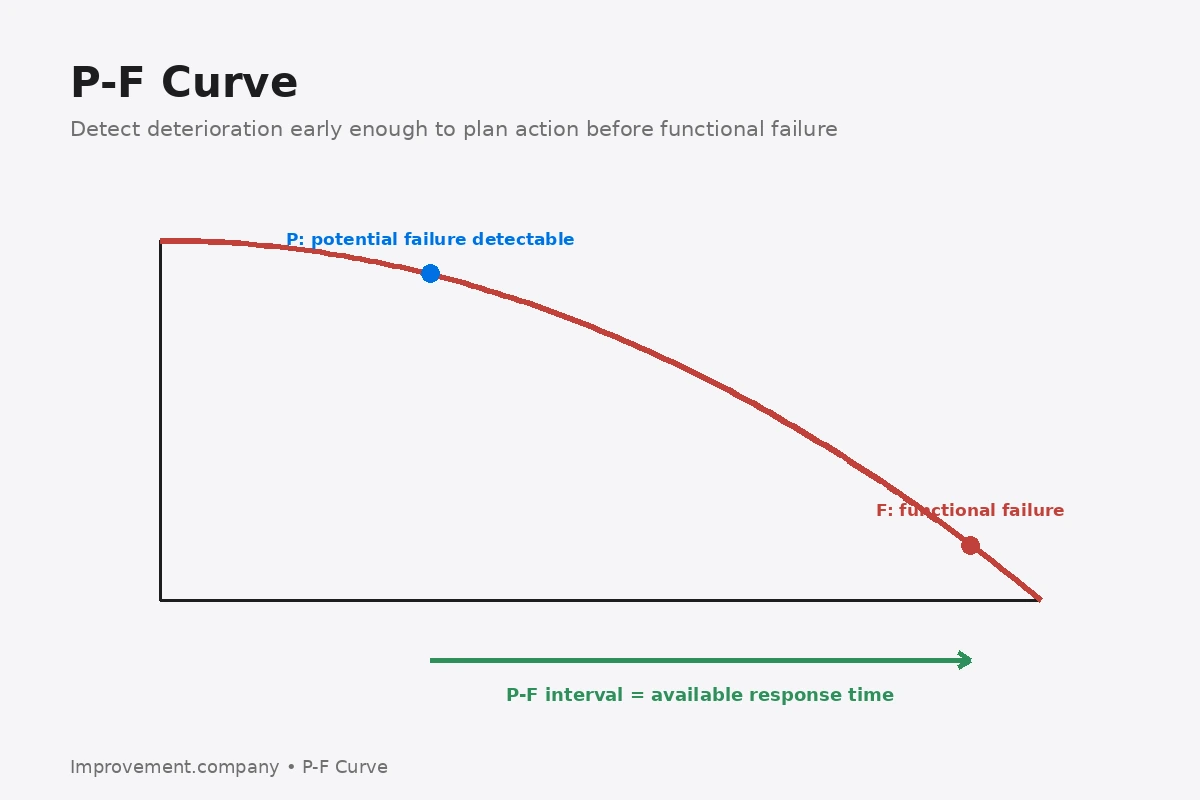
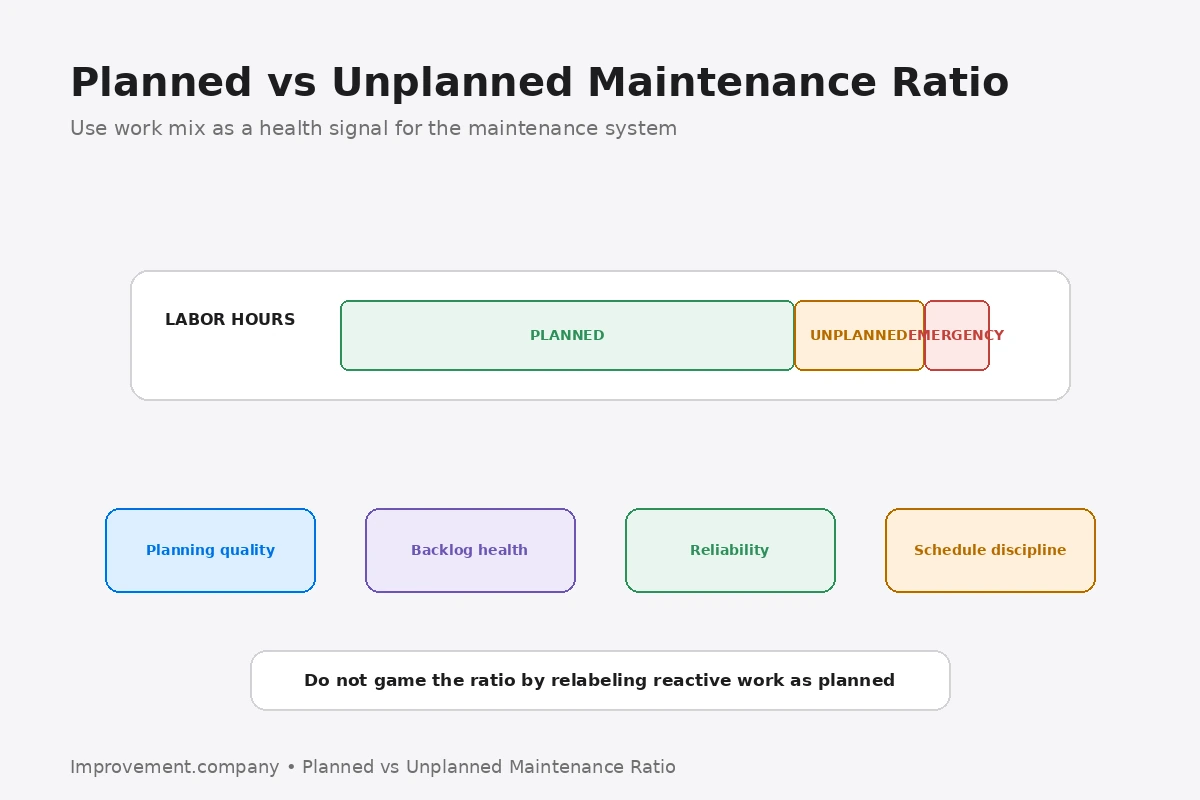
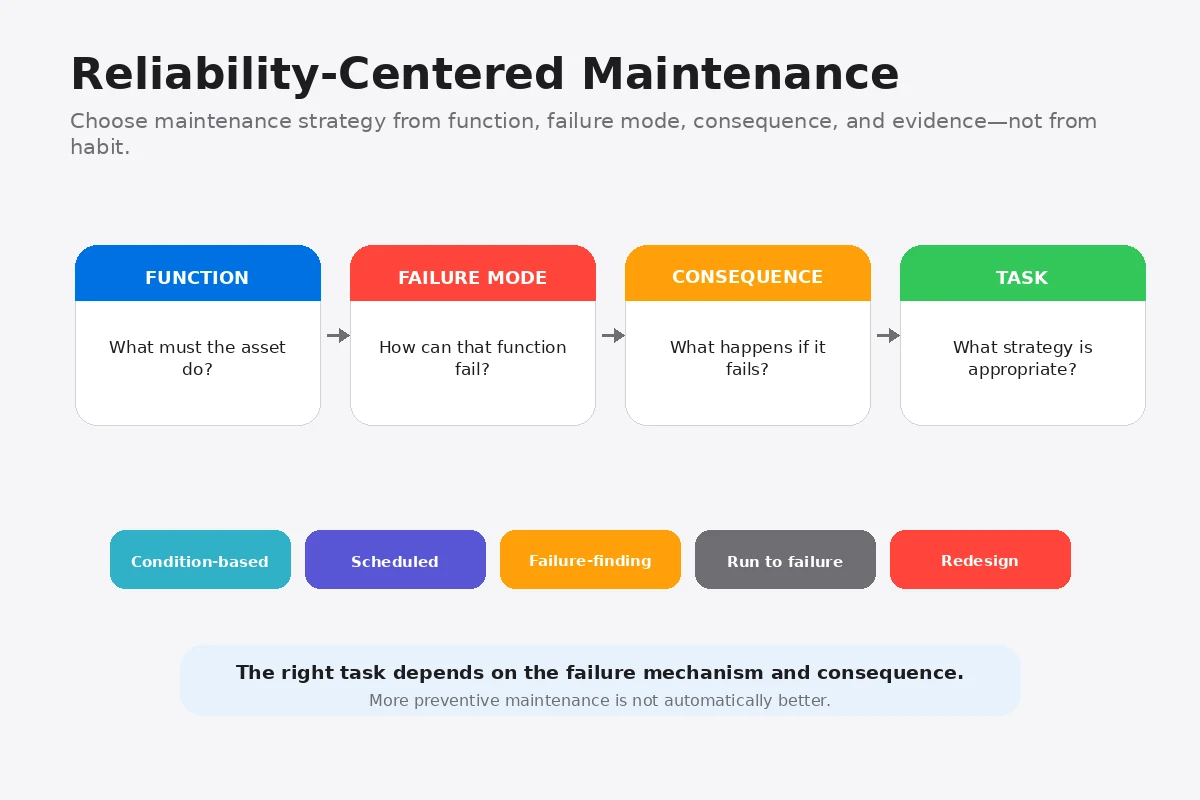
Understand Planned Maintenance within TPM, including preventive, predictive and condition-based approaches, equipment criticality and failure-mode-based decisions.
Understand Quality Maintenance within TPM and how teams identify, control and monitor equipment conditions that directly influence product quality.
TPM is a company-wide approach to improving equipment effectiveness by combining maintenance systems, operator involvement and continuous improvement.