4M Analysis: A Practical Root Cause Guide for Manufacturing
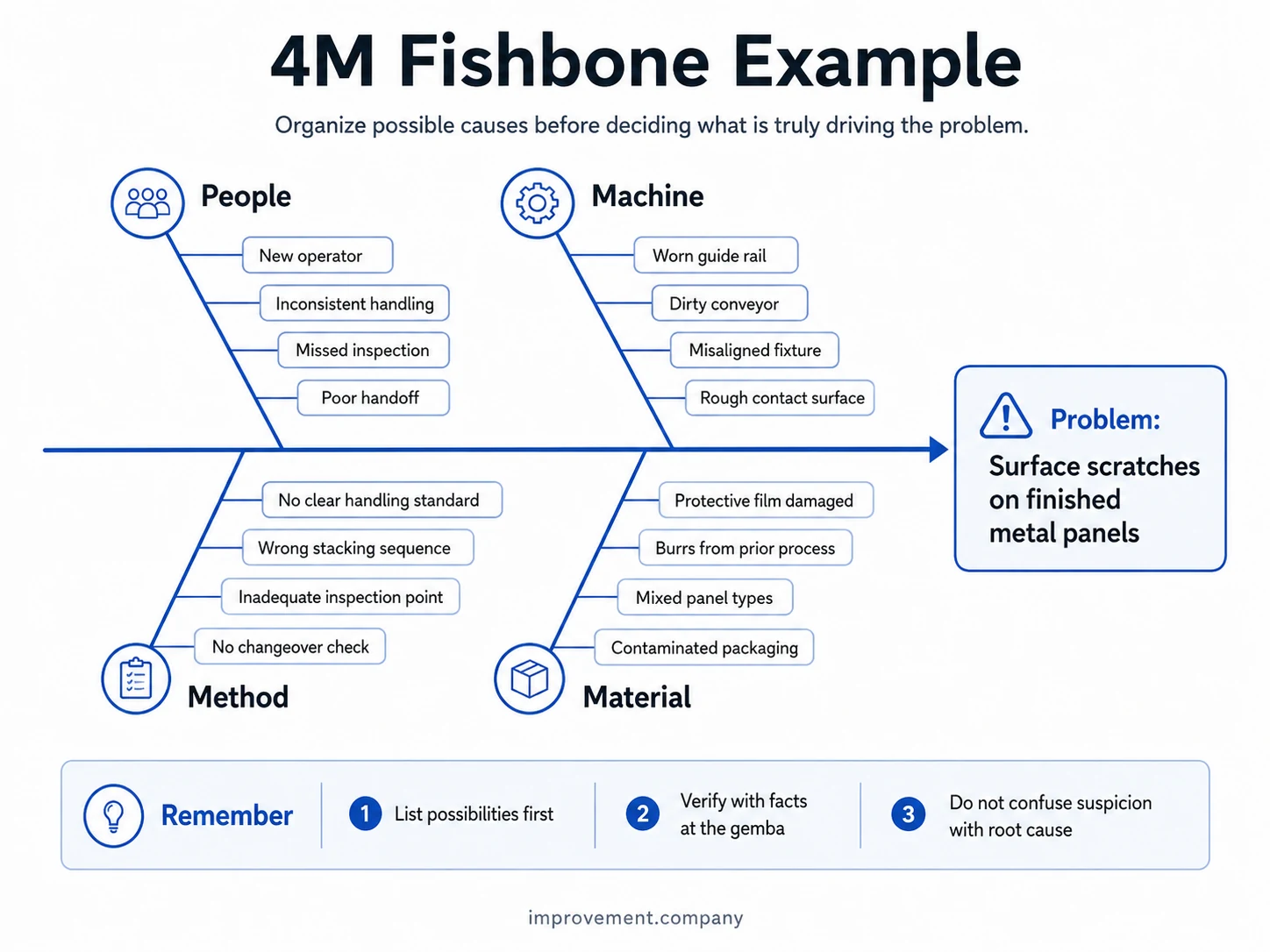
Learn how to use 4M Analysis to organize and verify potential causes across People, Machine, Method, and Material before selecting countermeasures.
Define problems clearly, investigate causes and test countermeasures using 5 Whys, fishbone, A3, 8D and practical root cause methods.
Start with the fundamentals, then follow the related methods as the knowledge base grows.
Learn how to use 4M Analysis to organize and verify potential causes across People, Machine, Method, and Material before selecting countermeasures.
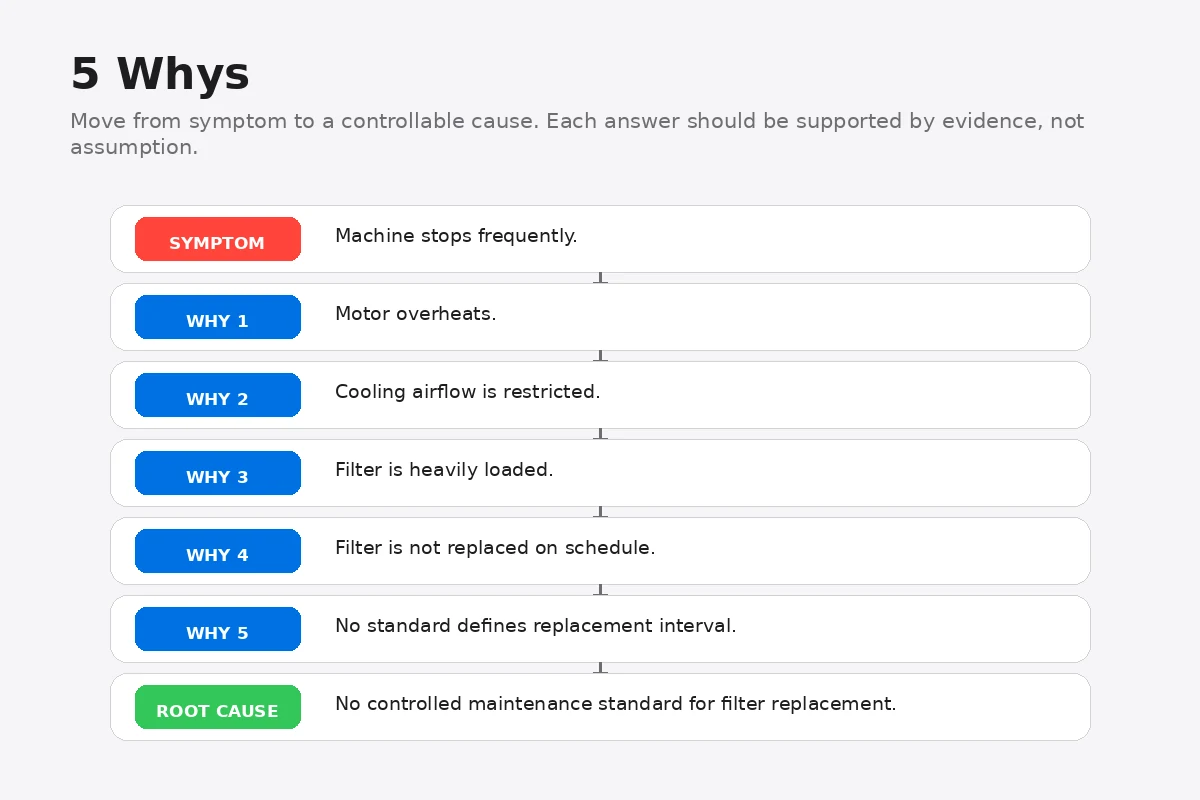
5 Whys is a simple root cause technique that uses repeated why questions to move from a visible problem toward the process conditions that allowed it to occur.
Learn how 5W1H uses What, Where, When, Who, Which, and How to define a problem clearly before investigating causes.
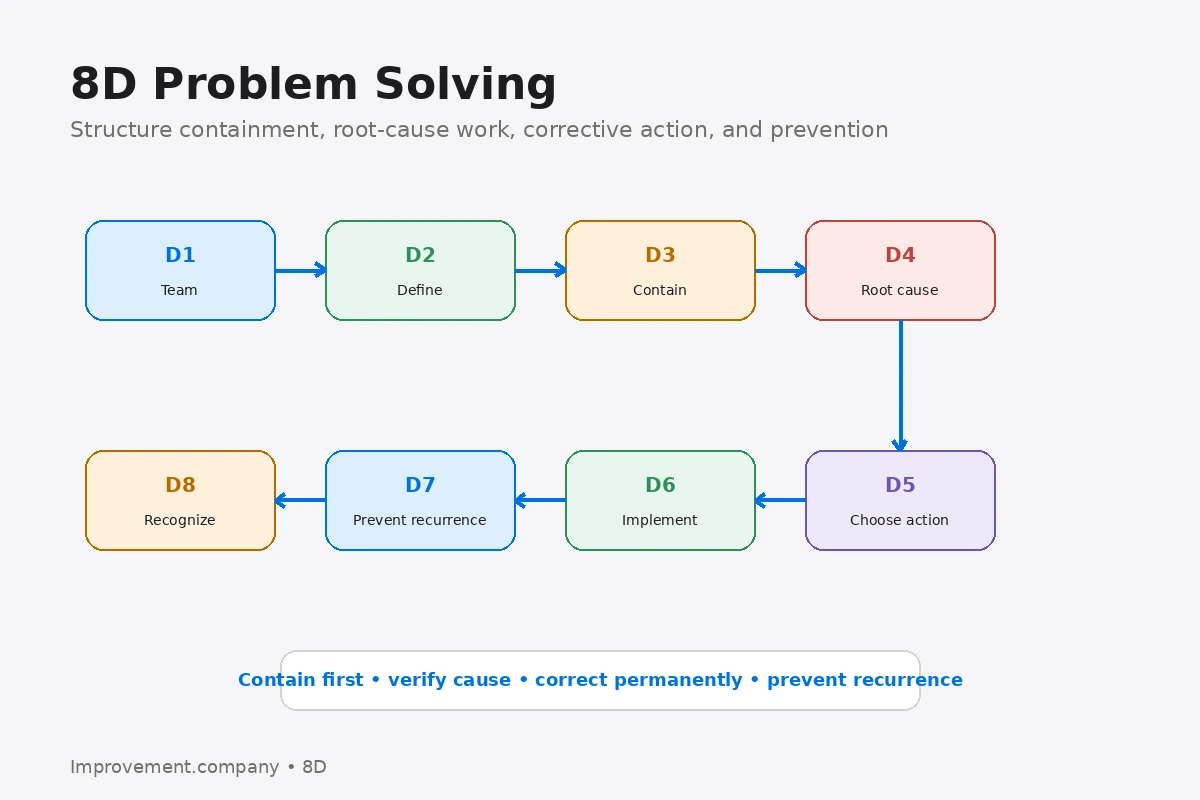
Learn the 8D method from containment and root cause analysis through corrective action, validation, recurrence prevention, and team learning.
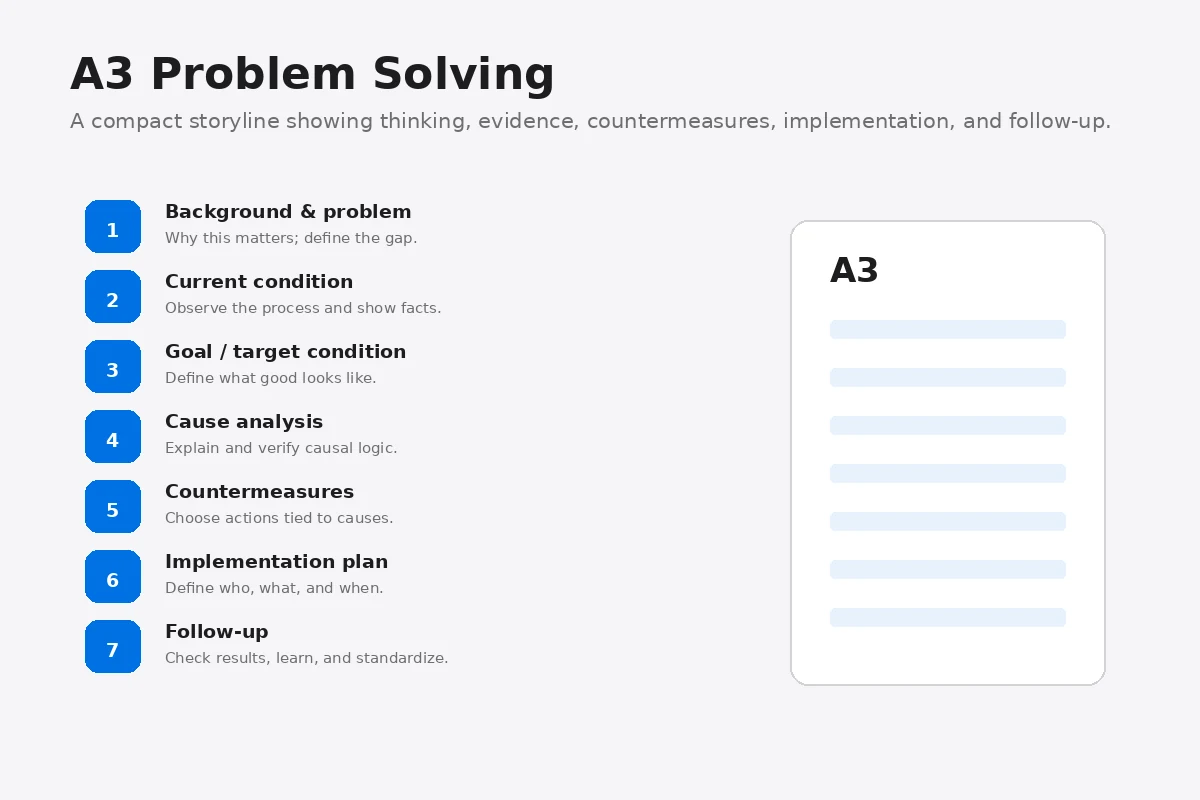
A3 Problem Solving combines structured thinking, evidence and concise communication to guide teams from a problem toward tested countermeasures and follow-up.
Learn how Barrier Analysis examines missing, weak, failed, or bypassed controls to understand why an unwanted event was able to occur.
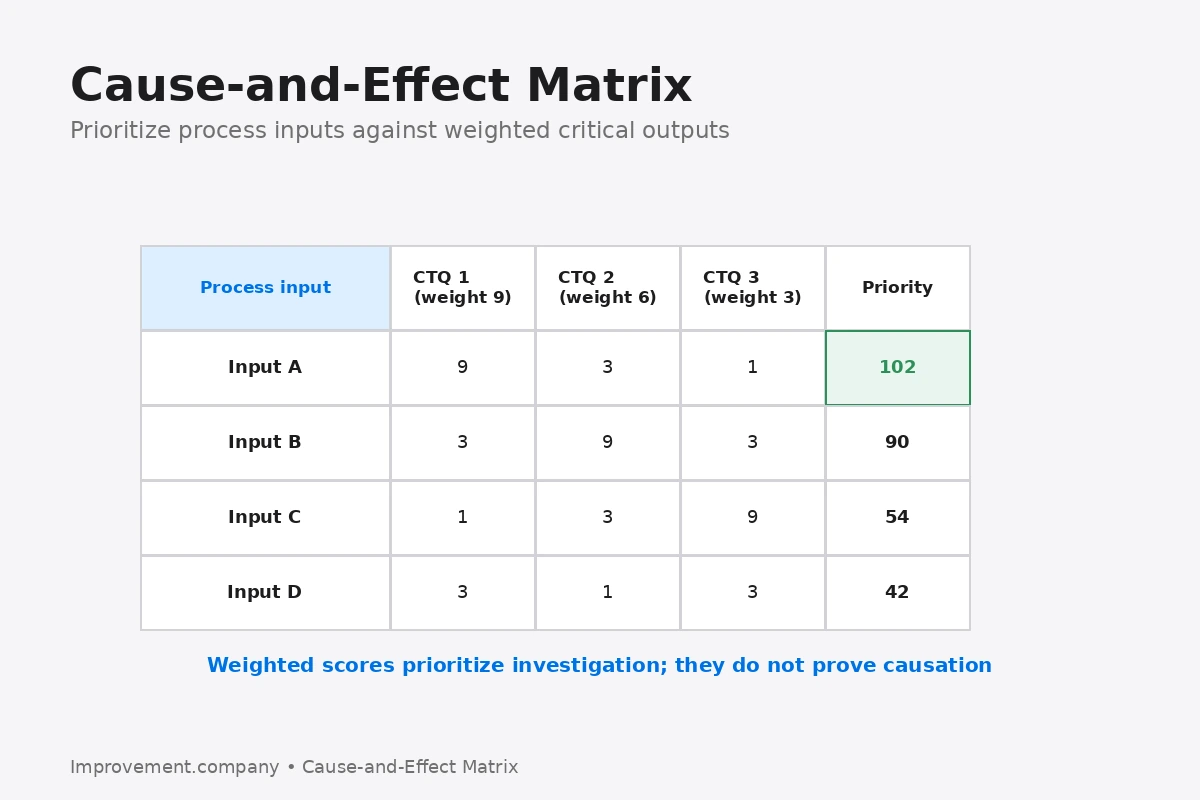
Learn how a Cause-and-Effect Matrix scores process inputs against critical outputs to focus investigation on the variables most likely to matter.
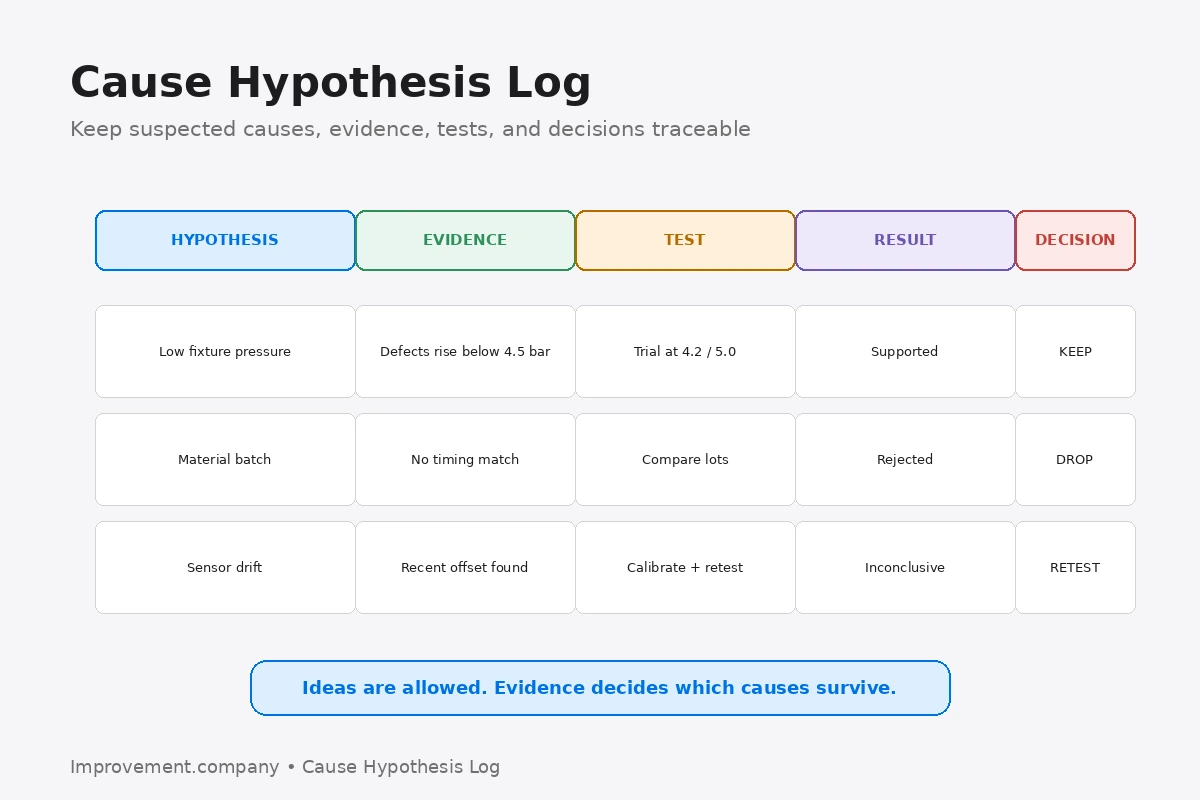
Learn how a Cause Hypothesis Log records suspected causes, supporting evidence, tests, results, and decisions so problem-solving teams separate ideas from verified causes.
Learn how Cause Verification tests whether a suspected cause truly changes the problem by using evidence, comparison, controlled tests, and repeatable results.
Learn how Change Point Analysis compares conditions before and after a problem appeared to identify process, material, method, equipment, or people changes worth investigating.
Learn how containment actions temporarily control risk and protect customers while root cause analysis and permanent corrective action continue.
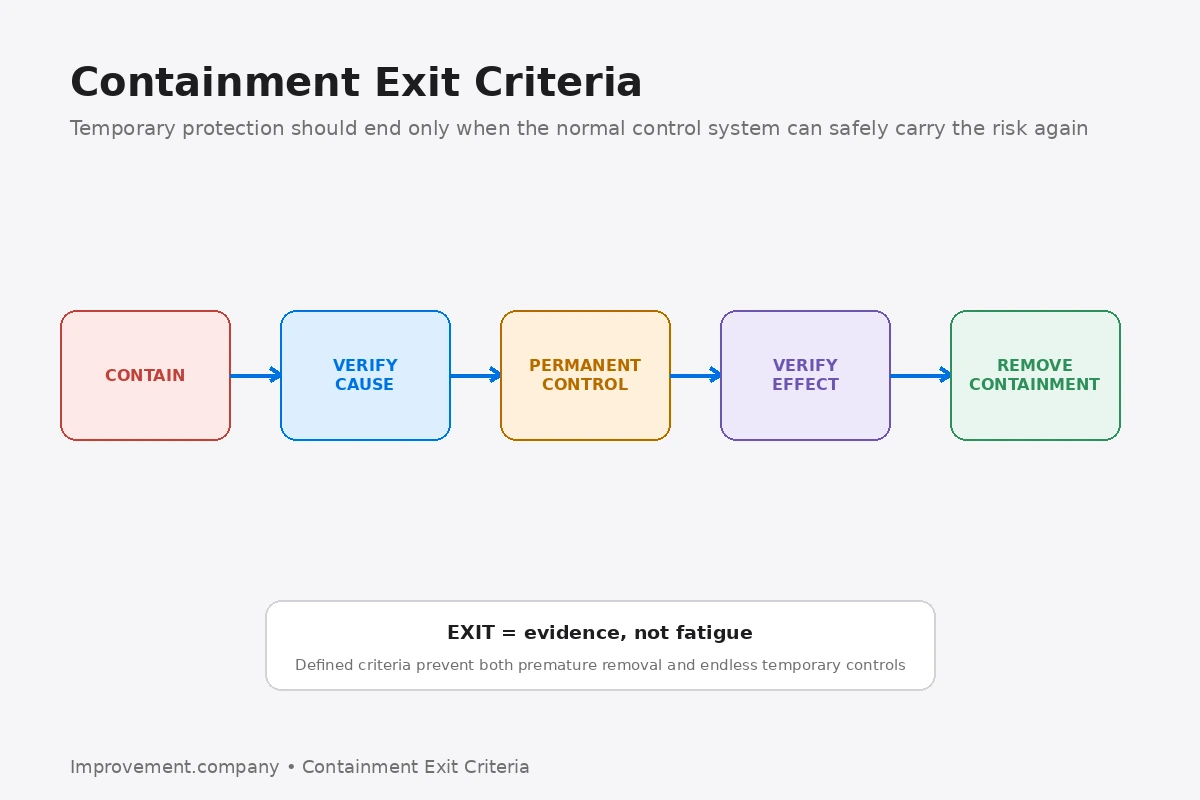
Learn how Containment Exit Criteria define the evidence required before temporary inspections, sorting, holds, or other protective controls can be removed.
Learn how a Countermeasure Side-Effect Review checks whether a fix creates new safety, quality, flow, cost, workload, maintenance, or customer risks.
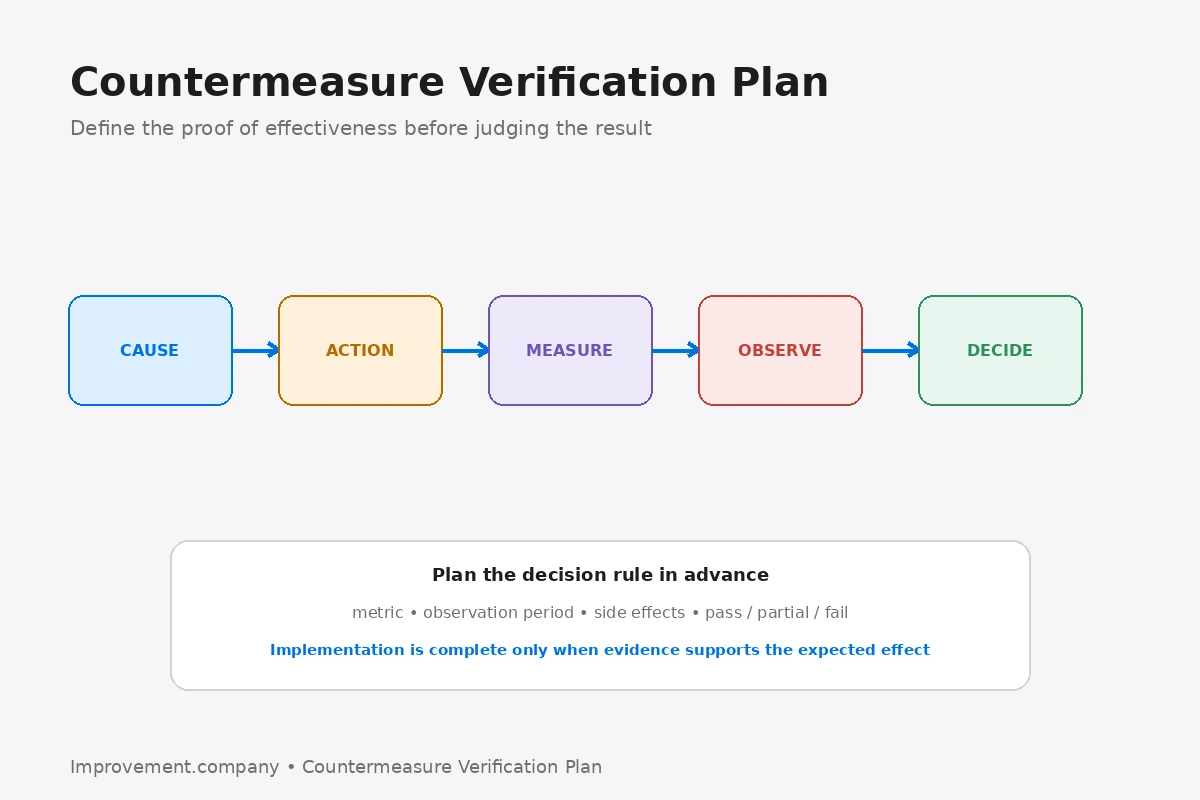
Learn how a Countermeasure Verification Plan defines measures, observation periods, expected results, side-effect checks, and decision rules before a corrective action is accepted.
Learn how Cross-Functional Problem Solving combines ownership, expertise, evidence, and decision rights when one function cannot solve the problem alone.
Learn how a Current Reality Tree links undesirable effects through cause-and-effect logic to identify a small number of core problems worth addressing.
Learn how a Decision Matrix compares alternatives against agreed criteria and weights so teams can make transparent, evidence-based choices.
Learn how Event and Causal Factor Charting builds a time-based sequence of events, conditions, and causal factors to support disciplined investigation.
Learn how Fault Isolation uses symptoms, boundaries, functional checks, and divide-and-test logic to narrow a failure to the responsible subsystem or component.
Learn how Fault Tree Analysis uses logical AND and OR relationships to map combinations of failures that can produce an undesired event.
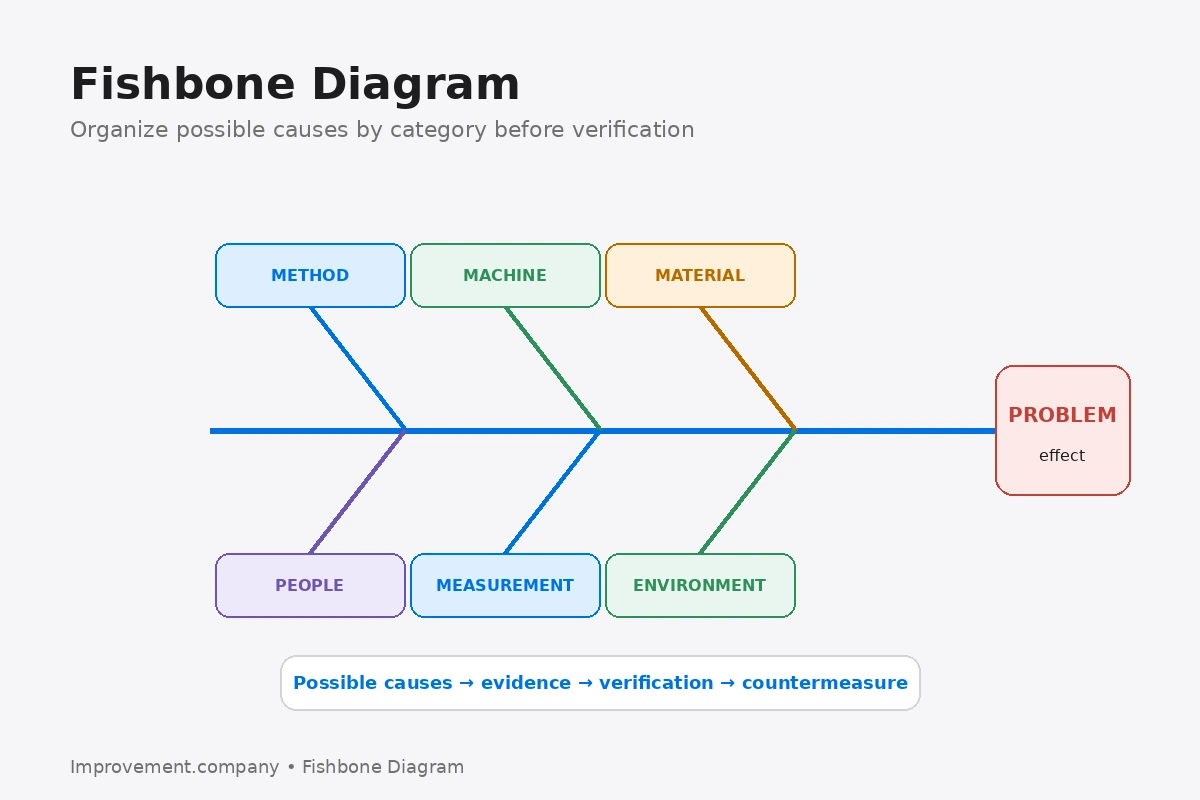
Learn how a fishbone diagram structures possible causes, when to use 4M or 6M categories, and how to move from brainstorming to verified causes.
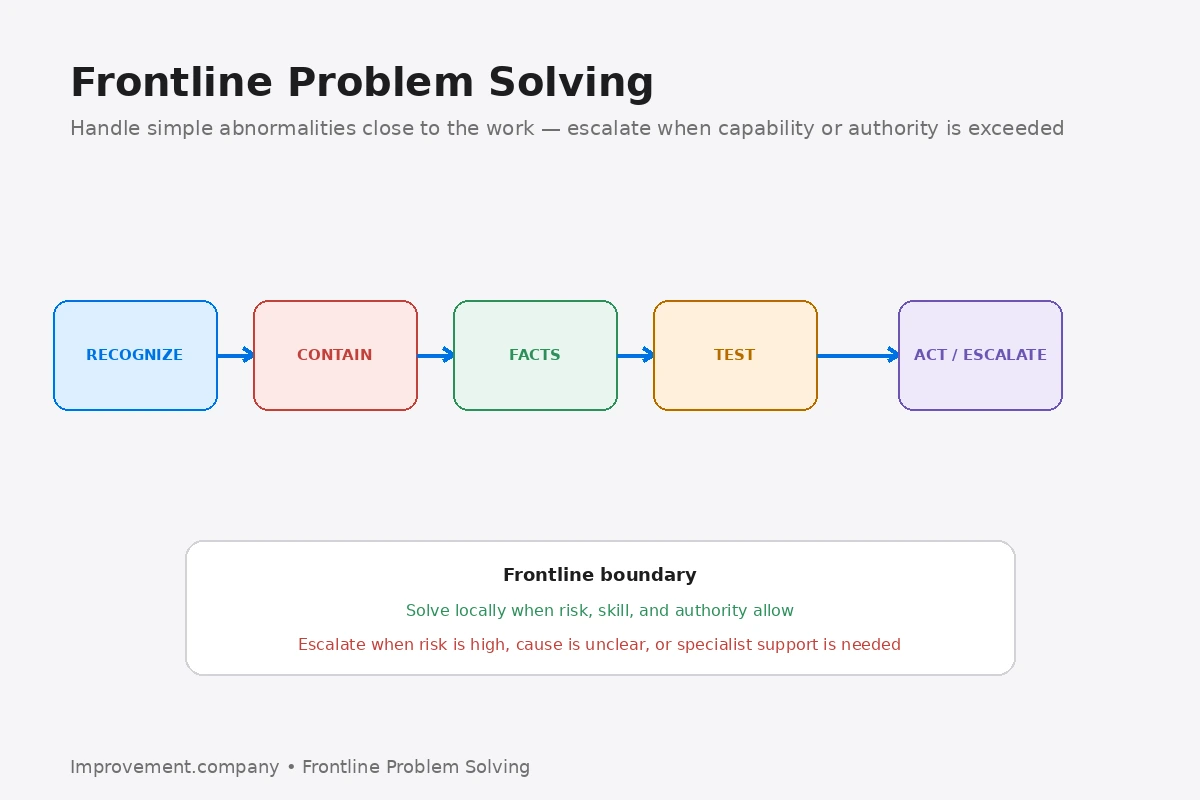
Learn how Frontline Problem Solving gives operating teams a disciplined way to contain abnormalities, gather facts, test simple causes, and escalate when deeper support is needed.
Learn how hypothesis-driven problem solving turns suspected causes into explicit, testable explanations that guide data collection and reduce unfocused investigation.
Learn how Is / Is Not Analysis compares affected and unaffected conditions to narrow a problem and identify meaningful differences.
Learn how a Problem Closure Review checks cause evidence, countermeasure effectiveness, containment removal, standard updates, ownership, and recurrence risk before closure.
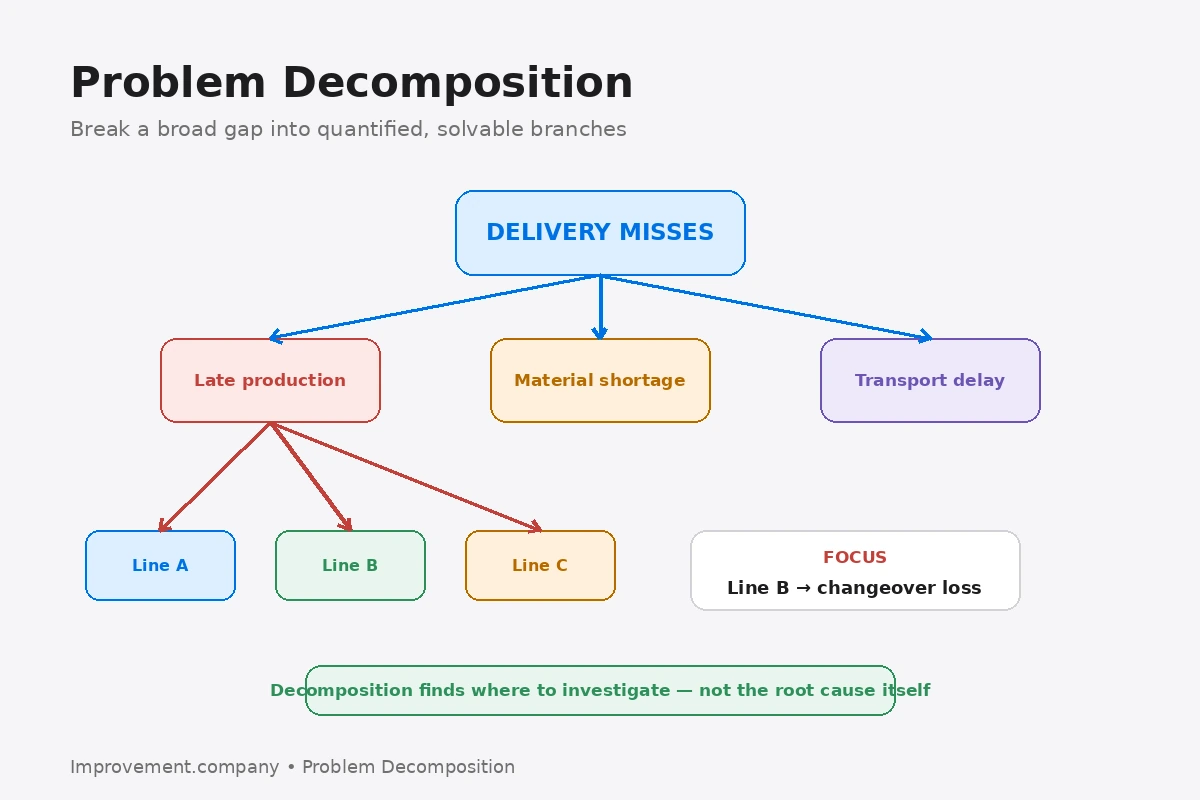
Learn how Problem Decomposition breaks a broad performance gap into smaller, measurable subproblems so teams can prioritize where investigation should begin.
Learn how a Problem Definition Quality Review checks the gap, location, timing, scope, evidence, affected condition, and assumptions before root-cause analysis begins.
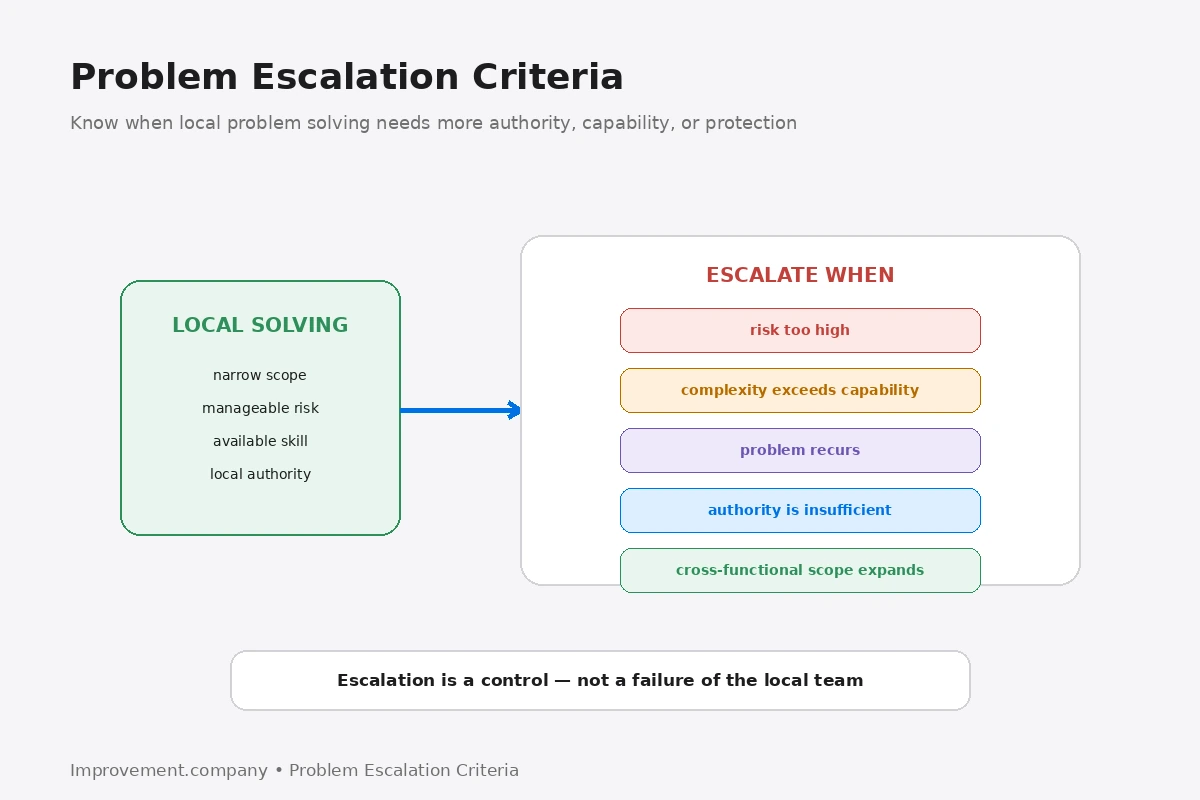
Learn how Problem Escalation Criteria define when an issue should move beyond local problem solving because of risk, complexity, recurrence, authority, or capability gaps.
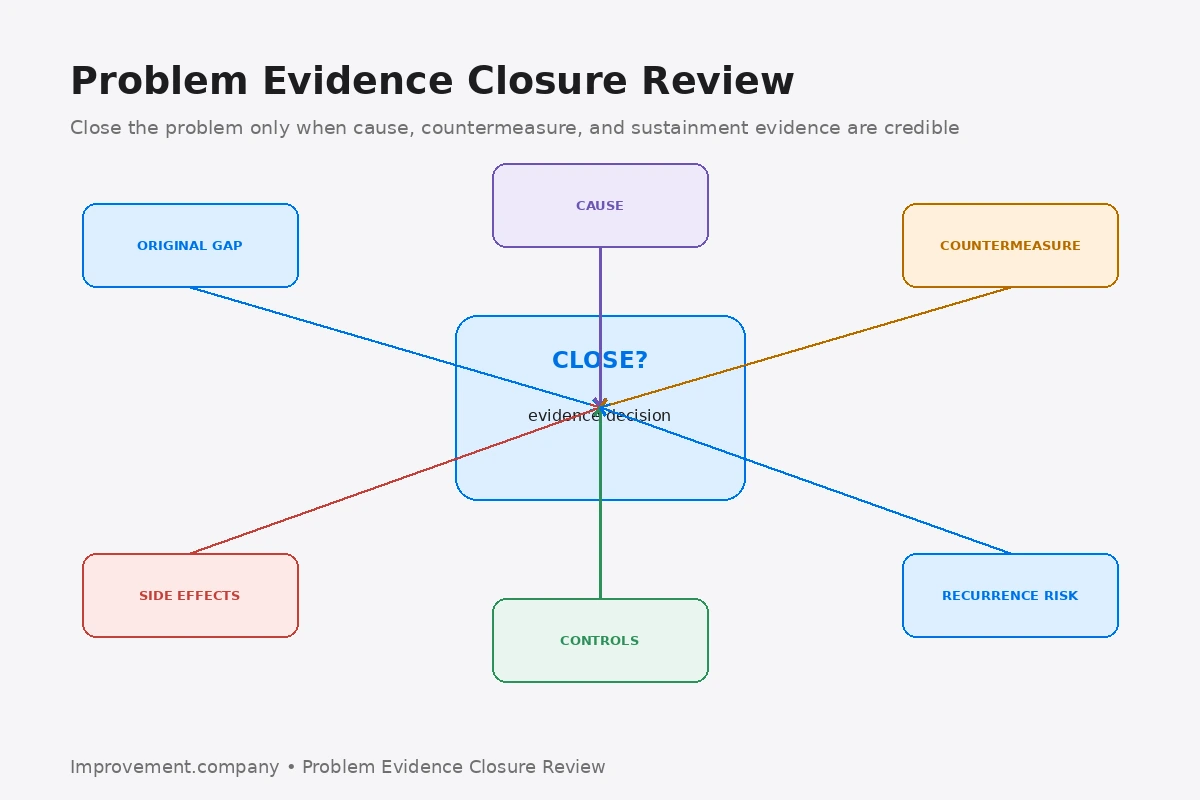
Learn how a Problem Evidence Closure Review checks causal evidence, countermeasure effect, recurrence risk, control changes, ownership, and sustainment before closure.
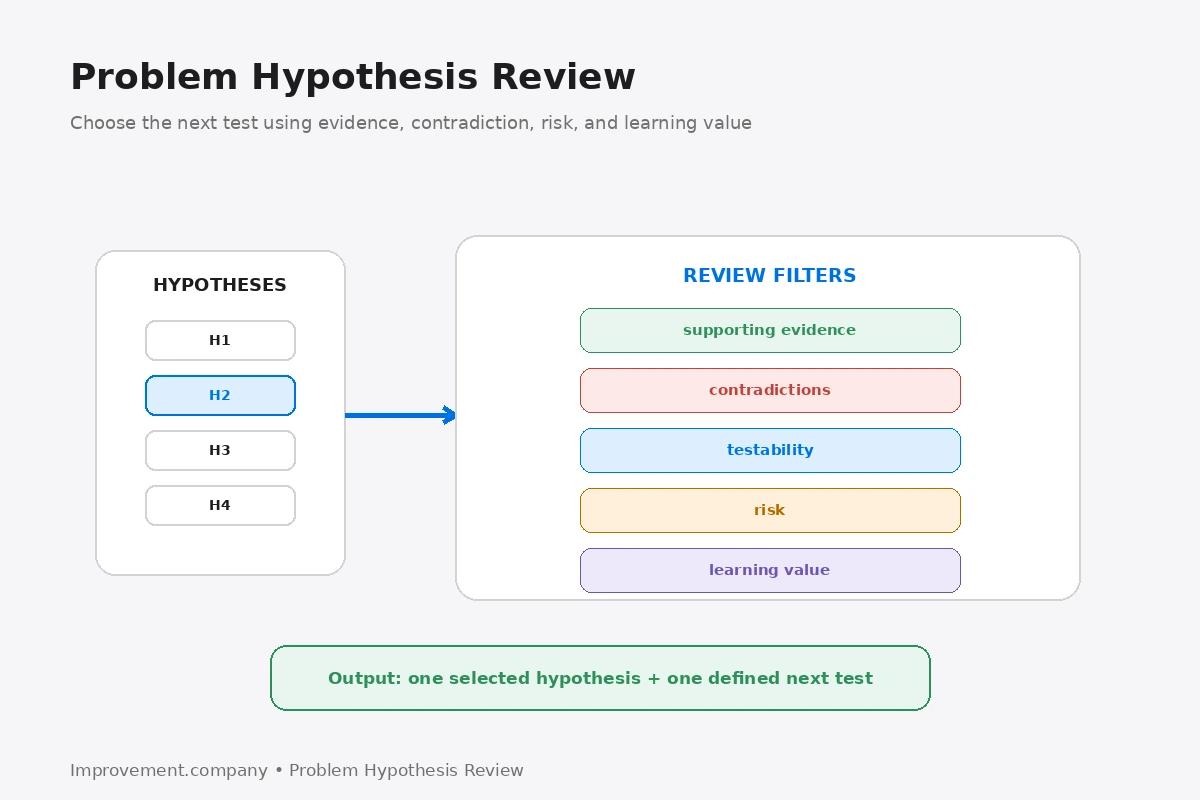
Learn how a Problem Hypothesis Review compares suspected causes using evidence, contradiction, testability, risk, and learning value before the team spends effort on the next test.
Learn how a Problem Priority Matrix ranks competing issues using impact, urgency, recurrence, risk, and effort so problem-solving capacity is focused deliberately.
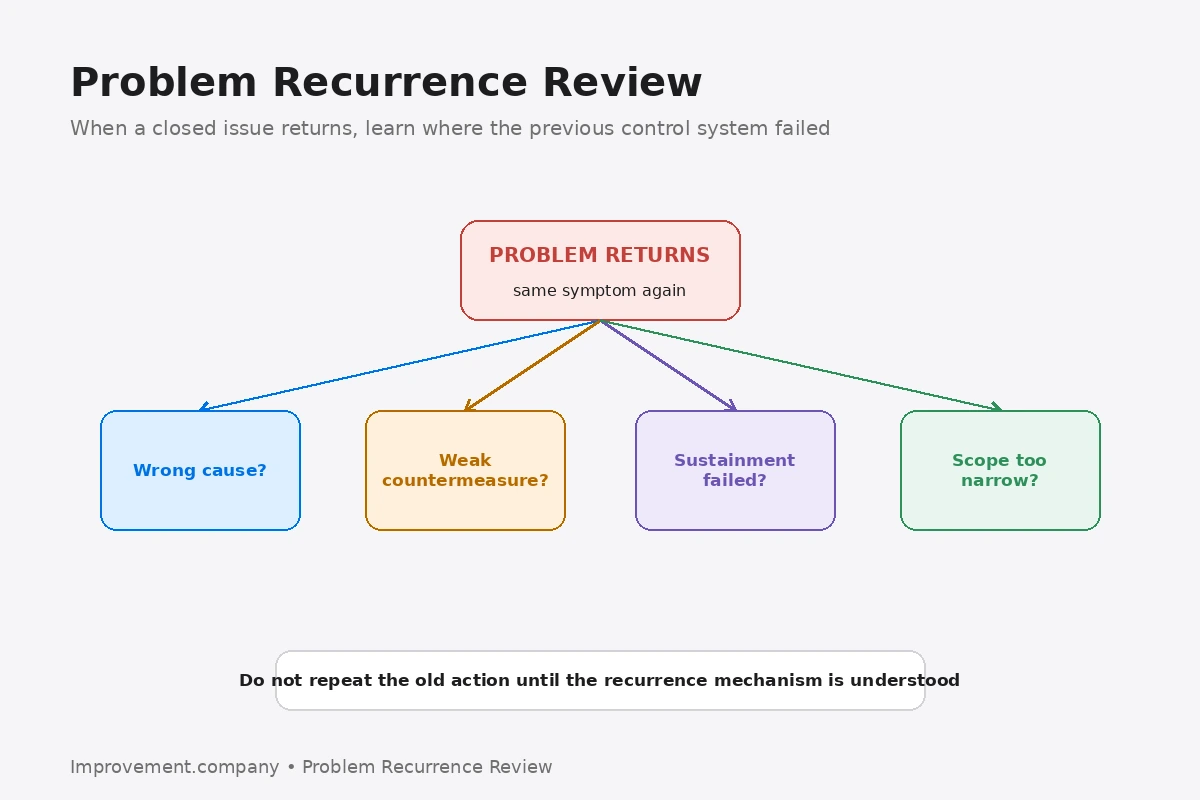
Learn how a Problem Recurrence Review examines why a previously controlled issue returned, whether the cause was wrong, the countermeasure weak, or sustainment failed.
Learn how a Problem-Solving Evidence Plan defines the observations, measurements, comparisons, and tests needed to reduce uncertainty before a cause or countermeasure is accepted.
Learn how a Problem-Solving Review Cadence keeps A3, 8D, RCA, and other investigations progressing through evidence, decisions, barriers, and next steps.
Learn how a strong Problem Statement describes the current gap, scope, evidence, timing, and impact without embedding assumptions or preferred solutions.
Learn how Problem Stratification separates data by product, machine, shift, supplier, time, and other factors to reveal where a problem is concentrated.
Learn how Quick Response Quality Control uses immediate containment, facts, local ownership, verification, and escalation to solve significant abnormalities quickly.
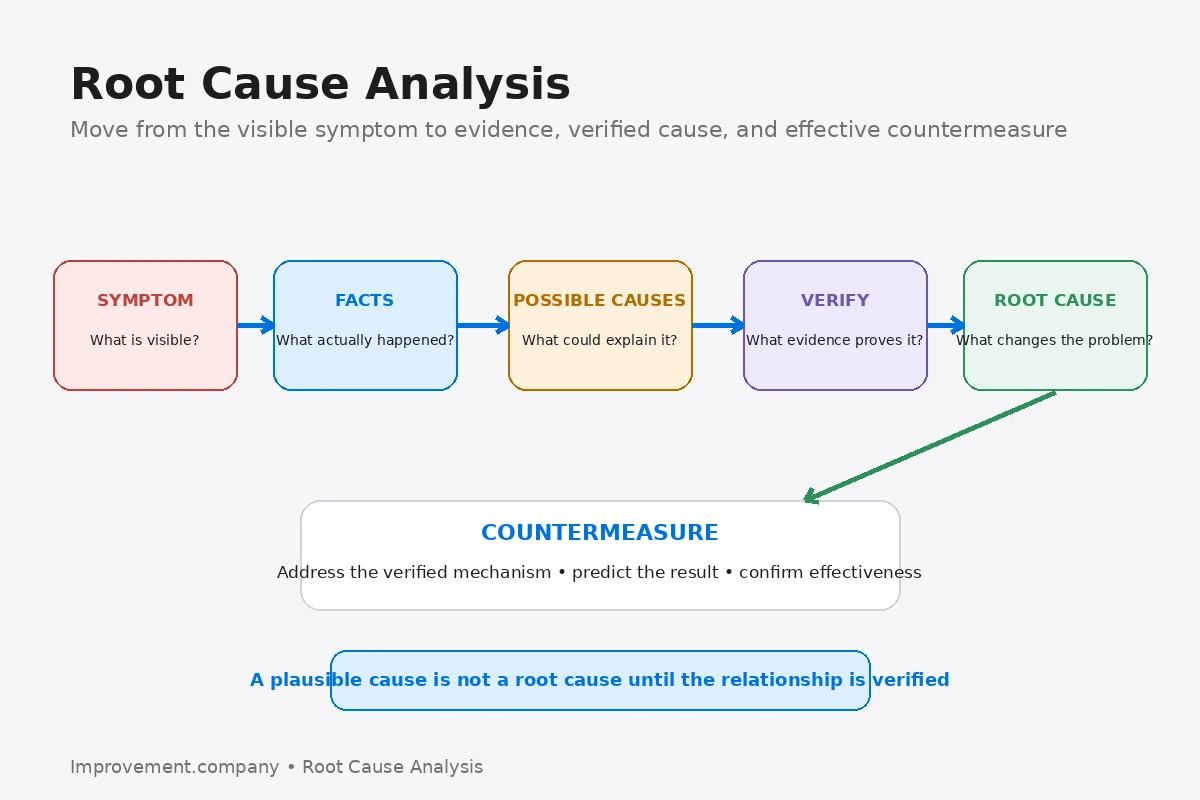
Learn what Root Cause Analysis is, how to distinguish symptoms from causes, when to use tools such as 5 Whys and fishbone diagrams, and how to verify results.
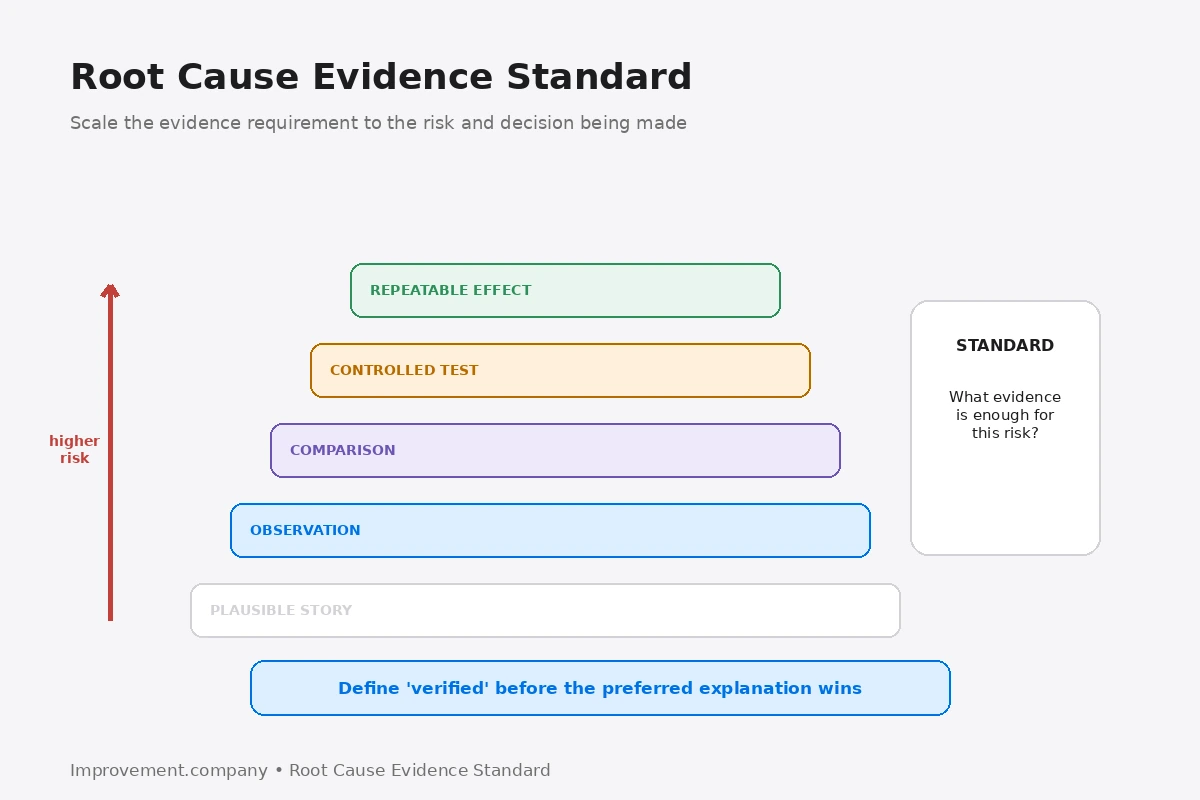
Learn how a Root Cause Evidence Standard sets practical expectations for confirming causal explanations using observation, comparison, testing, repeatability, and risk.
Learn how a Team Problem-Solving Board makes problem status, evidence, containment, next actions, blockers, and ownership visible without becoming a wall of stale information.
Understand Toyota-style problem solving as a disciplined PDCA-based approach to clarify problems, break them down, identify causes and verify countermeasures.