Abnormality Management: Detect, Escalate, and Restore the Standard
Learn how Abnormality Management defines normal conditions, detects deviations quickly, triggers escalation, and restores stable process performance.
Turn problems into visible daily action through Gemba, tier meetings, KPI boards, Andon, hour-by-hour management and escalation routines.
Start with the fundamentals, then follow the related methods as the knowledge base grows.
Learn how Abnormality Management defines normal conditions, detects deviations quickly, triggers escalation, and restores stable process performance.
Learn how an Action Aging Review tracks open actions by age, due date, owner, risk, and blockage so overdue commitments become visible before they stall improvement.
Learn how Action Closure Criteria define the evidence required to close daily-management and improvement actions so completion is verified rather than assumed.
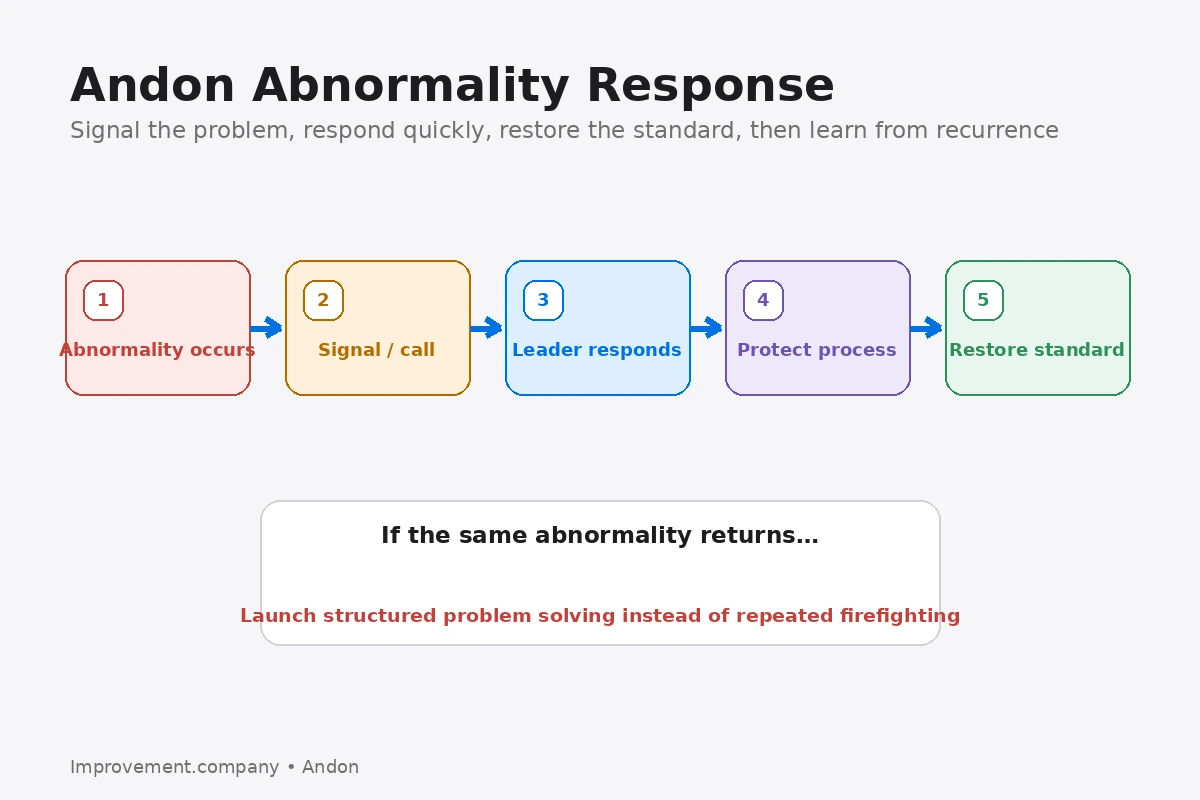
Learn how Andon systems signal abnormalities, support rapid response, connect to escalation and help teams protect safety, quality and flow.
Learn how a Daily Accountability Process connects targets, abnormalities, ownership, escalation, and follow-up so daily performance gaps lead to action.
Learn how a Daily Action Carryover Review keeps important unfinished actions visible across operating days by checking ownership, age, blockers, risk, and the next commitment.
Learn how a Daily Constraint Review focuses daily-management attention on the current system constraint, threats to flow, recovery actions, and escalation.
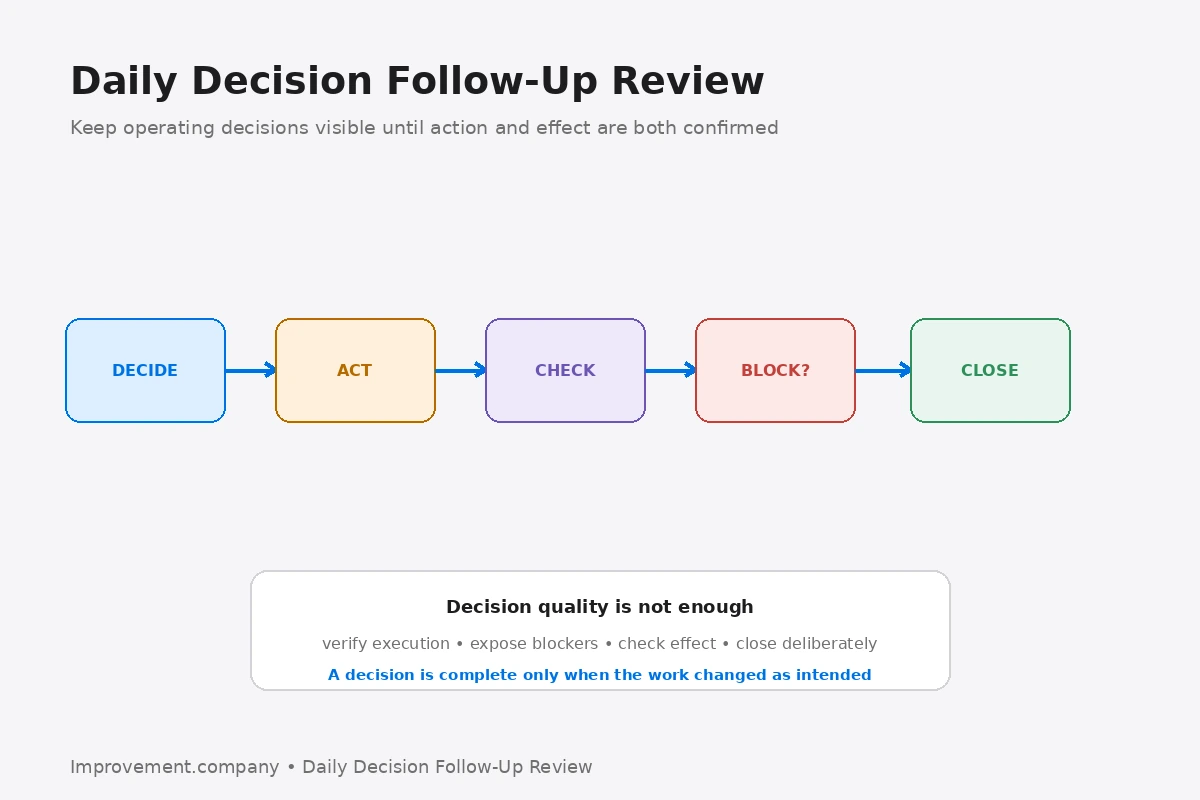
Learn how a Daily Decision Follow-Up Review keeps operating decisions visible until actions occur, effects are checked, blockers are escalated, and the loop is closed.
Learn how Daily Direction Setting converts demand, constraints, staffing, and risk into a clear operating plan before the shift begins.
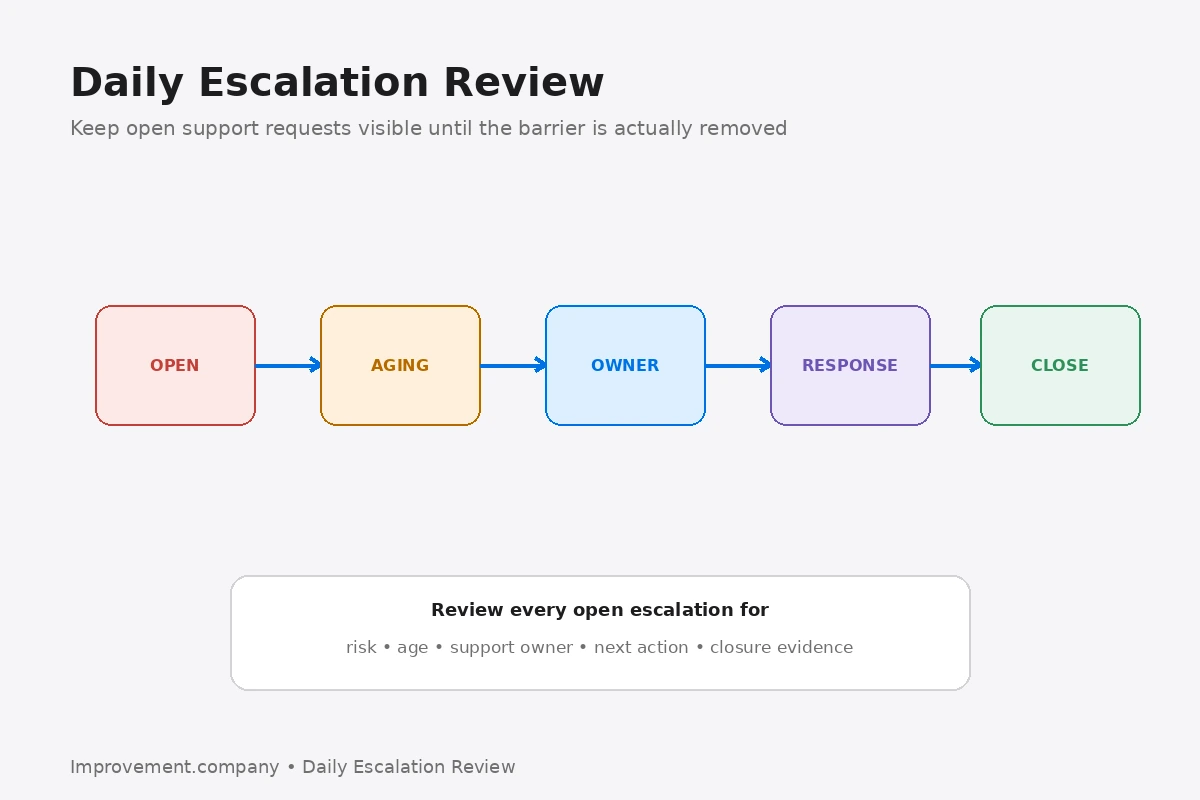
Learn how a Daily Escalation Review checks open escalations, risk, aging, ownership, response timing, and closure so important support requests do not disappear.
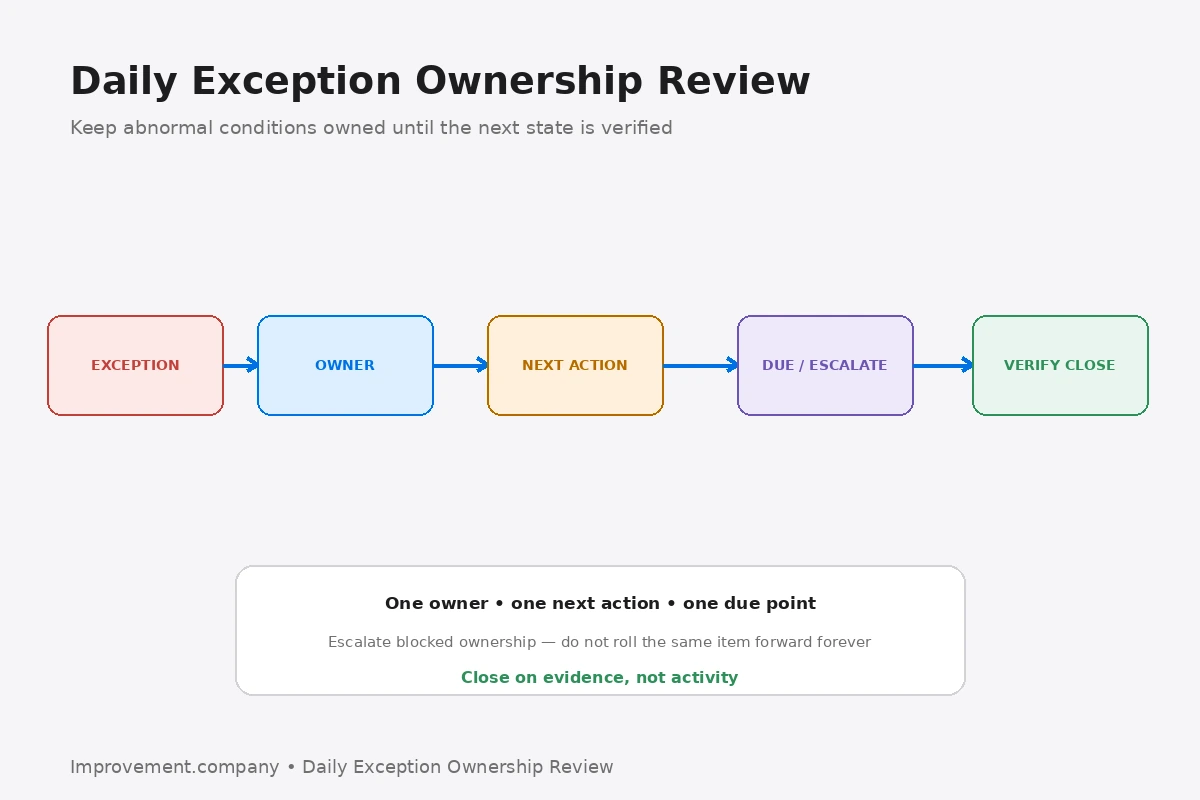
Learn how a Daily Exception Ownership Review assigns clear owners, due timing, escalation, evidence, and closure rules to abnormal conditions that cannot be resolved immediately.
Learn how a Daily Loss Review converts production, quality, maintenance, delivery, and labor losses into prioritized actions with ownership and escalation.
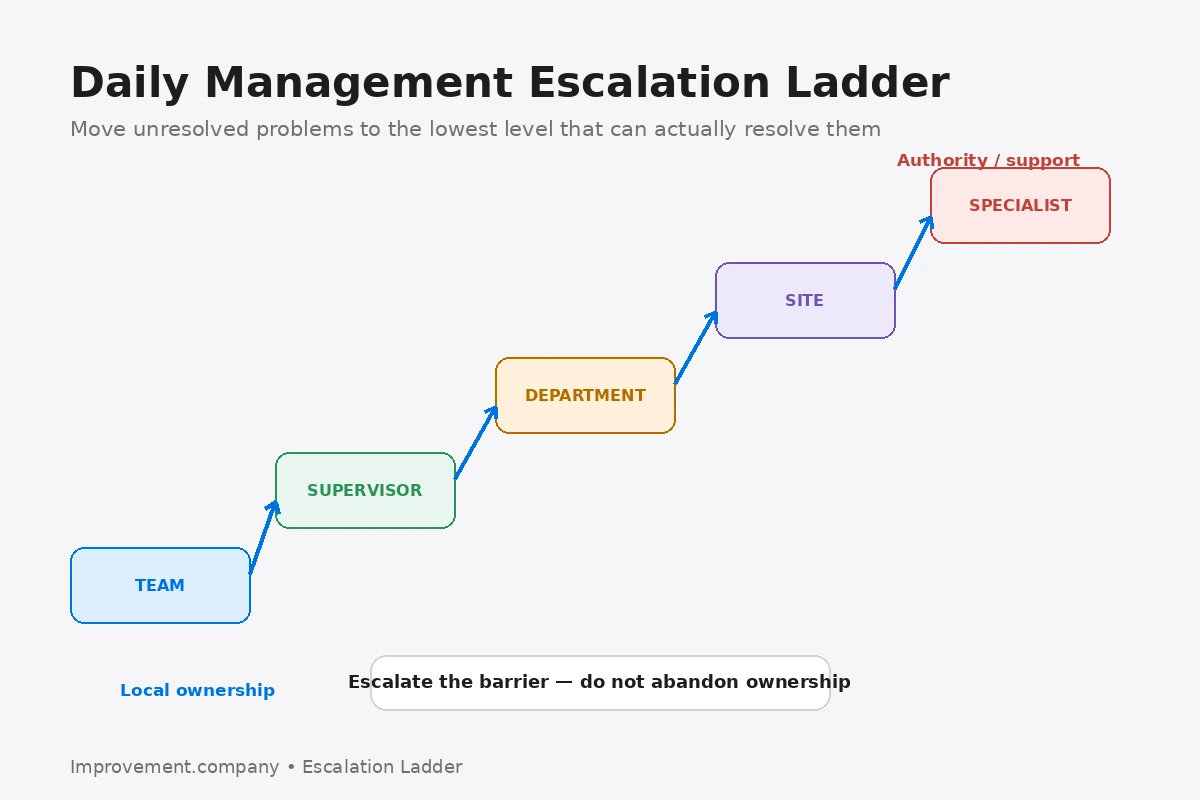
Learn how a Daily Management Escalation Ladder defines which problems stay local, which move upward, how fast escalation occurs, and what support is expected.
Learn how a Daily Management Reaction Plan links visible performance triggers with immediate response, ownership, escalation, and follow-up.
Learn how Daily Management Signal Quality improves boards and meetings by making abnormal conditions timely, specific, visible, actionable, and connected to ownership.
Daily Management connects standards, visual performance, problem escalation and leader routines so that teams can respond to abnormalities every day.
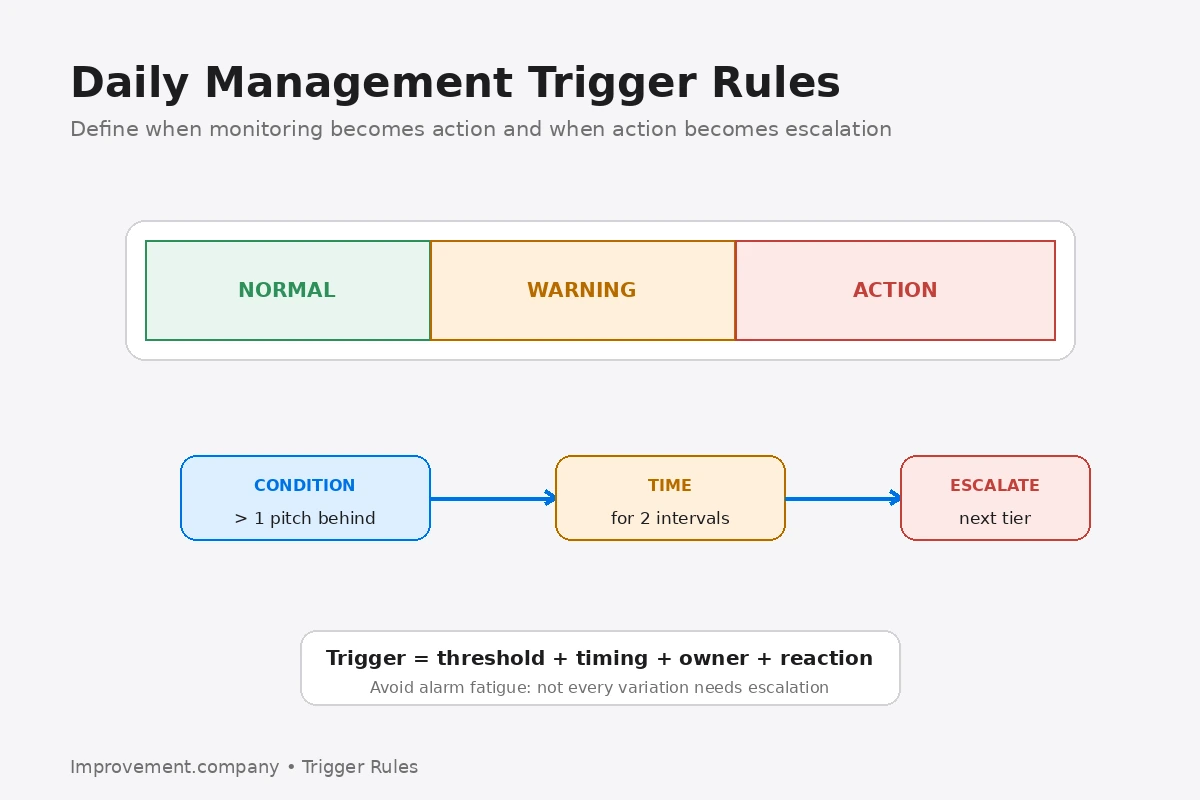
Learn how Daily Management Trigger Rules define thresholds, timing, ownership, and reactions that turn abnormal performance into immediate action instead of passive monitoring.
Learn how a Daily Performance Dialogue uses current conditions, abnormalities, actions, and support needs to convert metrics into practical decisions.
Learn how a Daily Priority Conflict Review resolves competing demands for people, equipment, material, or decisions using risk, customer impact, constraints, and authority.
Learn how a Daily Problem Review focuses on active operational problems, evidence, next actions, blockers, and escalation without turning every issue into a long meeting.
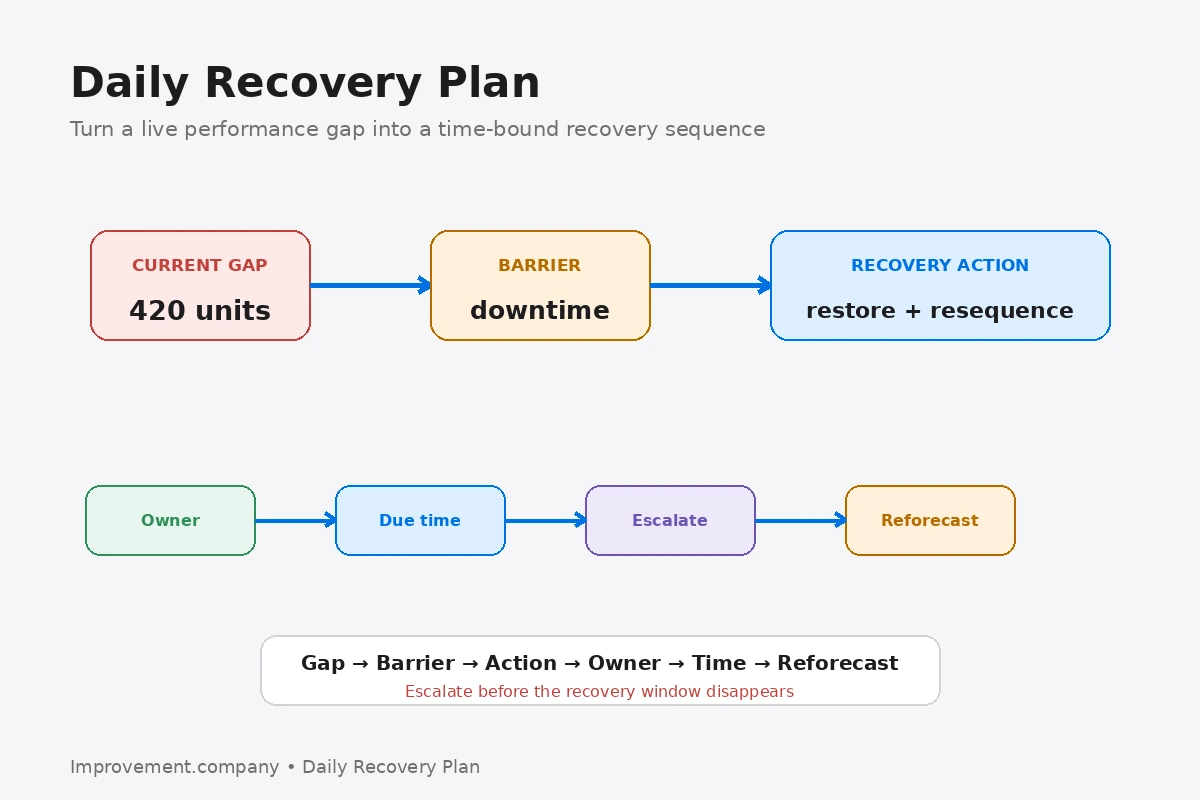
Learn how a Daily Recovery Plan converts an emerging performance gap into time-bound actions, ownership, escalation, and recovery checks before the operating period ends.
Learn how a Daily Response Effectiveness Review checks whether triggers, first responses, containment, escalation, and recovery actions control abnormal conditions.
Learn how a Daily Support Capacity Review compares urgent specialist demand with available maintenance, engineering, quality, and other support capacity.
Learn how Escalation Management defines when operating problems move to higher support levels so teams receive timely decisions, resources, and expertise.
Learn how Escalation Response Time measures the interval between a valid escalation and the support, decision, or resource needed to remove the operating barrier.
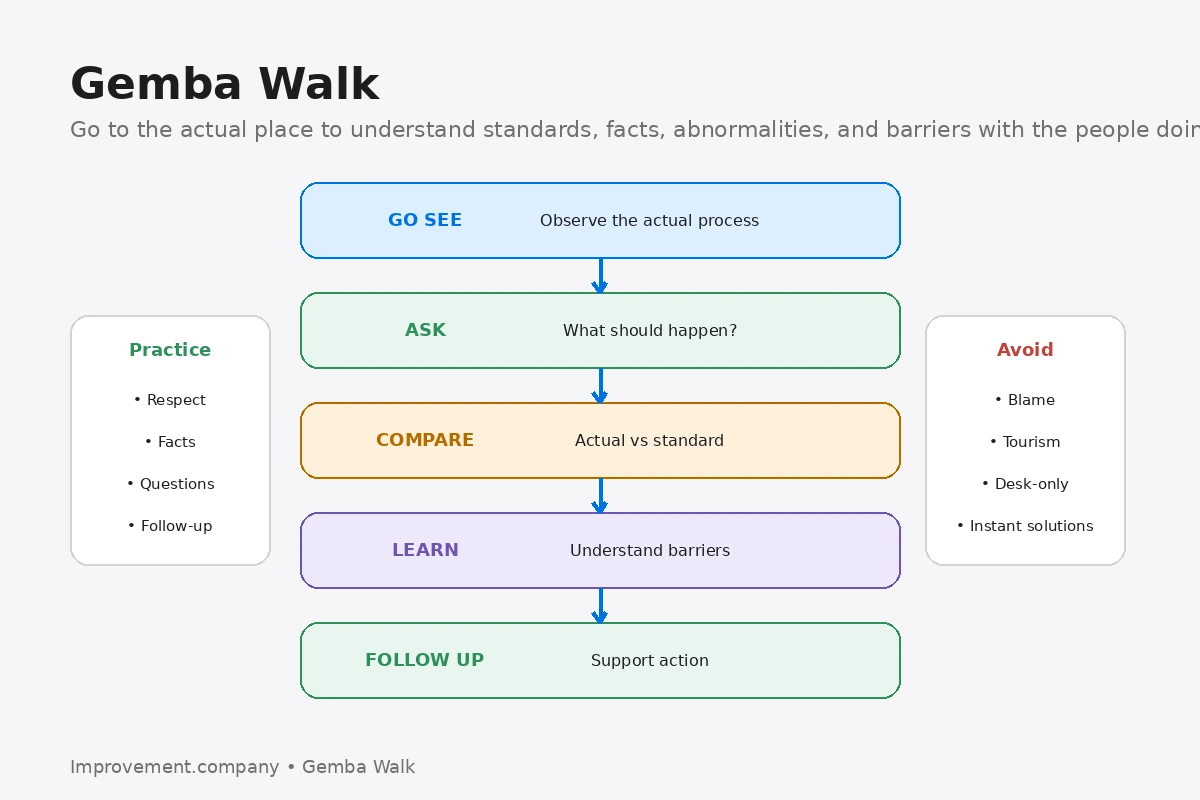
A Gemba Walk helps leaders understand work where it actually happens by observing processes, asking questions and learning from the people involved.
Learn how an Hour-by-Hour Board compares expected and actual output in short intervals so teams can respond to production gaps quickly.
Learn how a Kamishibai board makes recurring audit and verification tasks visible so leaders can confirm that important routines are performed.
Learn how KPI boards support Daily Management through clear targets, current status, abnormality visibility, ownership, escalation and action follow-up.
Learn how Management by Exception uses clear standards, visual signals, thresholds, and escalation rules so leaders focus attention where intervention adds value.
Learn how Process Confirmation uses focused leadership checks at the Gemba to verify that critical process conditions and standards are working.
Learn how Shift Handover Management transfers abnormal conditions, priorities, risks, and unfinished work so the next team starts with an accurate operating picture.
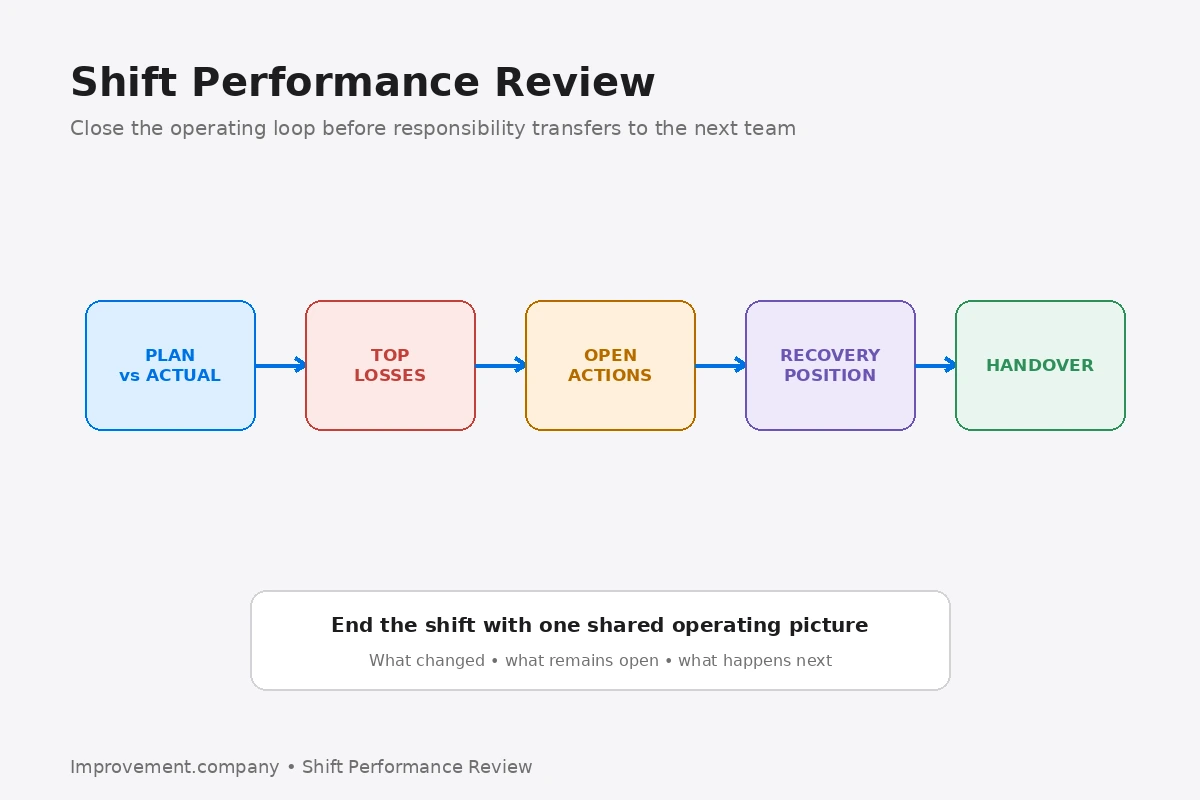
Learn how a Shift Performance Review compares plan versus actual, explains major losses, closes actions, and prepares a focused handover for the next operating team.
Learn how a Shift Recovery Handover transfers unresolved production gaps, actions, risks, and priorities between shifts without resetting the problem or losing accountability.
Learn how a Shift Start-Up Meeting aligns safety, staffing, priorities, abnormalities, and support needs before the shift begins operating at full pace.
Learn how Short Interval Control reviews performance in frequent intervals so teams can contain abnormalities and recover before the shift is lost.
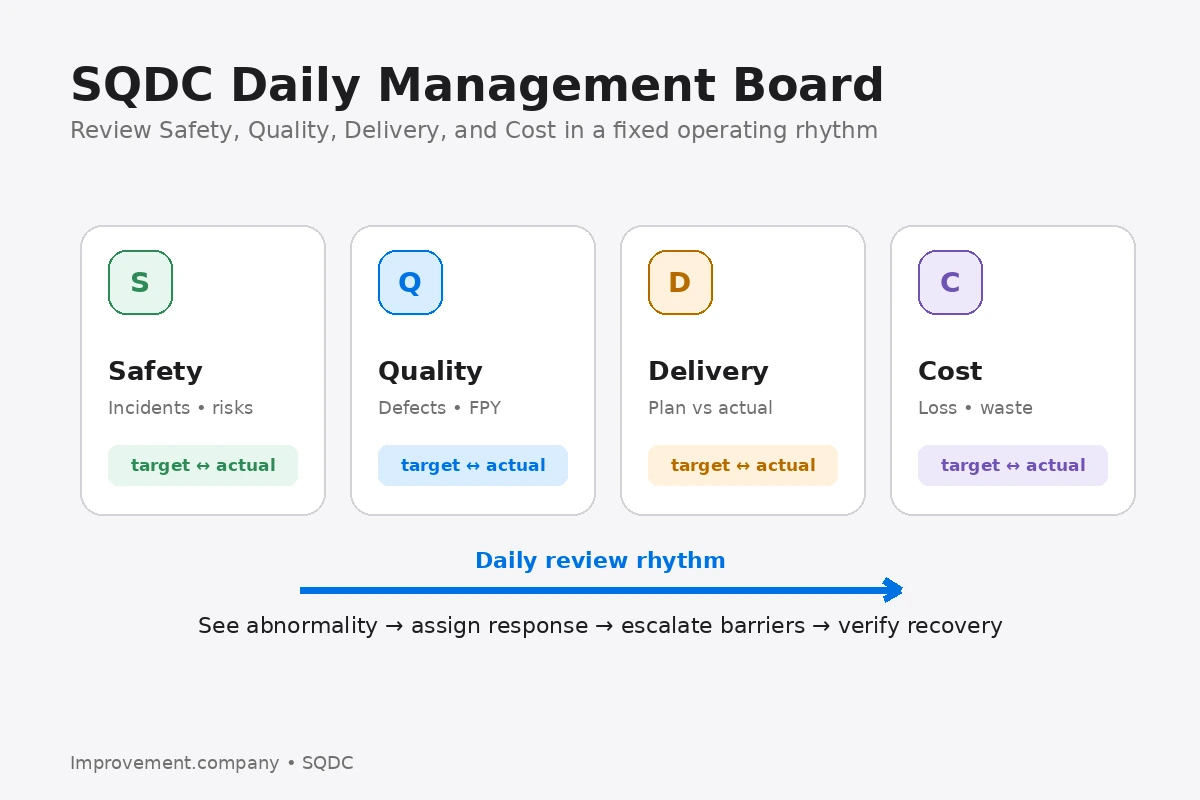
Use SQDC or SQDCP to review Safety, Quality, Delivery, Cost, and People together so daily management exposes gaps without optimizing one metric alone.
Learn how a Standard Work Audit compares actual work with the documented sequence, timing, WIP, and operating conditions without turning the audit into blame.
Learn how Tiered Daily Meetings connect frontline performance, escalation, support, and leadership response through a short daily cadence.
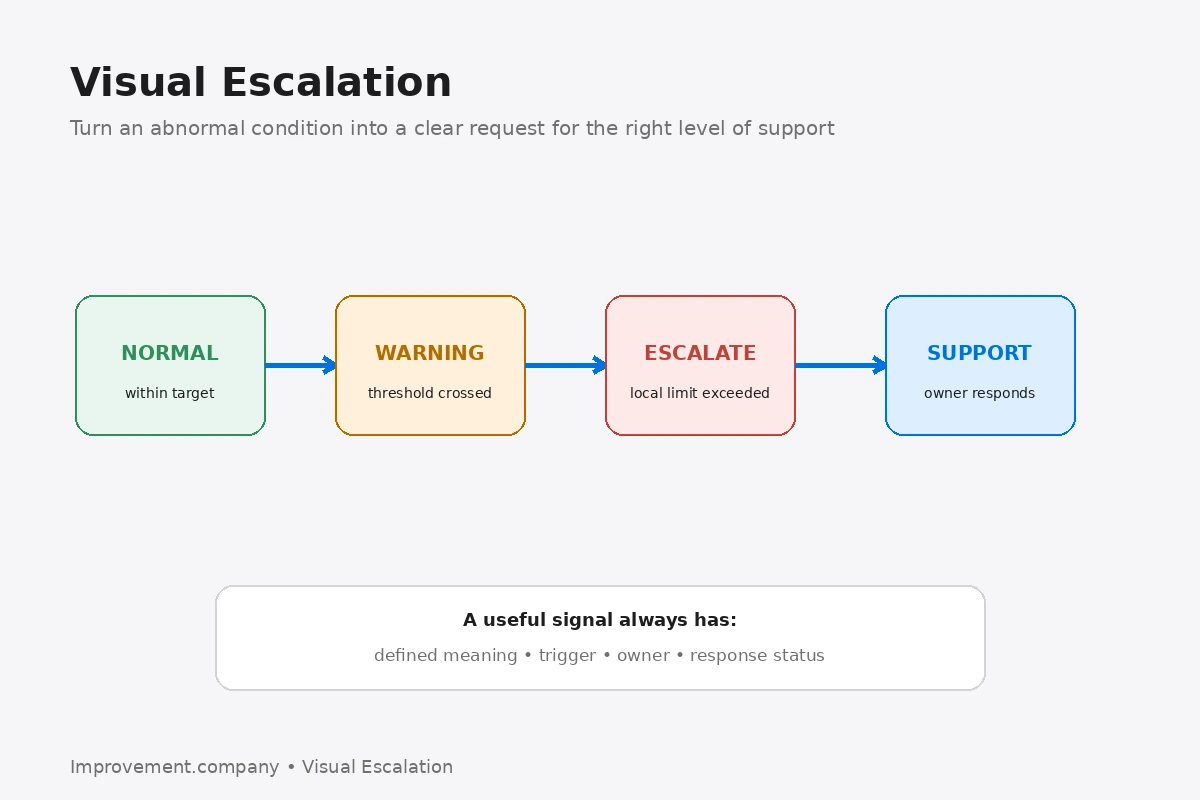
Learn how Visual Escalation uses clear signals, thresholds, ownership, and status changes to make abnormal conditions and required support visible at a glance.
Visual Management makes expected conditions, actual performance, abnormalities, and required actions easier for teams to understand at a glance.