Business Process Management: Manage Processes as Ongoing Assets
Learn how Business Process Management combines ownership, design, measurement, control, and improvement so important processes are managed continuously.
Connect strategy, systems and culture through Hoshin Kanri, performance management, transformation and organization-wide improvement.
Start with the fundamentals, then follow the related methods as the knowledge base grows.
Learn how Business Process Management combines ownership, design, measurement, control, and improvement so important processes are managed continuously.
Learn how Business Process Standardization defines consistent cross-functional workflows, roles, inputs, decisions, controls, and exceptions without blocking necessary flexibility.
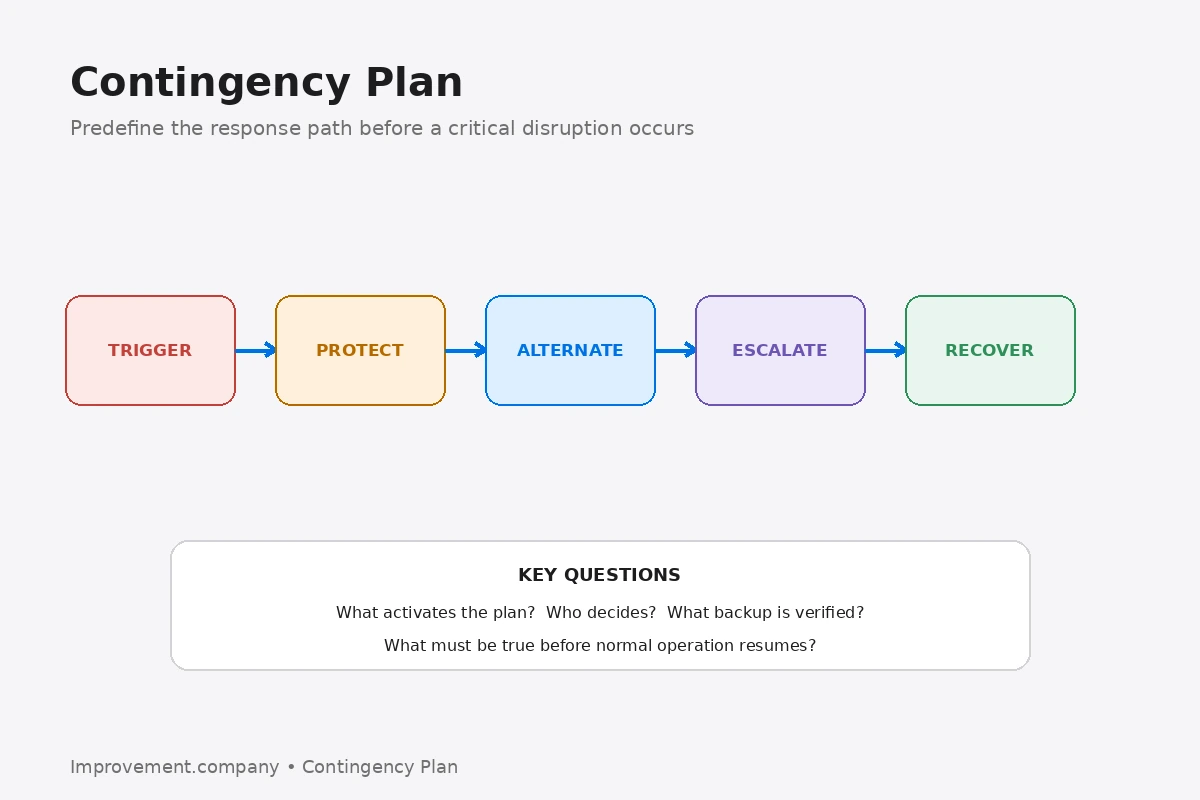
Learn how a Contingency Plan prepares roles, actions, communication, alternatives, recovery criteria, and escalation before a critical operating disruption occurs.
Learn how Critical Process Parameters identify process settings and conditions that materially affect critical outputs, validation, control plans, and reaction rules.
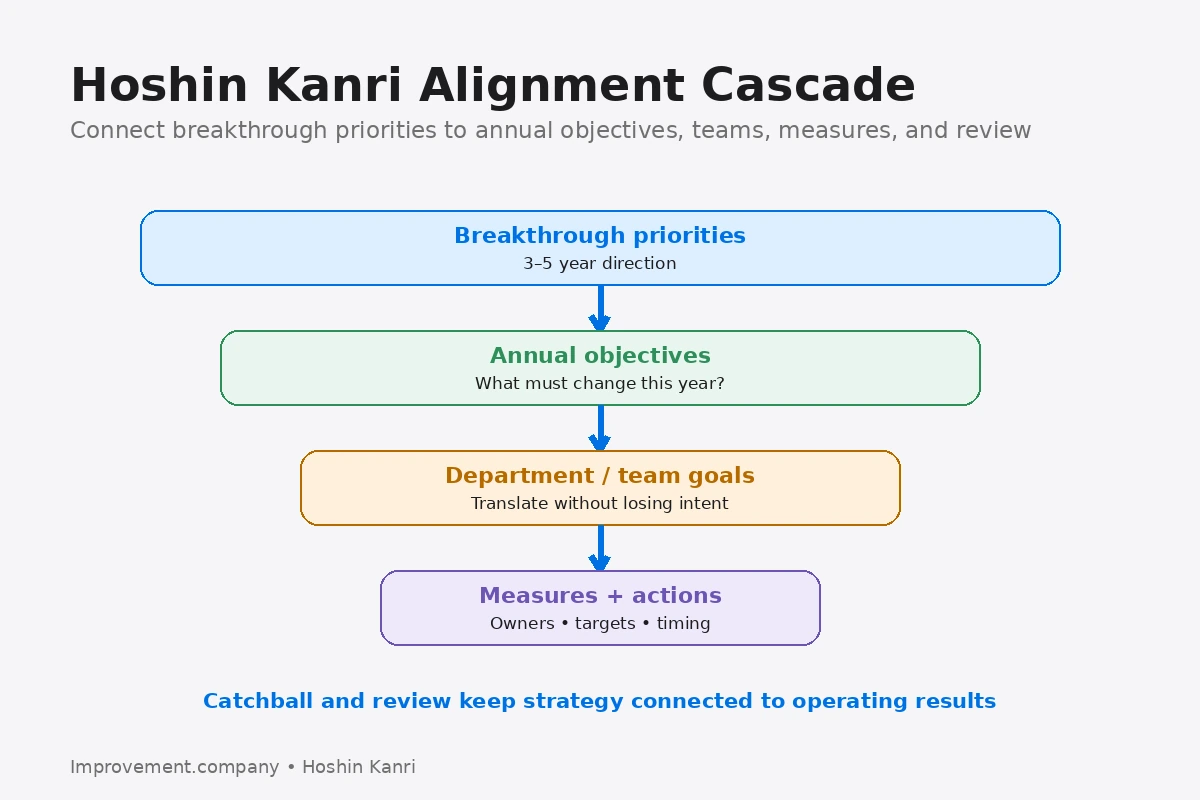
Hoshin Kanri is a strategy-deployment approach that aligns breakthrough priorities, measures and improvement activity across organizational levels.
Learn how Catchball creates two-way dialogue in Hoshin Kanri so goals, measures, resources, and feasibility are aligned before execution.
Learn how a regular Hoshin review cadence keeps strategic priorities, measures, countermeasures, and learning active after annual planning.
Learn how Improvement Portfolio Management balances strategic value, risk, capacity, and sequencing across multiple improvement initiatives.
Learn how Management of Change controls technical and operational risk by reviewing proposed changes before implementation and verifying safe release.
Learn how Obeya creates a shared visual management space for strategy, performance, problems, decisions, and cross-functional coordination.
Learn how Operating Discipline strengthens reliable execution by aligning standards, capability, supervision, process confirmation, reaction rules, and accountability.
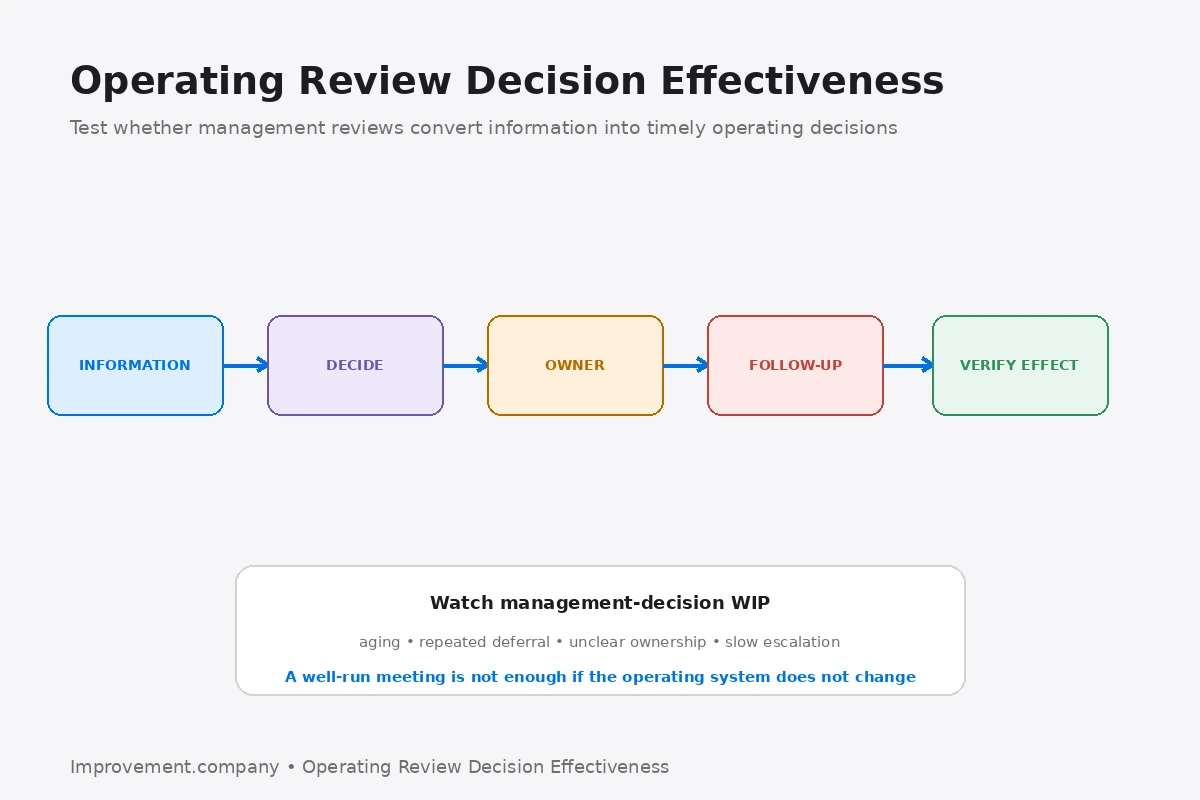
Learn how Operating Review Decision Effectiveness checks whether management reviews produce timely decisions, clear ownership, follow-up, escalation, and useful operating effects.
Learn how an Operating Review System connects daily, weekly, and monthly performance reviews so issues escalate appropriately without duplicating meetings.
Learn how an Operational Excellence management system connects strategy, daily management, problem solving, capability, and improvement into one operating rhythm.
Learn how Process Architecture defines process levels, boundaries, ownership, and relationships so organizations can manage work beyond functional silos.
Learn how a Process Control Exception Log records temporary deviations from critical controls with reason, risk, owner, approval, compensating action, expiry, and closure evidence.
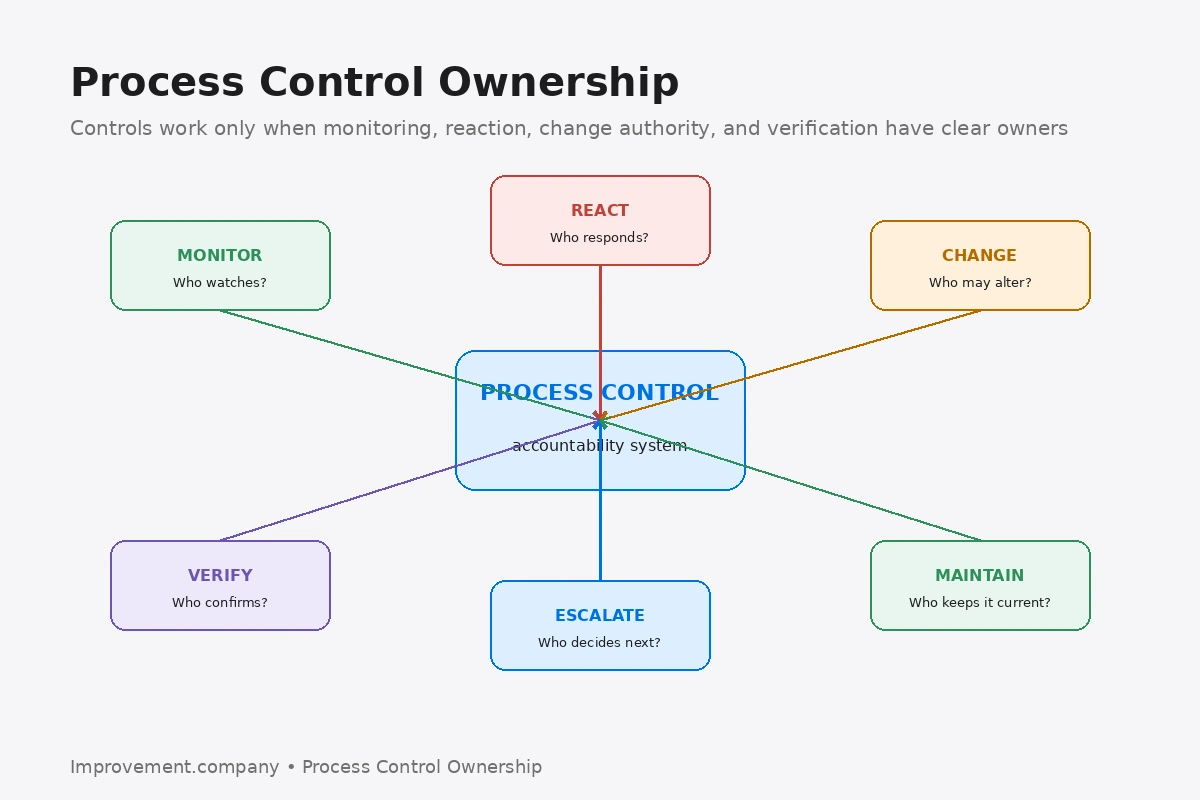
Learn how Process Control Ownership clarifies who monitors critical conditions, reacts to abnormality, approves changes, and verifies that process controls remain effective.
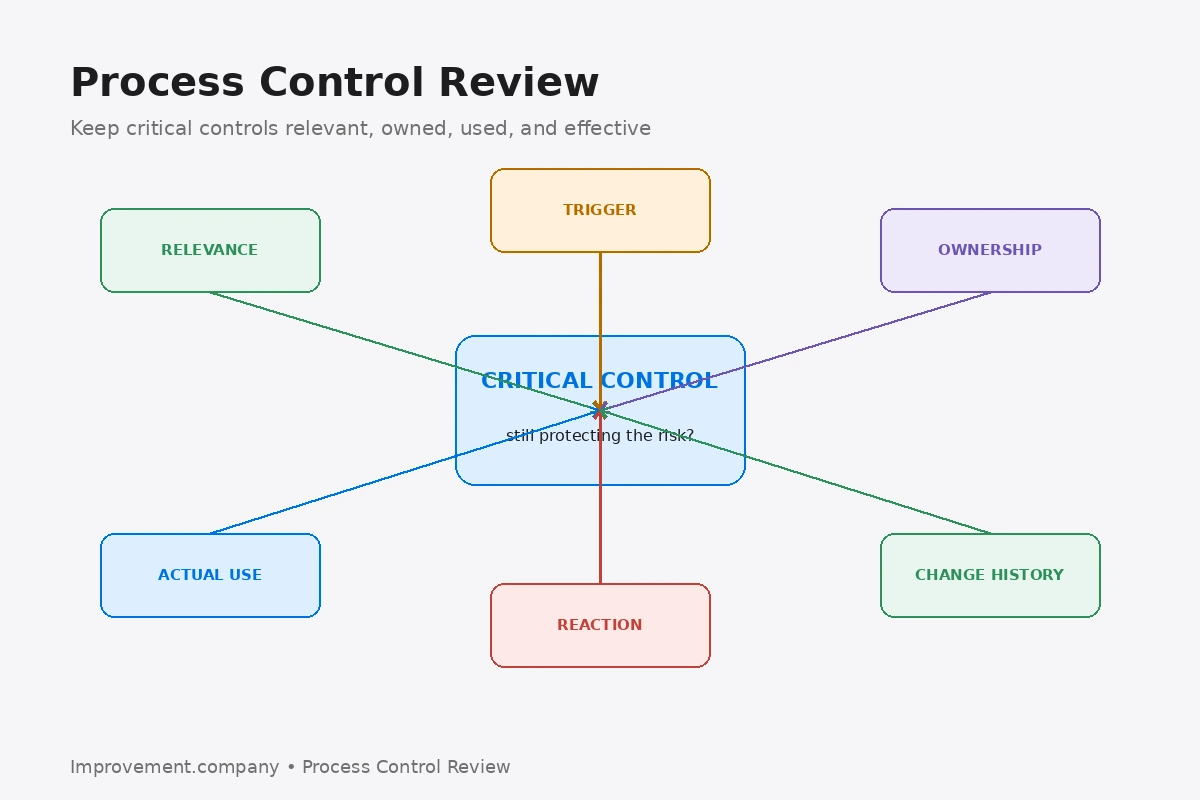
Learn how a Process Control Review evaluates control relevance, trigger quality, ownership, reaction effectiveness, and change history so critical process controls remain useful.
Learn how a Process Control Strategy combines critical characteristics, controls, measurement, reaction rules, ownership, and escalation into one operating logic.
Learn how a Process Decision Escalation Review identifies delayed decisions, unclear authority, missing evidence, cross-functional conflict, and slow escalation paths.
Learn how a Process Decision Log records significant decisions, evidence, authority, assumptions, expected effects, and review dates so later teams understand the logic.
Learn how a Process Design Review tests flow, risk, controls, maintainability, material, staffing, and ownership before a new or redesigned process is released.
Learn how Process Exception Management identifies, approves, tracks, and closes work that cannot follow the normal process without letting exceptions become normal.
Learn how a Process Exception Review identifies recurring deviations, aging temporary controls, approval patterns, and opportunities to improve the standard process.
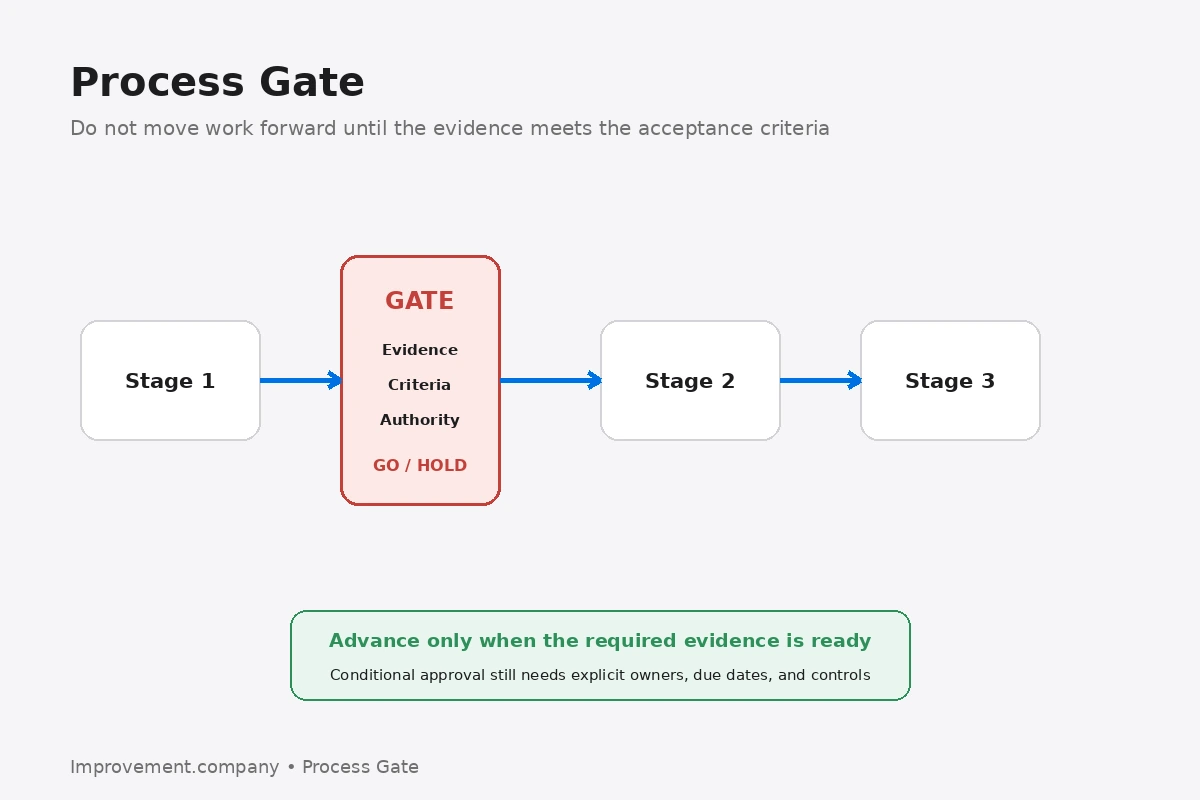
Learn how a Process Gate defines the evidence, decision authority, and acceptance criteria required before work can move to the next stage of a business or operating process.
Learn how Process Governance defines ownership, decision rights, measures, review routines, and escalation for cross-functional processes.
Learn how Process Governance Escalation Thresholds define when issues stay local or move upward based on risk, authority, time sensitivity, and control failure.
Learn how a Process Governance Review checks ownership, decision rights, escalation paths, review cadence, control authority, and cross-functional interfaces.
Learn how Process Interface Management defines inputs, outputs, ownership, standards, and escalation at process boundaries where work commonly breaks down.
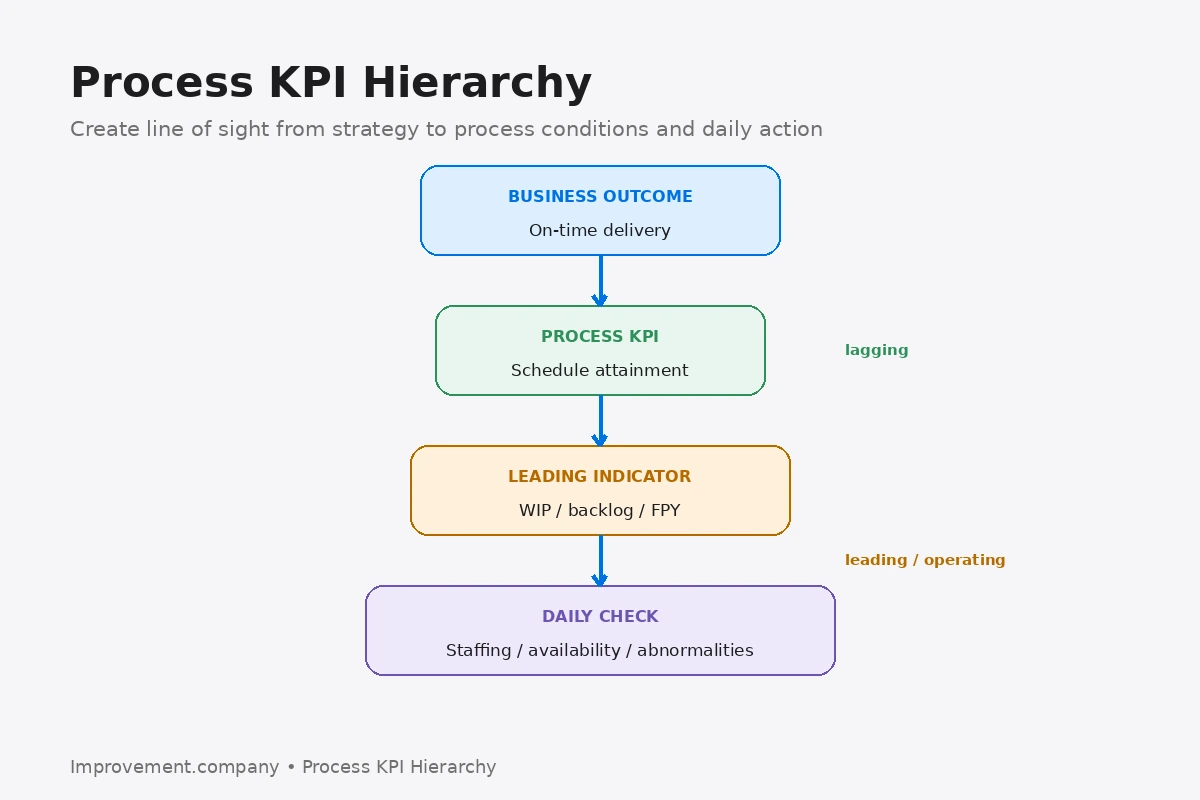
Learn how a Process KPI Hierarchy links strategic outcomes to process results, leading indicators, and daily operating measures without creating a wall of disconnected metrics.
Learn how a Process Maturity Assessment evaluates management discipline, standardization, measurement, problem solving, ownership, and improvement capability.
Learn how Process Mining reconstructs process paths from system event data to reveal variants, delays, rework, bottlenecks, and conformance gaps.
Learn how Process Ownership creates accountability for end-to-end performance when work crosses departments, systems, and organizational boundaries.
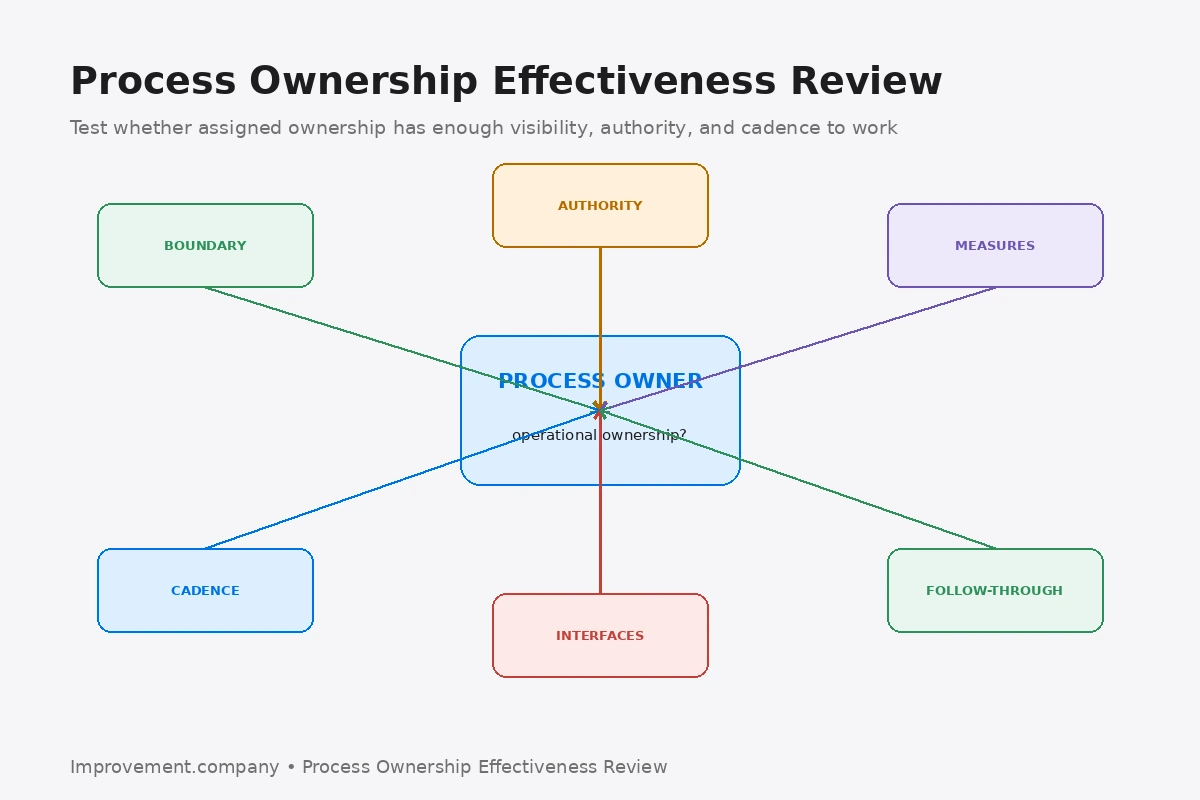
Learn how a Process Ownership Effectiveness Review checks authority, measures, review cadence, cross-functional coordination, risk ownership, and improvement follow-through.
Learn how Process Ownership Handover transfers performance accountability, risks, controls, open actions, and decision rights when responsibility moves to a new process owner.
Learn how Process Performance Management connects customer outcomes, process measures, targets, review cadence, ownership, and improvement priorities.
Learn how a Process Risk Review checks whether risks, controls, triggers, ownership, assumptions, and priorities still reflect current operating conditions.
Learn how Process Validation demonstrates that a process can consistently achieve intended results before full release, handover, or routine production.
Learn how Risk-Based Thinking identifies uncertainty, consequence, controls, and opportunities before decisions are made instead of relying only on reactive correction.
Operational Excellence connects strategy, leadership, process discipline and Continuous Improvement into a system that reliably delivers better performance.
Learn how the Hoshin Kanri X-Matrix connects long-term direction, annual priorities, measures, initiatives, and ownership.