A3 Coaching: Develop Problem-Solving Thinking, Not Just the Report
Learn how A3 Coaching uses questions, evidence, reflection, and iterative review to develop stronger problem-solving capability without taking ownership away.
Build capability through coaching, leader standard work, respect for people, skill development, empowerment and strong improvement habits.
Start with the fundamentals, then follow the related methods as the knowledge base grows.
Learn how A3 Coaching uses questions, evidence, reflection, and iterative review to develop stronger problem-solving capability without taking ownership away.
Learn how a Capability Development Plan converts identified skill gaps into prioritized learning actions, practice, coaching, qualification, and follow-up.
Learn how a Change Adoption Review checks actual behavior, barriers, capability, leader reinforcement, and process results after a change has been launched.
Learn how a Change Champion Network connects credible local influencers with sponsors and project teams to surface barriers, reinforce behavior, and support adoption.
Learn how a Change Feedback Loop captures user experience, barriers, unintended effects, and adoption signals so a new process can be adjusted without losing control.
Learn how a Change Impact Assessment identifies affected roles, processes, systems, skills, behaviors, and risks before implementation planning begins.
Learn how change management supports Continuous Improvement by building understanding, participation, capability, reinforcement, and ownership.
Learn how a Change Readiness Assessment evaluates sponsorship, capability, workload, systems, stakeholder support, and barriers before implementation.
Learn how a Change Reinforcement Plan uses leader follow-up, process confirmation, coaching, measures, recognition, and barrier removal to stabilize new ways of working.
Learn how a Change Reinforcement Review evaluates leader follow-up, process confirmation, barriers, recognition, metrics, and workarounds after a change has been launched.
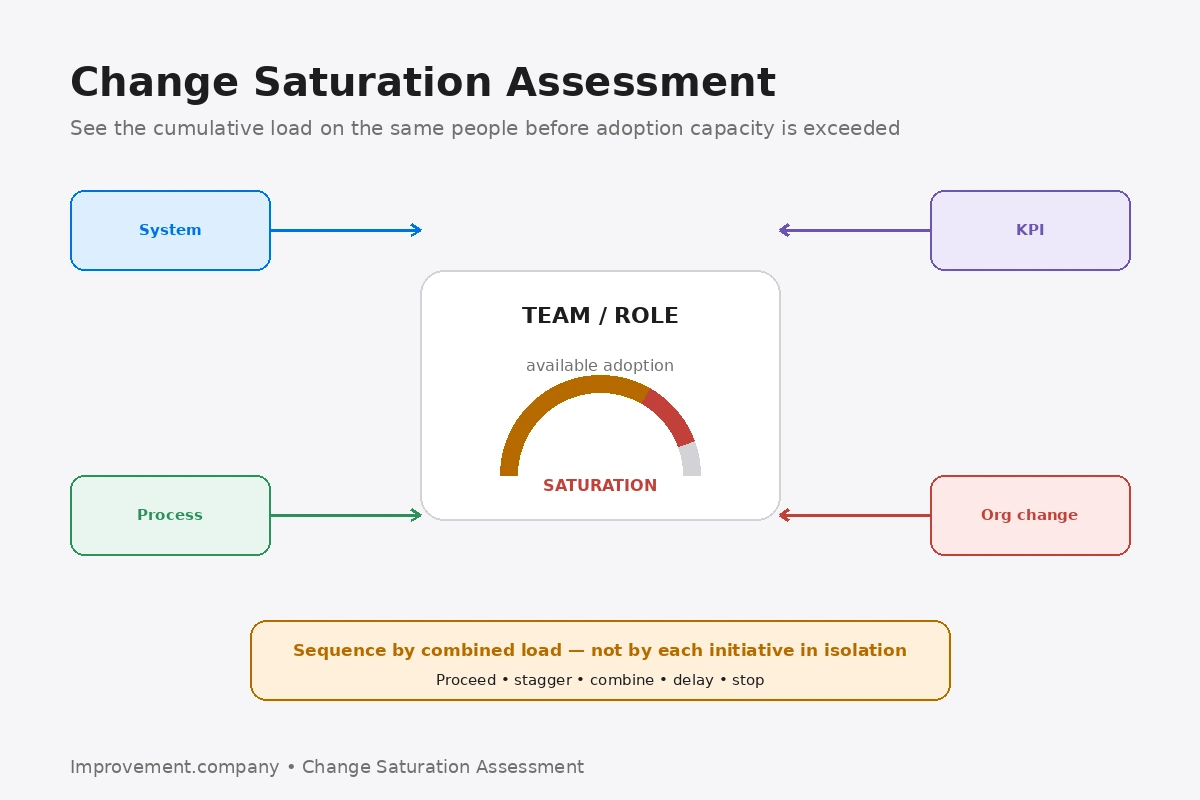
Learn how a Change Saturation Assessment identifies overlapping initiatives, competing behaviors, timing conflicts, and capacity risks before change overload damages adoption.
Learn how effective Change Sponsorship creates direction, removes barriers, reinforces new behavior, and keeps leadership actions aligned during implementation.
Learn how Coaching Action Follow-Up converts coaching conversations into clear experiments, commitments, observations, and learning without taking ownership away from the learner.
Improvement coaching develops people's problem-solving capability by using questions, observation and reflection instead of immediately supplying answers.
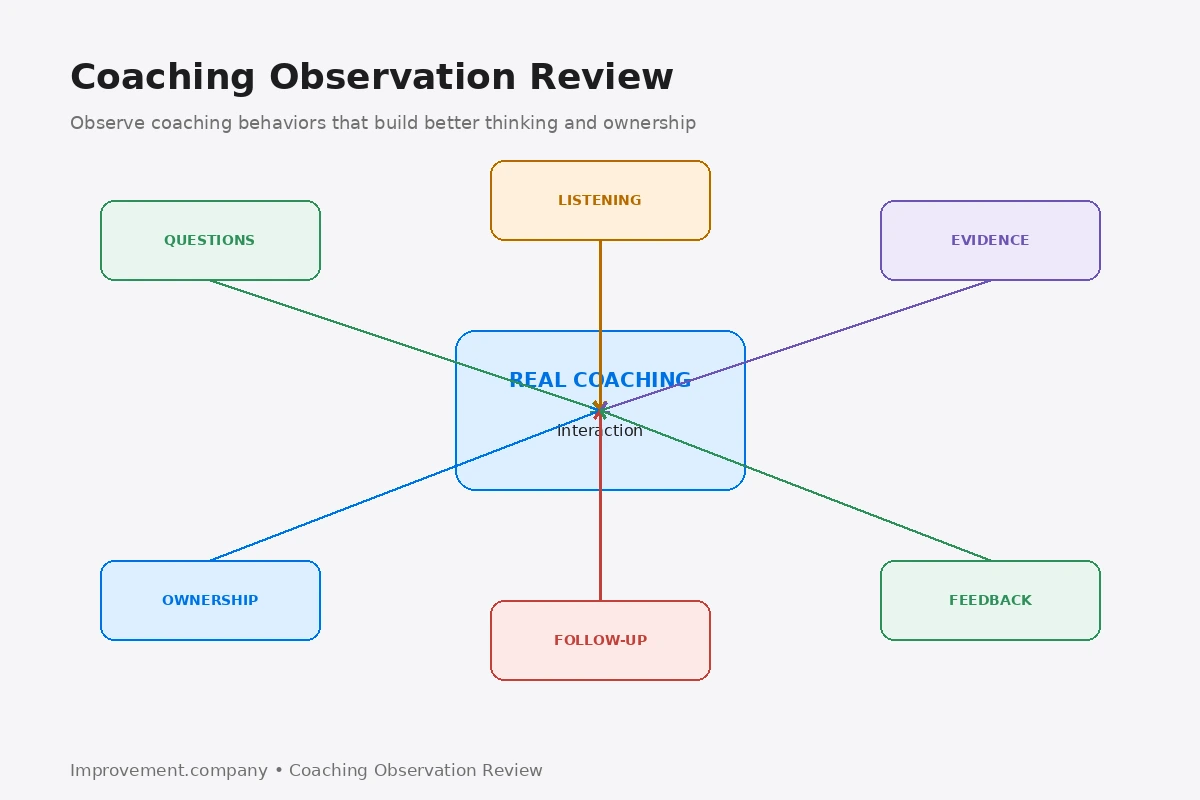
Learn how a Coaching Observation Review examines real coaching interactions for question quality, listening, ownership, evidence, follow-up, and capability development.
Learn how Competency-Based Qualification verifies knowledge and demonstrated job performance before a person is signed off as capable of working independently.
Learn how Decision Rights define who recommends, approves, decides, and escalates improvement choices so teams move faster without losing governance.
Learn how Force Field Analysis identifies driving and restraining forces around a proposed change so teams can strengthen support and reduce resistance.
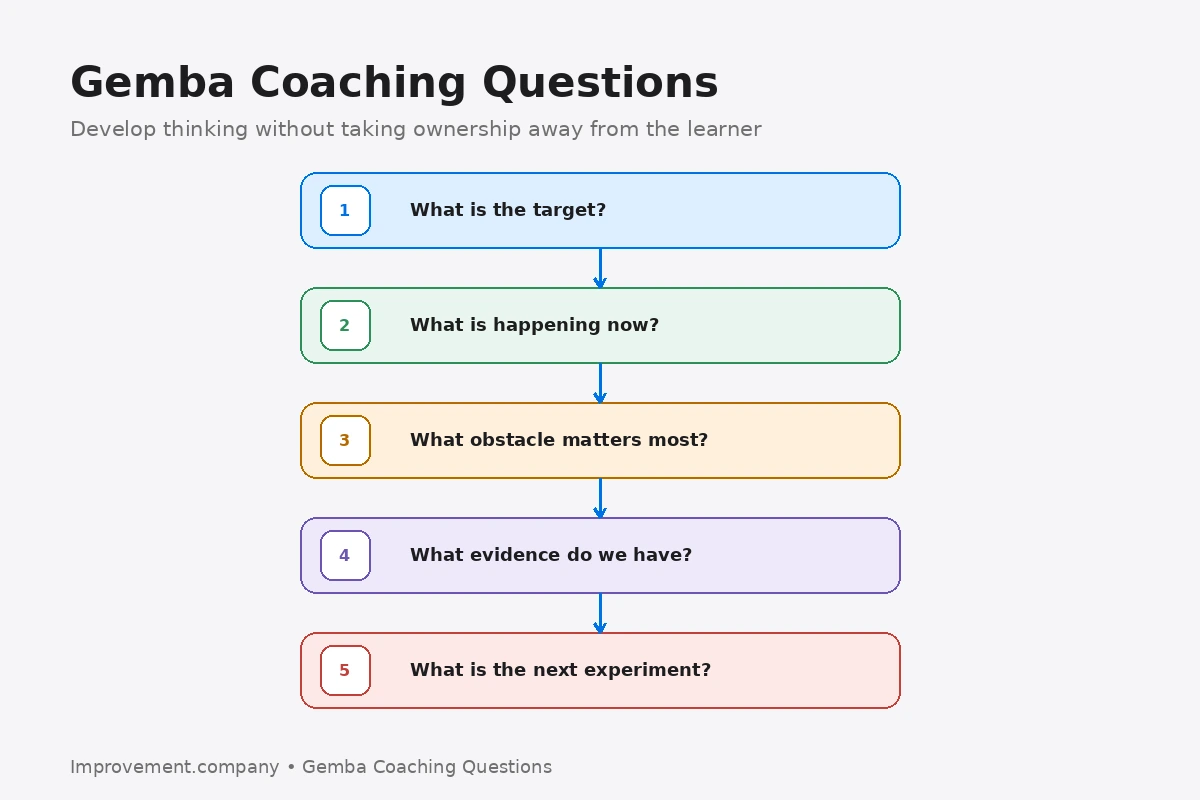
Learn how Gemba Coaching Questions help leaders develop problem-solving capability by asking about the target, current condition, evidence, obstacles, and next experiment.
Learn how a Kaizen Event facilitator structures preparation, participation, problem solving, testing, and follow-up while keeping ownership with the team.
Learn how a Knowledge Transfer Plan captures critical know-how, creates supervised practice, verifies competence, and reduces operational risk from single-person dependency.
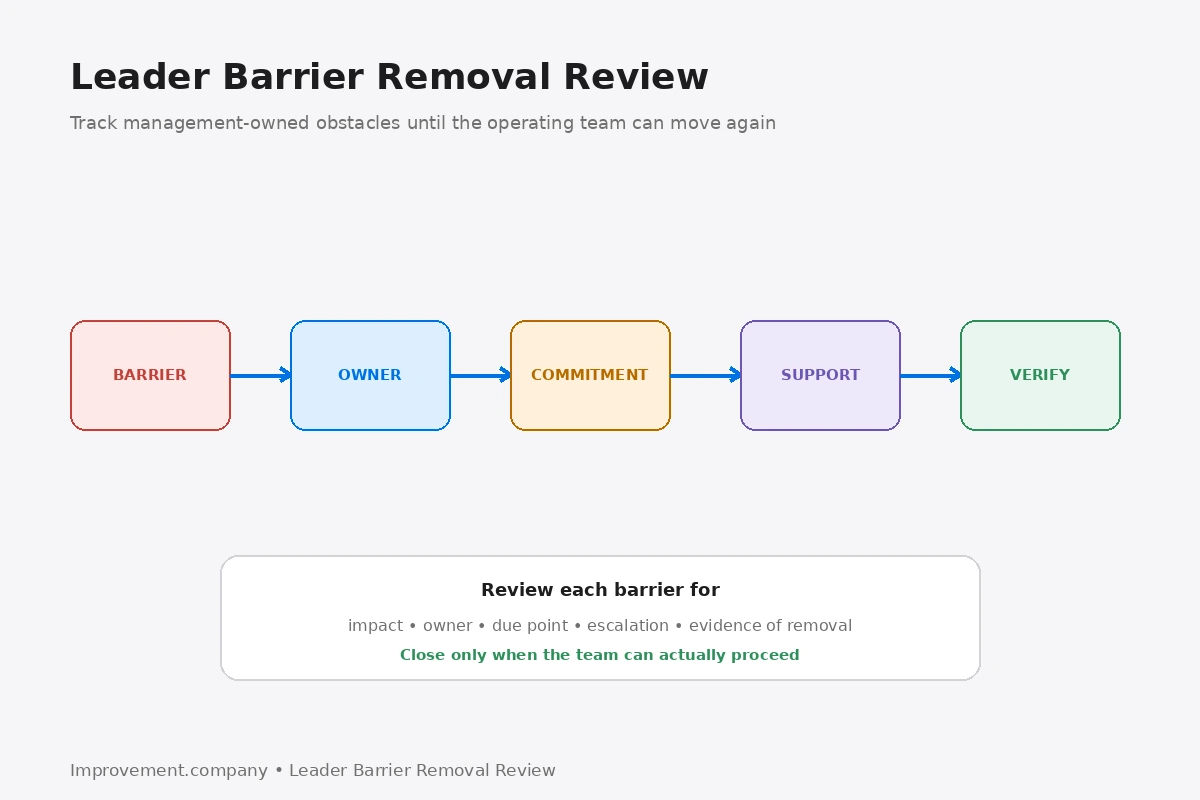
Learn how a Leader Barrier Removal Review checks whether management-owned obstacles are being removed with clear ownership, timing, escalation, and evidence of impact.
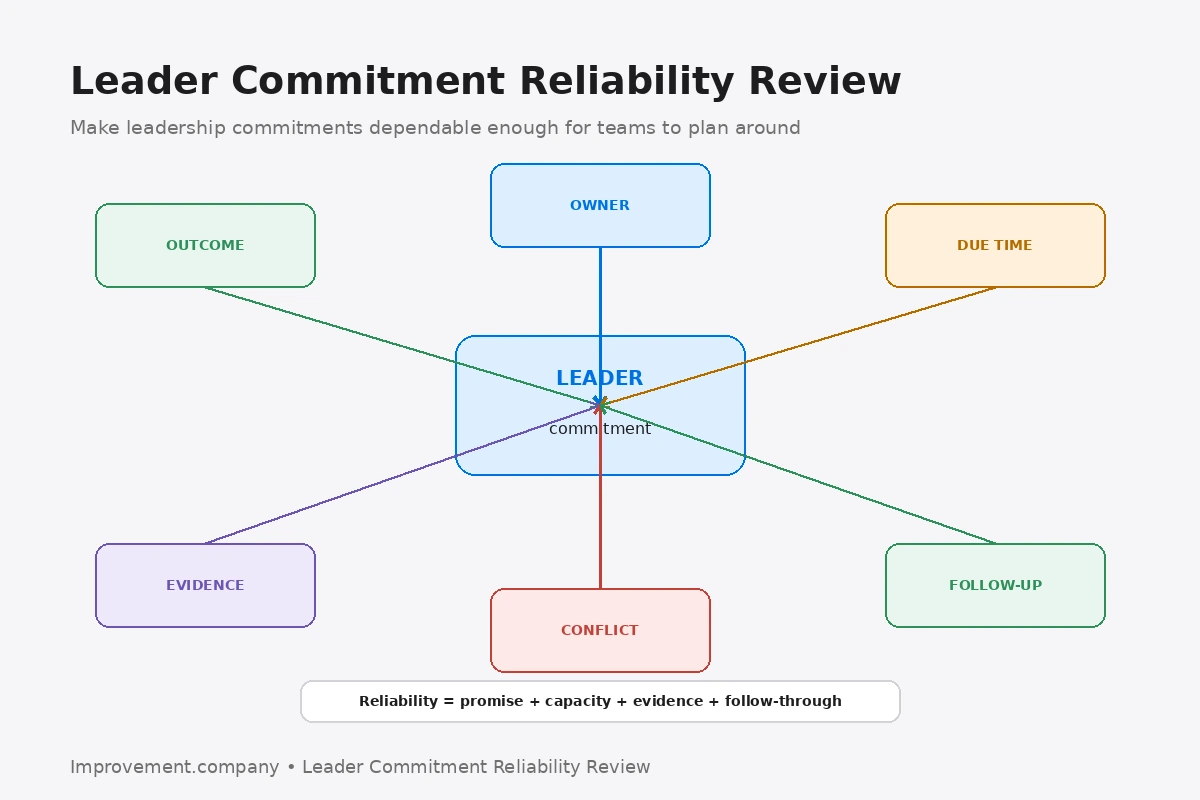
Learn how a Leader Commitment Reliability Review checks whether leadership commitments have clear ownership, timing, evidence, escalation, and dependable follow-through.
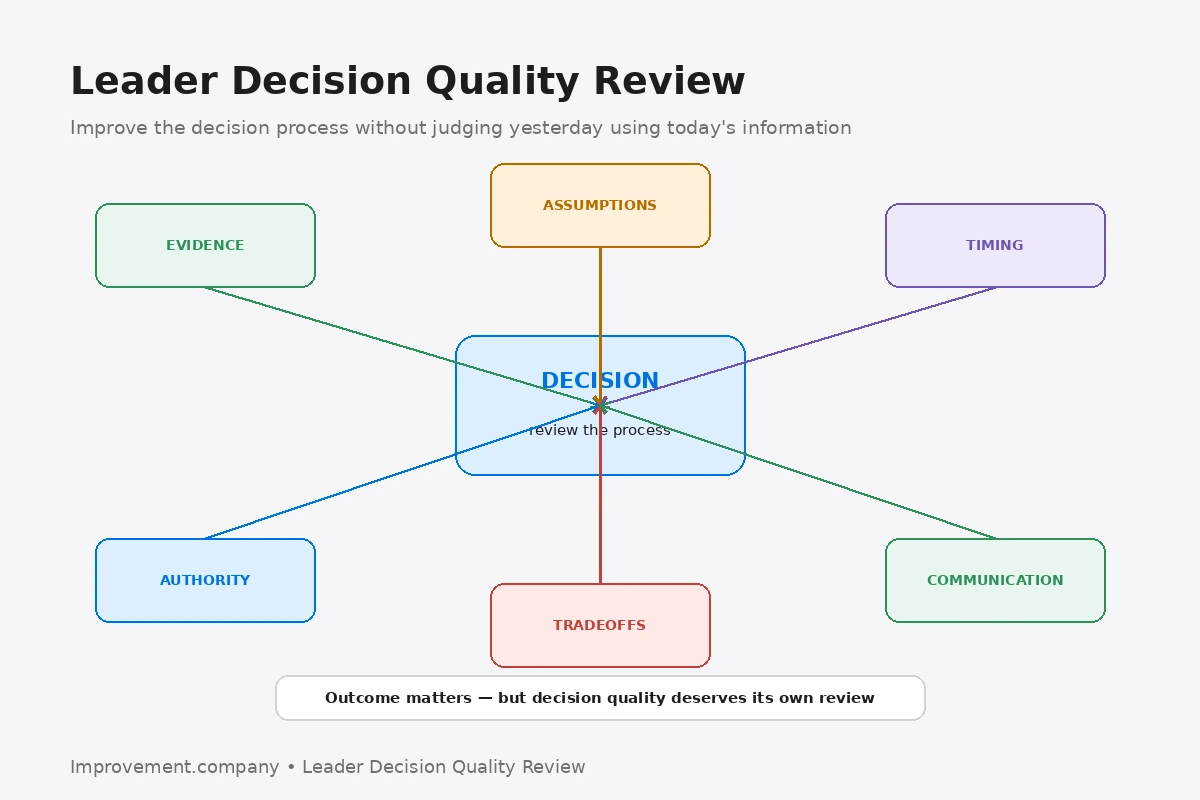
Learn how a Leader Decision Quality Review examines evidence, timing, authority, assumptions, tradeoffs, communication, and results so management decisions improve over time.
Learn how Leader Delegation Effectiveness clarifies authority, outcomes, limits, escalation triggers, support, and follow-up while preserving accountability.
Learn how a Leader Escalation Quality Review checks response speed, clarity, authority, ownership, support quality, feedback, and closure after escalation.
Learn how Leader Follow-Up Discipline turns management commitments into dependable action by clarifying ownership, timing, evidence, escalation, and closure without micromanaging.
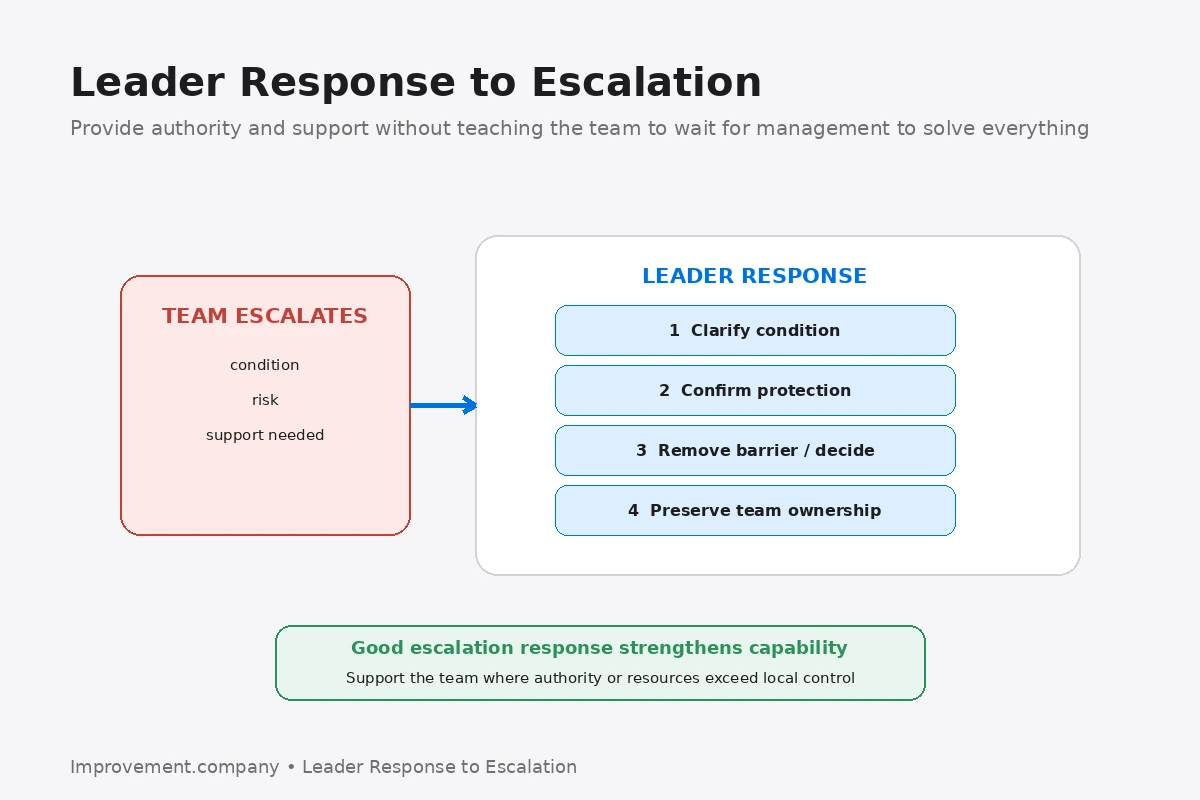
Learn how leaders should respond to escalation by clarifying risk, removing barriers, providing decisions, and preserving frontline ownership of the problem.
Leader Standard Work defines recurring leadership routines that help sustain standards, develop people and keep attention focused on process performance.
Learn how Nemawashi builds understanding and alignment through early discussion before a formal decision or major organizational change.
Learn why psychological safety helps employees surface abnormalities, admit uncertainty, test ideas, and participate in problem solving without fear.
Learn how a RACI Matrix clarifies who is responsible, accountable, consulted, and informed across improvement work and cross-functional decisions.
Explore Respect for People as an operational principle: involve employees, develop capability, design fair systems, and respond to problems without blame.
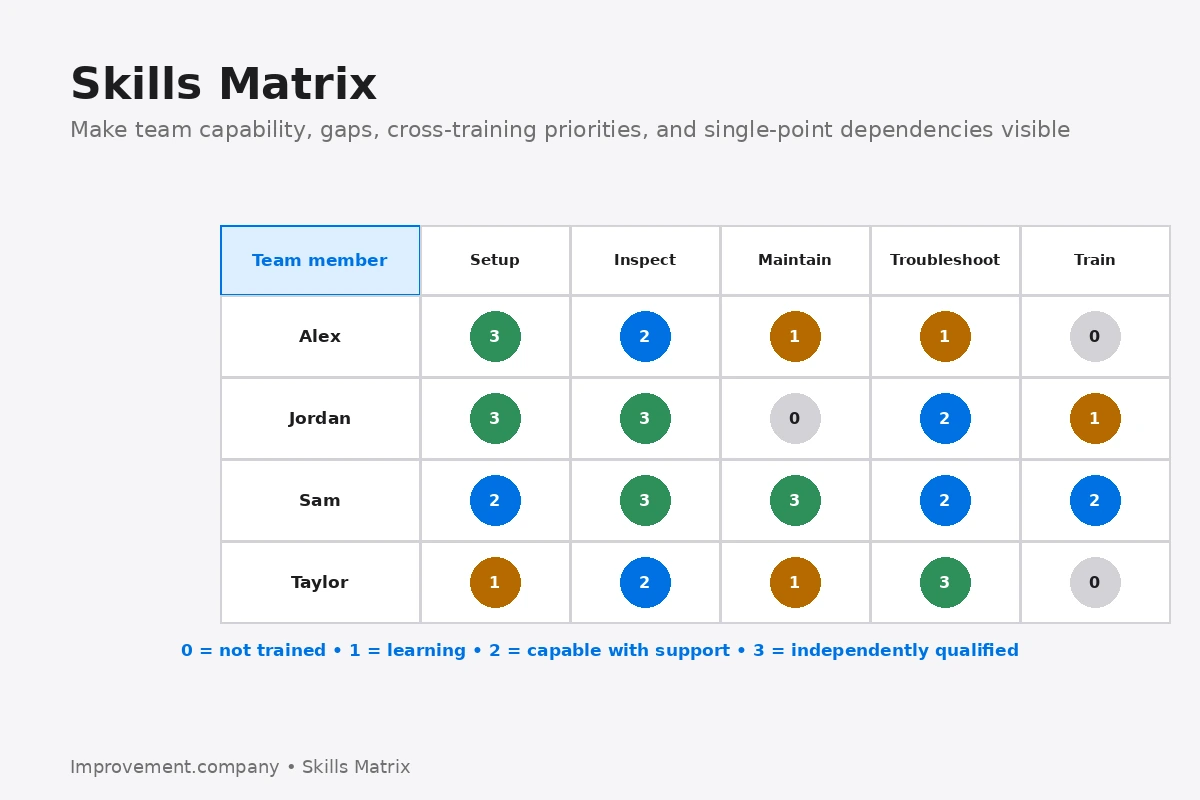
Learn how to build and use a skills matrix to visualize capability, identify training gaps, reduce staffing risk, and support employee development.
Learn how Stakeholder Analysis identifies who is affected by a change, what matters to them, and how engagement should be planned.
Learn how Toyota Kata develops improvement capability through a repeatable scientific routine and a structured coaching relationship.
Learn how Training Needs Analysis identifies required competence, current capability, performance gaps, priorities, and effective development actions.
Learn how Training Within Industry develops supervisors through Job Instruction, Job Methods, and Job Relations to improve capability and consistency.
Learn how TWI Job Instruction prepares trainers to teach a job correctly, safely, and consistently using a structured four-step method.
Learn how Training Within Industry Job Methods helps supervisors analyze a job, question details, develop a better method, and put the improvement into use.
Learn how Training Within Industry Job Relations helps supervisors understand facts, weigh actions, make decisions, and follow up on people problems.